9R9K image
Deposition Date 2025-05-20
Release Date 2025-10-01
Last Version Date 2025-10-01
Entry Detail
PDB ID:
9R9K
Keywords:
Title:
IRAK4 in complex with inhibitor
Biological Source:
Source Organism:
Homo sapiens (Taxon ID: 9606)
Host Organism:
Method Details:
Experimental Method:
Resolution:
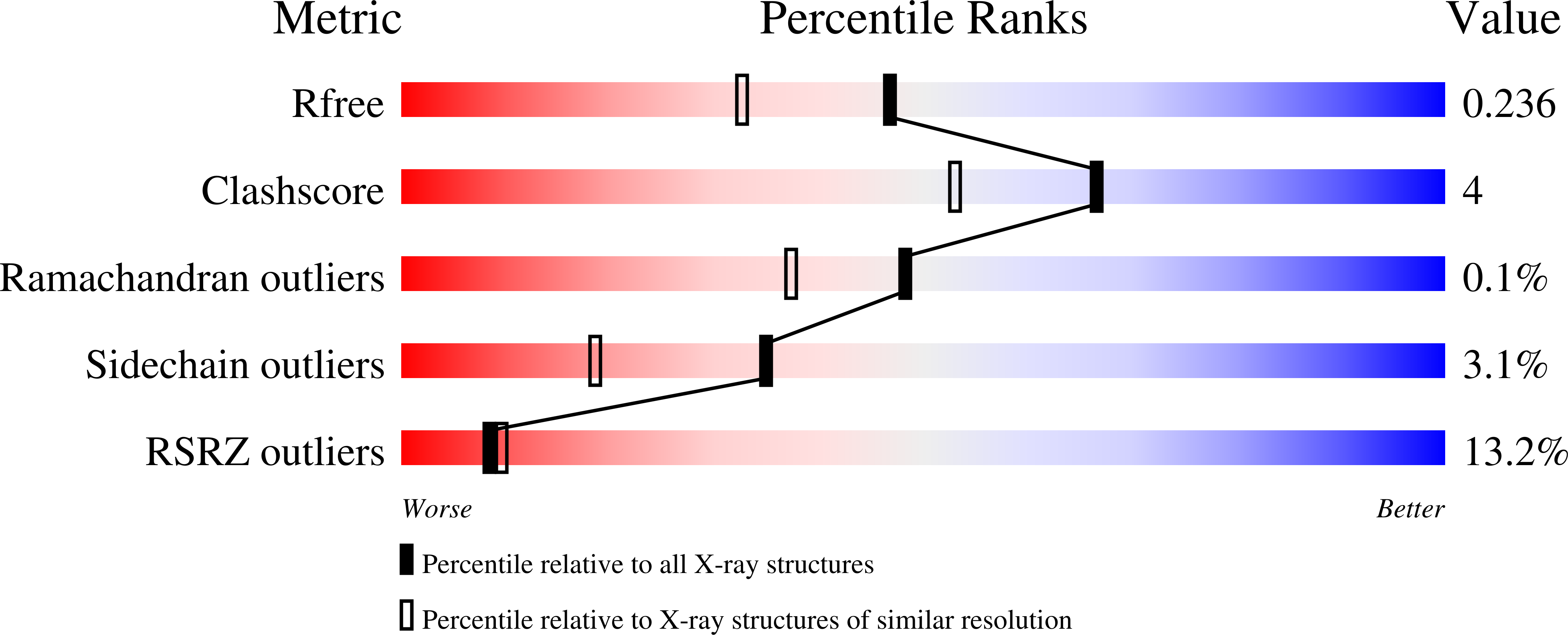
1.87 Å
R-Value Free:
0.24
R-Value Work:
0.21
R-Value Observed:
0.21
Space Group:
C 1 2 1
Macromolecular Entities
Structures with similar UniProt ID
Protein Blast
Polymer Type:polypeptide(L)
Molecule:Interleukin-1 receptor-associated kinase 4
Gene (Uniprot):IRAK4
Chain IDs:A, B, C, D
Chain Length:308
Number of Molecules:4
Biological Source:Homo sapiens
Modified Residue
Compound ID Chain ID Parent Comp ID Details 2D Image
SEP A SER modified residue
TPO A THR modified residue
Primary Citation
Generation of a potent & selective series of IRAK4 inhibitors based on a structure based, hybridization approach.
Bioorg.Med.Chem. 131 118333 118333 (2025)
PMID: 40972347 DOI: 10.1016/j.bmc.2025.118333

Abstact

IRAK4 inhibitors are of high interest as treatment for not only inflammatory and autoimmune diseases, but also in the field of oncology. Despite extensive research in the IRAK4 area and progression of several inhibitors into clinical trials, no IRAK4 inhibitor has yet reached the market. In this article, we describe the development of a highly potent and selective IRAK4 lead compound 5e, starting from Astellas AS2444697 (1a). The work includes identification of the pyrazole-pyridine substituent in compound 1g, binding towards the gatekeeper region of IRAK4, followed by a structure-guided scaffold hybridization that led to 5a. Subsequent optimization of substituents of the indazole scaffold yielded 5e, which exhibits a 10-fold improvement in IRAK4 cell potency and higher off-target selectivity compared to AS244697 (1a).

Legend

Protein

Chemical

Disease

Primary Citation of related structures
Feedback Form
Name
Email
Institute
Feedback