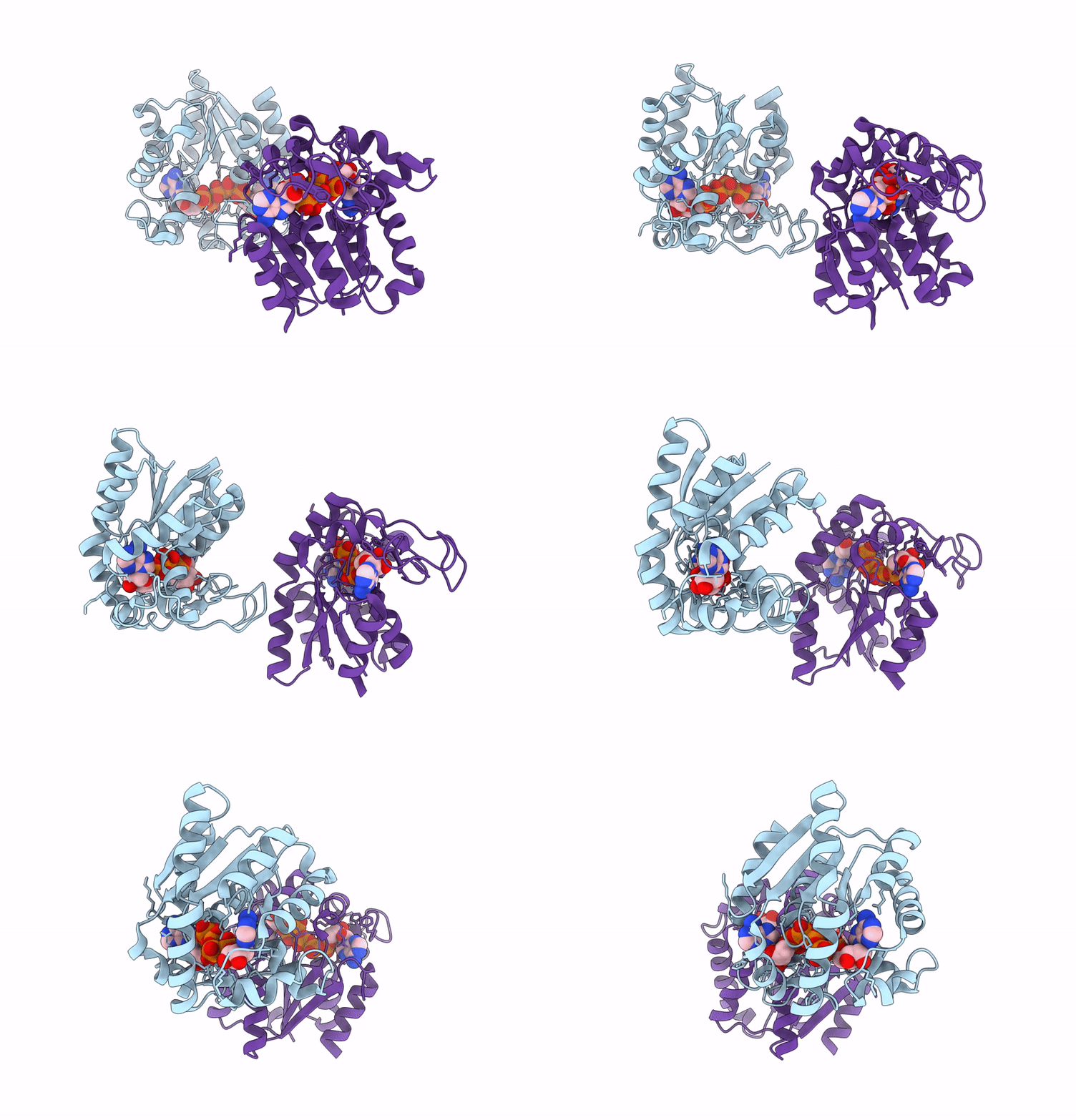
9R71 image
Deposition Date 2025-05-13
Release Date 2025-10-15
Last Version Date 2025-10-29
Entry Detail
PDB ID:
9R71
Keywords:
Title:
Crystal structure of E. coli Adenylate kinase E114A mutant in complex with inhibitor Ap5a.
Biological Source:
Source Organism:
Escherichia coli (Taxon ID: 562)
Host Organism:
Method Details:
Experimental Method:
Resolution:
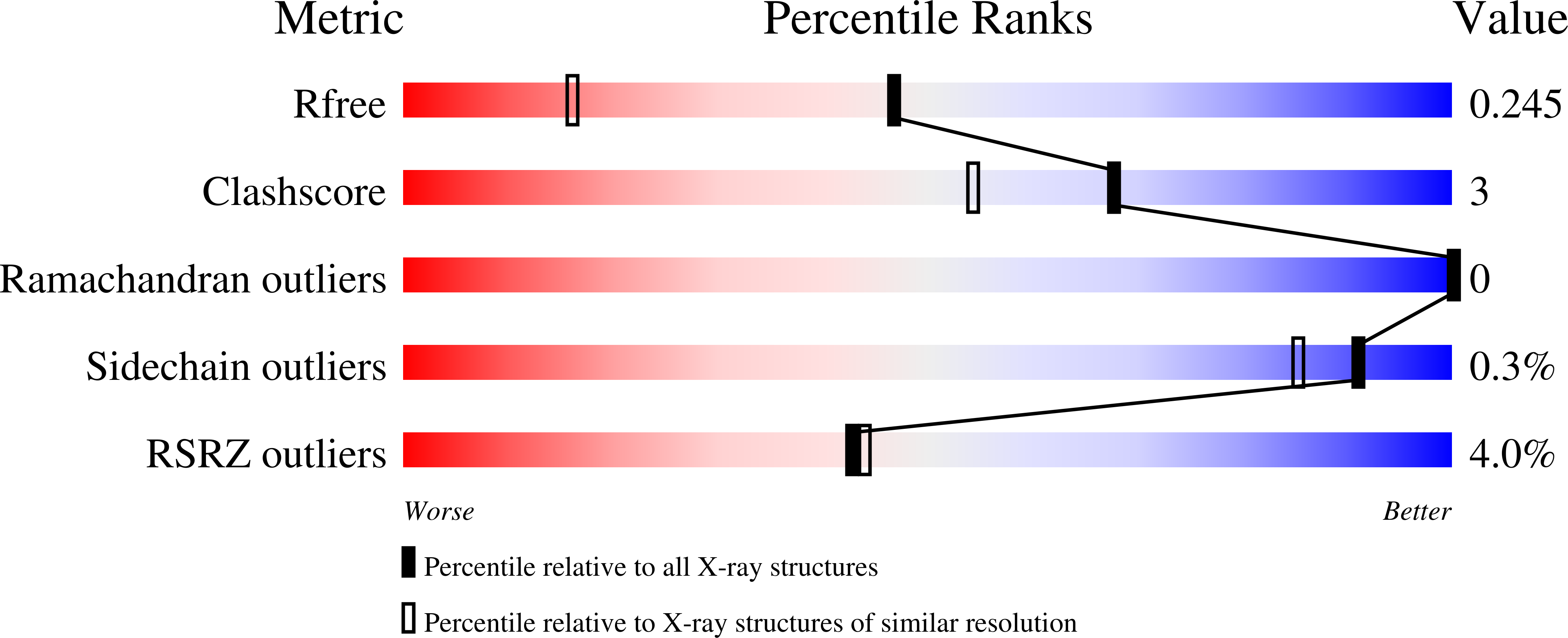
1.61 Å
R-Value Free:
0.24
R-Value Work:
0.19
R-Value Observed:
0.19
Space Group:
P 21 21 2
Macromolecular Entities
Structures with similar UniProt ID
Protein Blast
Polymer Type:polypeptide(L)
Molecule:Adenylate kinase
Gene (Uniprot):adk
Chain IDs:A, B
Chain Length:214
Number of Molecules:2
Biological Source:Escherichia coli
Ligand Molecules
Primary Citation
Exploring Helical Fraying Linked to Dynamics and Catalysis in Adenylate Kinase.
Biochemistry 64 4281 4295 (2025)
PMID: 41042980 DOI: 10.1021/acs.biochem.5c00306

Abstact

Conformational dynamics is a fundamental aspect of enzymatic catalysis that, for example, can be linked to ligand binding and release, assembly of the active site, and the catalytic mechanism. The essential and metabolic enzyme adenylate kinase (AK) undergoes large-scale conformational changes in response to binding of its substrates ATP and AMP. As such, it has been intensely studied in search of linkages between dynamics and catalysis. For a complex conformational change to occur in a protein, whether it is of an induced fit or conformational selection nature, changes at several hinges are often required. Here, based on a comparative structure-function analysis of AK enzymes from E. coli and the archaea Odinarchaeota and from human AK1, we found that conformational changes in the enzymes are to a varying degree linked to bending, fraying, or unfolding/folding events of the termini of α-helices observed in various structural hot spots of the enzymes. The findings contribute with a mechanistic angle to how enzymatic dynamics and catalysis relate to the plasticity of the termini of α-helices.

Legend

Protein

Chemical

Disease

Primary Citation of related structures
Feedback Form
Name
Email
Institute
Feedback