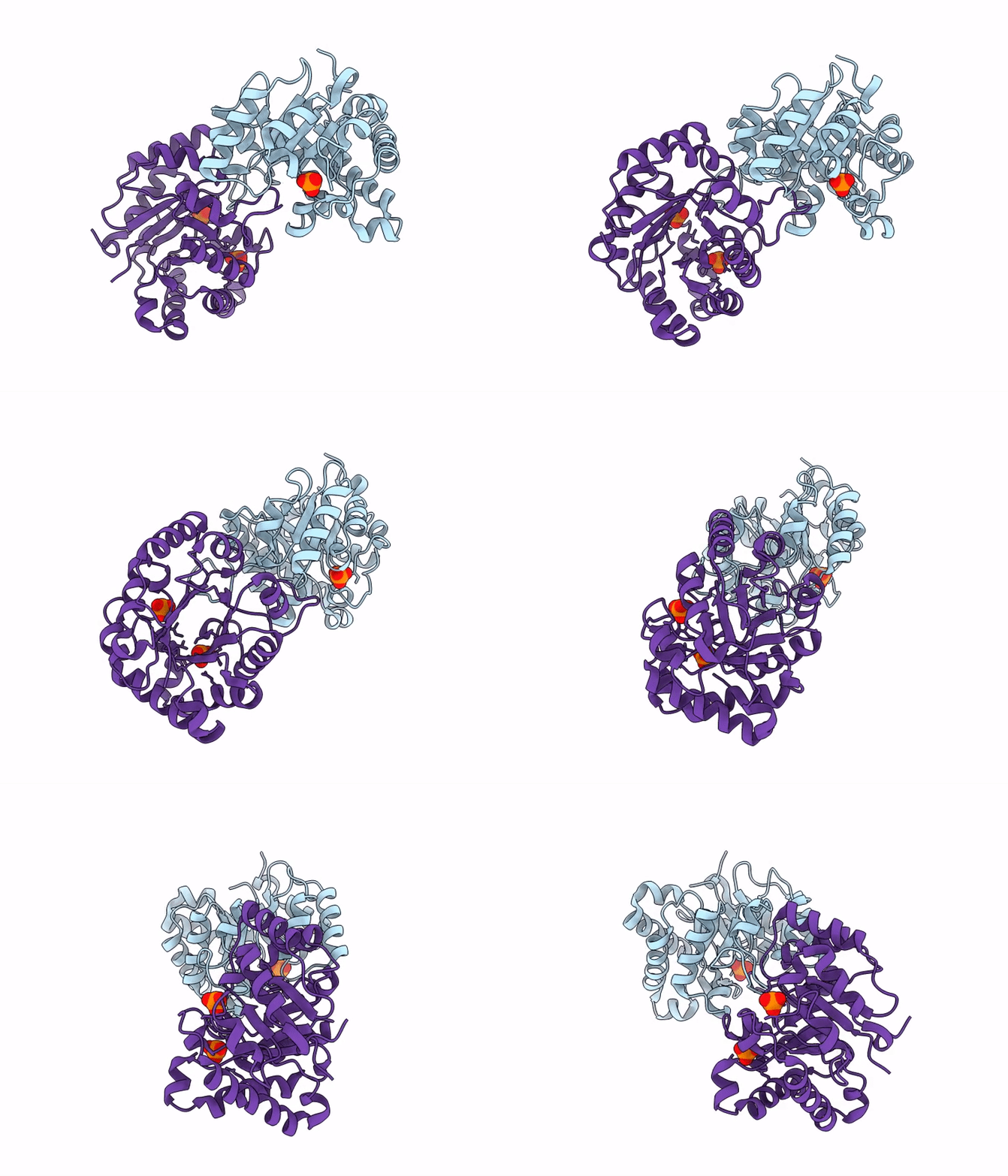
9R6M image
Deposition Date 2025-05-13
Release Date 2025-10-01
Last Version Date 2025-10-01
Entry Detail
PDB ID:
9R6M
Keywords:
Title:
Crystal structure of C14S mutant of triosephosphate isomerase from Chamydomonas reinhardtii
Biological Source:
Source Organism:
Host Organism:
Method Details:
Experimental Method:
Resolution:
3.55 Å
R-Value Free:
0.29
R-Value Work:
0.27
R-Value Observed:
0.28
Space Group:
P 21 21 21

Macromolecular Entities
Structures with similar UniProt ID
Protein Blast
Polymer Type:polypeptide(L)
Molecule:Chloroplast triosephosphate isomerase
Gene (Uniprot):TIM
Mutagens:C14S
Chain IDs:A, B
Chain Length:255
Number of Molecules:2
Biological Source:Chlamydomonas reinhardtii
Ligand Molecules
Primary Citation
Molecular and structural basis for nitrosoglutathione-dependent redox regulation of triosephosphate isomerase from Chlamydomonas reinhardtii.
Plant Sci. 362 112768 112768 (2025)
PMID: 40946919 DOI: 10.1016/j.plantsci.2025.112768

Abstact

Protein S-nitrosylation is a reversible redox-based post-translational modification that plays an important role in cell signaling by modulating protein function and stability. At the molecular level, S-nitrosylation consists of the formation of a nitrosothiol (-SNO) and is primarily induced by the trans-nitrosylating agent nitrosoglutathione (GSNO). Triosephosphate isomerase (TPI), which catalyzes the interconversion of dihydroxyacetone phosphate and glyceraldehyde-3-phosphate, has been identified as a putative target of S-nitrosylation in both plant and non-plant systems. Here we investigate the molecular basis for GSNO-dependent regulation of chloroplast TPI from the model green alga Chlamydomonas reinhardtii (CrTPI). Molecular modelling identified Cys14 and Cys219 as potential sites for interaction with GSNO, though crystallography of GSNO-treated CrTPI revealed S-nitrosylation only at Cys14. To disclose GSNO target sites, we generated and characterized Cys-to-Ser variants for Cys14 and Cys219, identifying Cys219 as a key residue mediating the GSNO-dependent modulation of CrTPI activity. Molecular dynamics simulations further revealed the stabilizing interactions of S-nitrosylated cysteines with their local environments. Overall, our results indicate that CrTPI catalysis is modulated by GSNO through a redox-based mechanism involving Cys219, which highlights a conserved regulatory strategy shared with human TPI.

Legend

Protein

Chemical

Disease

Primary Citation of related structures
Feedback Form
Name
Email
Institute
Feedback