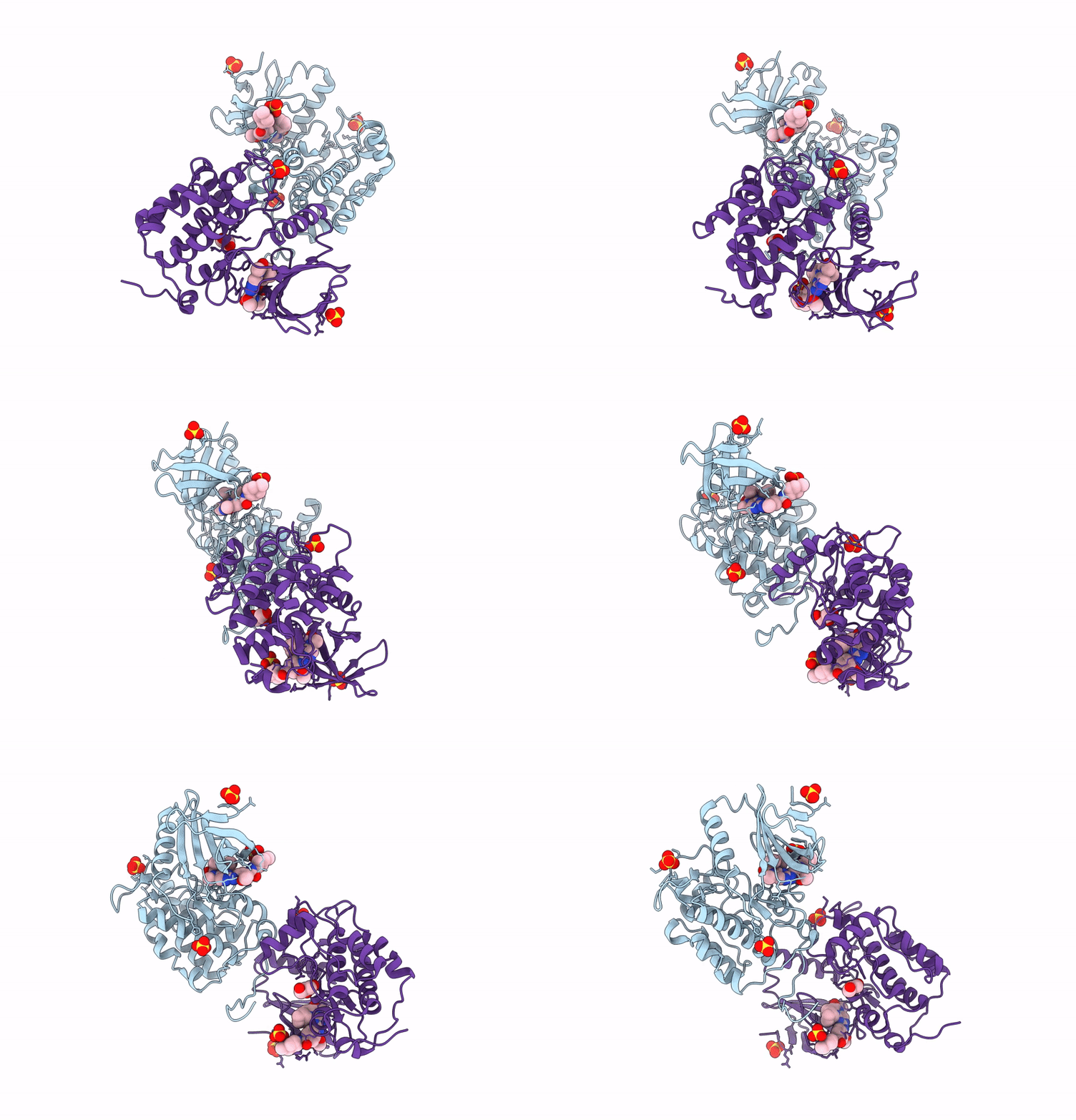
9R1X image
Deposition Date 2025-04-28
Release Date 2025-11-26
Last Version Date 2025-12-10
Entry Detail
PDB ID:
9R1X
Keywords:
Title:
PLK1 SURFACE ENTROPY REDUCTION (SER) MUTANT IN COMPLEX WITH INHIBITOR BI 2536
Biological Source:
Source Organism(s):
Homo sapiens (Taxon ID: 9606)
Expression System(s):
Method Details:
Experimental Method:
Resolution:
2.84 Å
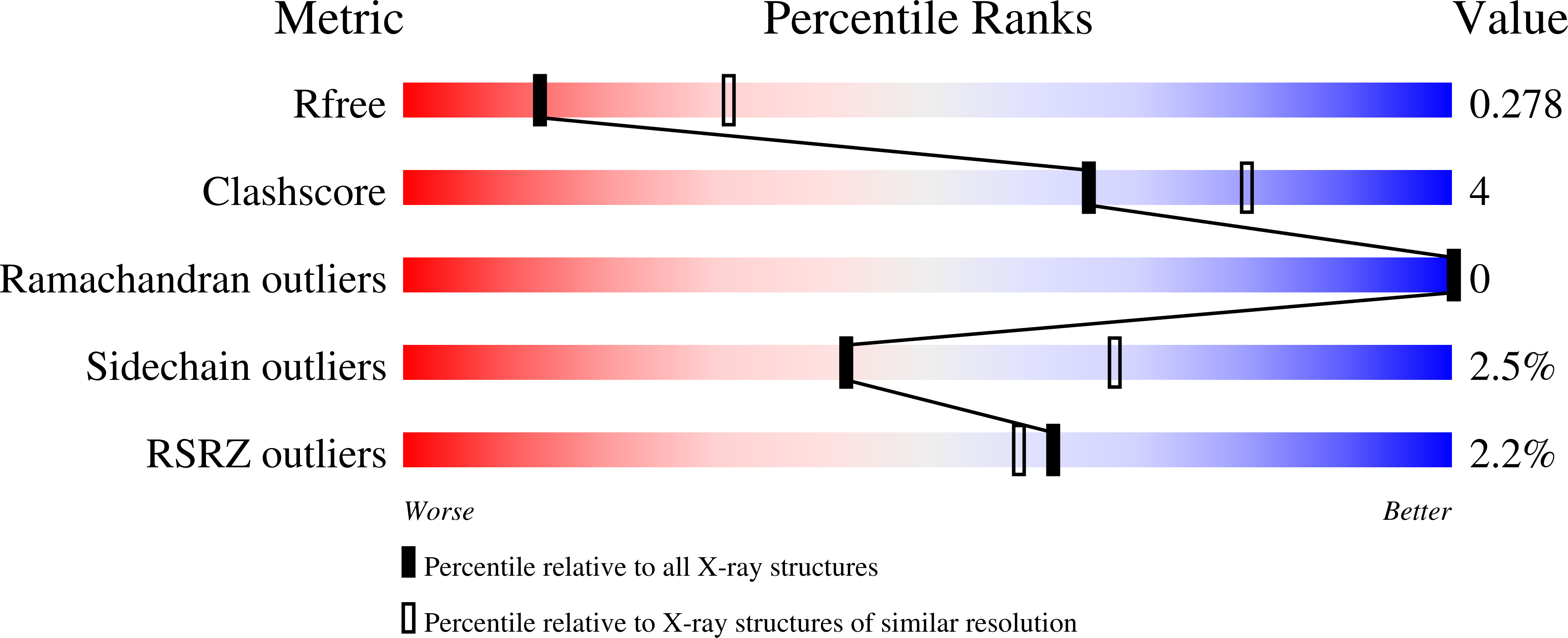
R-Value Free:
0.27
R-Value Work:
0.21
R-Value Observed:
0.22
Space Group:
C 1 2 1
Macromolecular Entities
Structures with similar UniProt ID
Protein Blast
Polymer Type:polypeptide(L)
Molecule:Serine/threonine-protein kinase PLK1
Gene (Uniprot):PLK1
Chain IDs:A, B
Chain Length:325
Number of Molecules:2
Biological Source:Homo sapiens
Primary Citation
Polo-like kinase 1-inhibitor co-complex structures via the surface-entropy reduction approach and a DARPin-assisted approach.
Acta Crystallogr D Struct Biol 81 718 733 (2025)
PMID: 41246821 DOI: 10.1107/S2059798325009325

Abstact

Polo-like kinase 1 (PLK1) is a major regulator of cell division and has been pursued as a drug target for cancer therapy for a long time. Crystallization of the kinase domain has proven to be exceptionally challenging. Previously, we published a crystallization approach using a PLK1-specific designed ankyrin-repeat protein (DARPin) as a crystallization facilitator. Here, we report an alternative route: crystallization was successful after the introduction of a double mutation which reduced surface entropy and enabled the formation of a new crystal contact. This new PLK1 crystallization system was used to determine the first co-complex crystal structure of the Bayer thiazolidinone lead series, as well as crystal structures with representatives of two competitor inhibitor series. The molecular binding modes of these three inhibitors are analysed and discussed, and the surface-entropy reduction approach is compared with the surface modifications employed by us and others to enable the crystallization of PLK1.

Legend

Protein

Chemical

Disease

Primary Citation of related structures
Feedback Form
Name
Email
Institute
Feedback