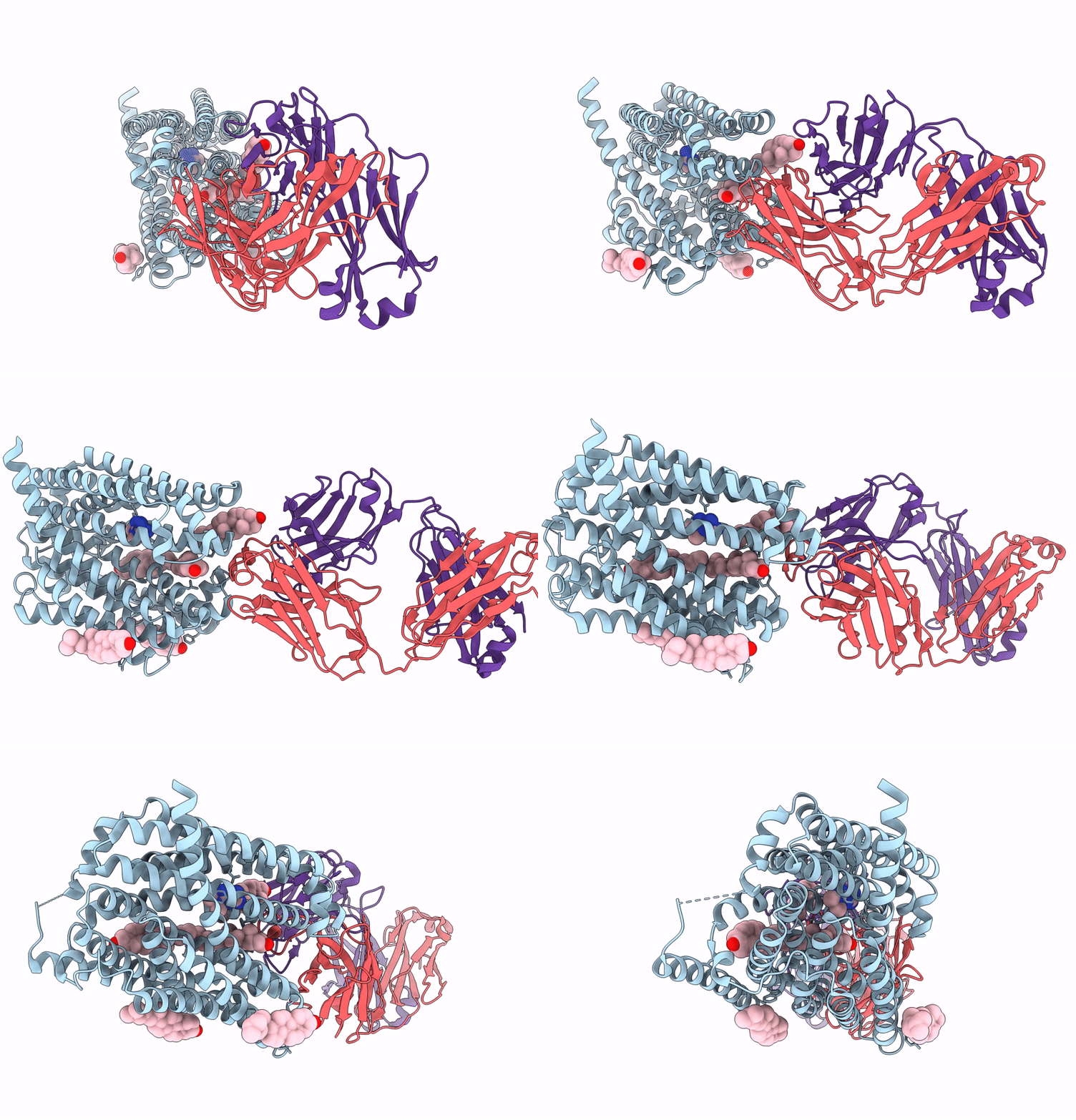
9R1F image
Deposition Date 2025-04-26
Release Date 2025-11-05
Last Version Date 2025-11-05
Entry Detail
PDB ID:
9R1F
Title:
Cryo-EM structure of human MATE1 in complex with metformin
Biological Source:
Source Organism:
Host Organism:
Method Details:
Experimental Method:
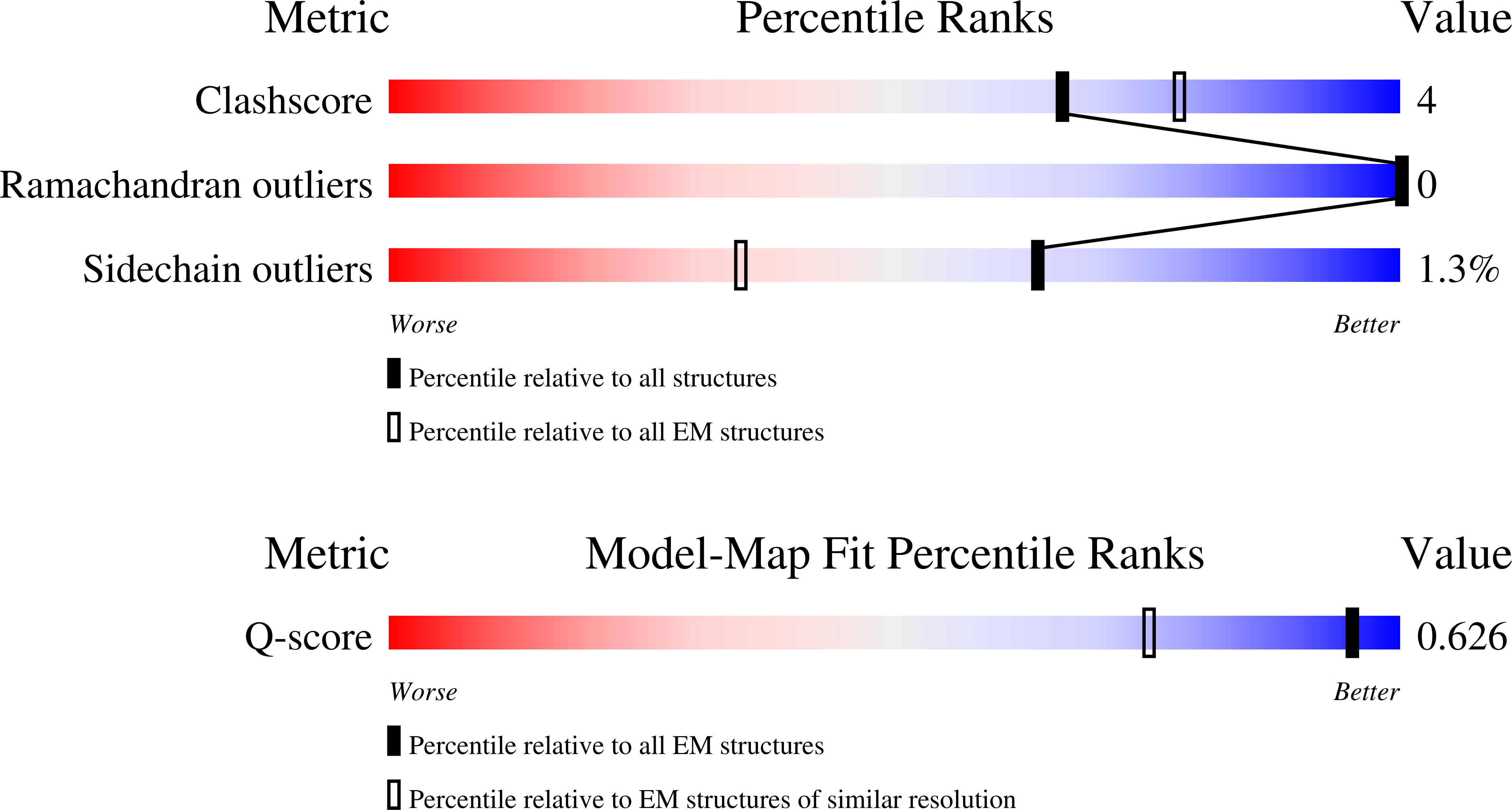
Resolution:
2.31 Å
Aggregation State:
PARTICLE
Reconstruction Method:
SINGLE PARTICLE
Macromolecular Entities
Structures with similar UniProt ID
Protein Blast
Polymer Type:polypeptide(L)
Molecule:Multidrug and toxin extrusion protein 1
Gene (Uniprot):SLC47A1
Chain IDs:A
Chain Length:570
Number of Molecules:1
Biological Source:Homo sapiens
Polymer Type:polypeptide(L)
Molecule:Heavy chain of Fab
Chain IDs:B (auth: H)
Chain Length:227
Number of Molecules:1
Biological Source:synthetic construct
Polymer Type:polypeptide(L)
Molecule:Light chain of Fab
Chain IDs:C (auth: L)
Chain Length:211
Number of Molecules:1
Biological Source:synthetic construct
Primary Citation
Structural basis of drug recognition by human MATE1 transporter.
Nat Commun 16 9444 9444 (2025)
PMID: 41145429 DOI: 10.1038/s41467-025-64490-z

Abstact

Human MATE1 (multidrug and toxin extrusion protein 1) is highly expressed in the kidney and liver, where it mediates the final step in the excretion of a broad range of cationic drugs, including the antidiabetic drug metformin, into the urine and bile. This transport process is essential for drug clearance and also affects therapeutic efficacy. To understand the molecular basis of drug recognition by hMATE1, we determined cryo-electron microscopy structures of the transporter in complex with the substrates 1-methyl-4-phenylpyridinium (MPP) and metformin and with the inhibitor cimetidine. The structures reveal a shared binding site located in a negatively charged pocket in the C-lobe of the protein. We functionally validated key interactions using radioactivity-based cellular uptake assays using hMATE1 mutants. Molecular dynamics simulations provide insights into the different binding modes and dynamic behaviour of the ligands within the pocket. Collectively, these findings define the structural basis of hMATE1 substrate specificity and shed light on its role in drug transport and drug-drug interactions.

Legend

Protein

Chemical

Disease

Primary Citation of related structures
Feedback Form
Name
Email
Institute
Feedback