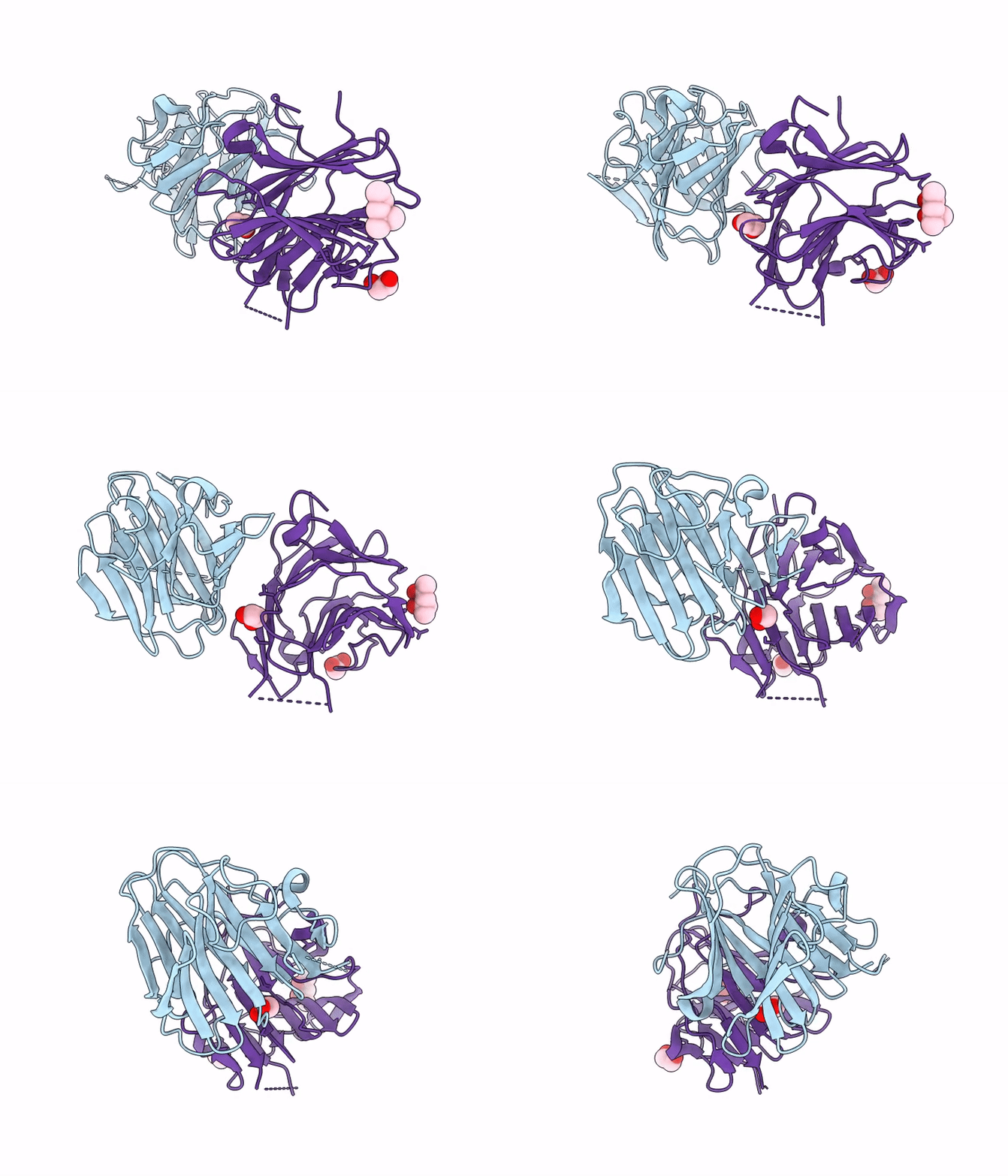
9R11 image
Deposition Date 2025-04-24
Release Date 2025-09-10
Last Version Date 2025-09-10
Entry Detail
PDB ID:
9R11
Keywords:
Title:
Structure of the PRYSPRY domain of human MID2, crystal form II
Biological Source:
Source Organism:
Homo sapiens (Taxon ID: 9606)
Host Organism:
Method Details:
Experimental Method:
Resolution:
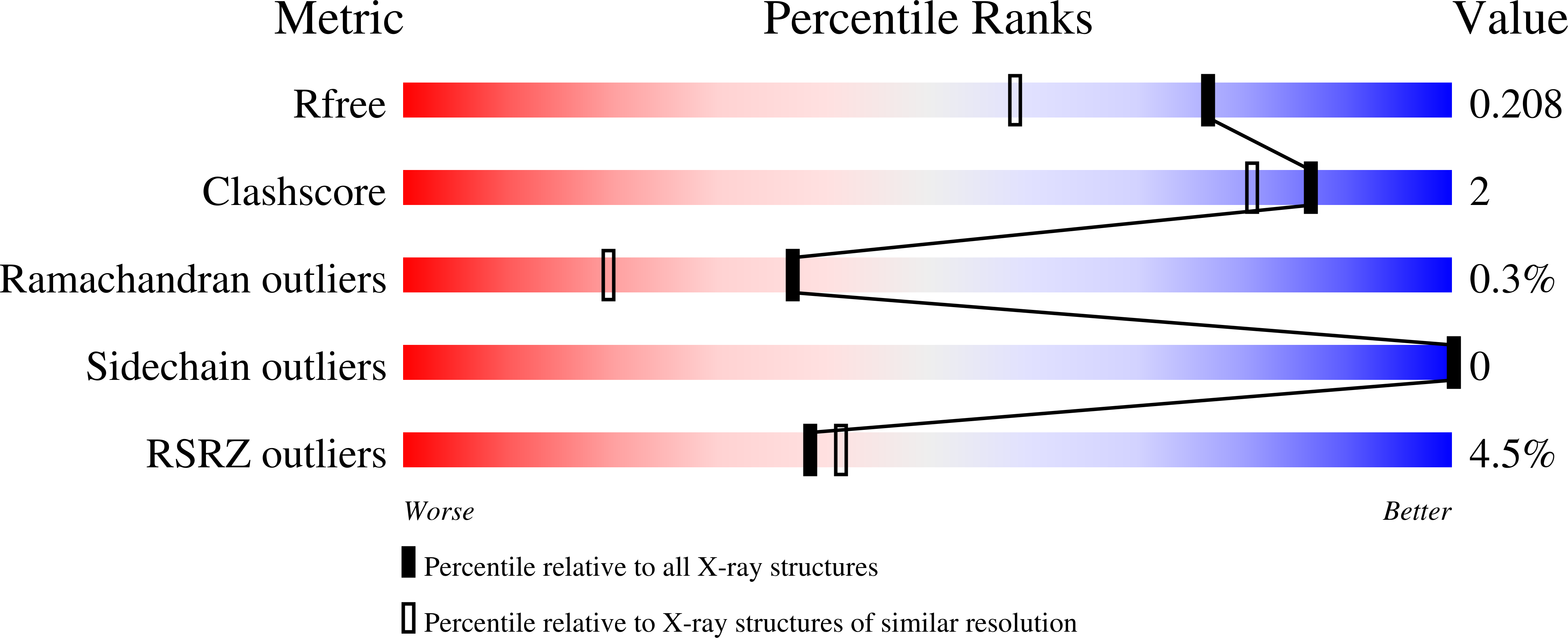
1.64 Å
R-Value Free:
0.20
R-Value Work:
0.15
R-Value Observed:
0.15
Space Group:
P 21 21 21
Macromolecular Entities
Structures with similar UniProt ID
Protein Blast
Polymer Type:polypeptide(L)
Molecule:Probable E3 ubiquitin-protein ligase MID2
Gene (Uniprot):MID2
Chain IDs:A (auth: B), B (auth: A)
Chain Length:190
Number of Molecules:2
Biological Source:Homo sapiens
Primary Citation
Structural analysis of TRIM family PRYSPRY domains and its implications for E3-ligand design.
J Struct Biol X 12 100134 100134 (2025)
PMID: 40821731 DOI: 10.1016/j.yjsbx.2025.100134

Abstact

Tripartite motif (TRIM) proteins constitute one of the largest subfamilies of RING-type E3 ubiquitin ligases and are attractive targets for the development of novel degraders that exploit the ubiquitin-proteasome pathway. More than half of all TRIM family members contain a PRYSPRY domain, a potentially druggable protein interaction module, located in their C-terminal region. Here, we have determined crystal structures of the PRYSPRY domains from nine TRIM family proteins: TRIM1 (MID2), TRIM9, TRIM10, TRIM11, TRIM15, TRIM16, TRIM18 (MID1), TRIM36, and TRIM67. These structures reveal conservation of the overall β-sandwich topology, despite low sequence conservation, with a unique subdomain swap observed in TRIM11. Significant variations were found in the loops flanking the canonical substrate-binding site, which modulate the shape and electrostatic properties of the binding pocket, hinting at substantial differences in substrate specificity and binding modes among family members. TRIM36 features a unique structural motif between the canonical β-strands 2 and 3, leading to the formation of a dimer, with the canonical substrate-binding site partially occluded by the dimerization motif. In addition, we mapped the locations of missense mutations in MID1 associated with X-linked Opitz syndrome, suggesting that some of these mutations impair the conformational stability of the protein. Taken together, our data provide intriguing insights into the structural and functional divergence of TRIM family PRYSPRY domains, their potential druggability and substrate recognition, and the challenges of ligand design.

Legend

Protein

Chemical

Disease

Primary Citation of related structures
Feedback Form
Name
Email
Institute
Feedback