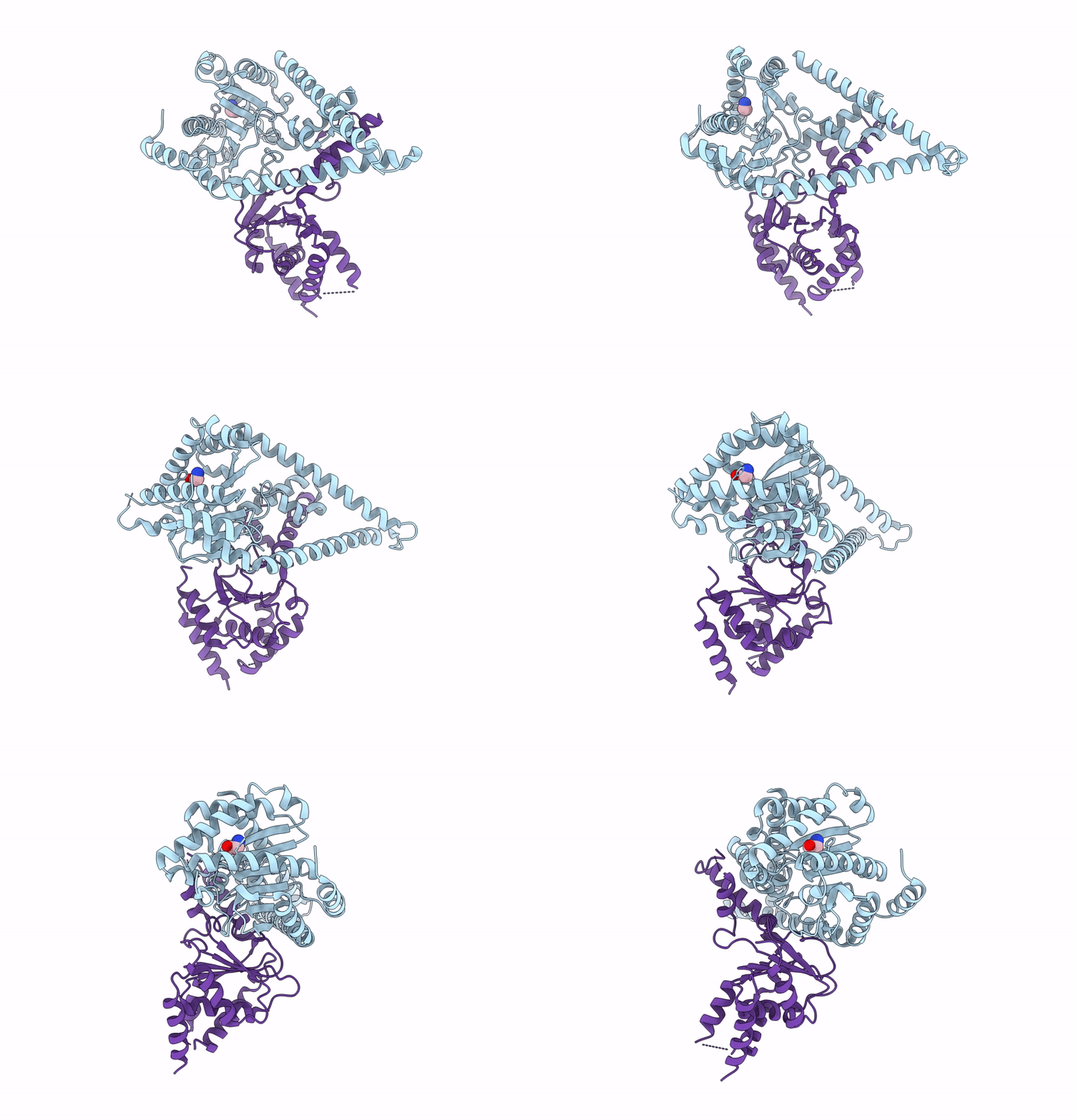
9R0K image
Deposition Date 2025-04-24
Release Date 2025-10-29
Last Version Date 2025-12-10
Entry Detail
PDB ID:
9R0K
Keywords:
Title:
Structure of the human heterotetrameric cis-prenyltransferase complex in its apo form
Biological Source:
Source Organism:
Homo sapiens (Taxon ID: 9606)
Host Organism:
Method Details:
Experimental Method:
Resolution:
2.89 Å
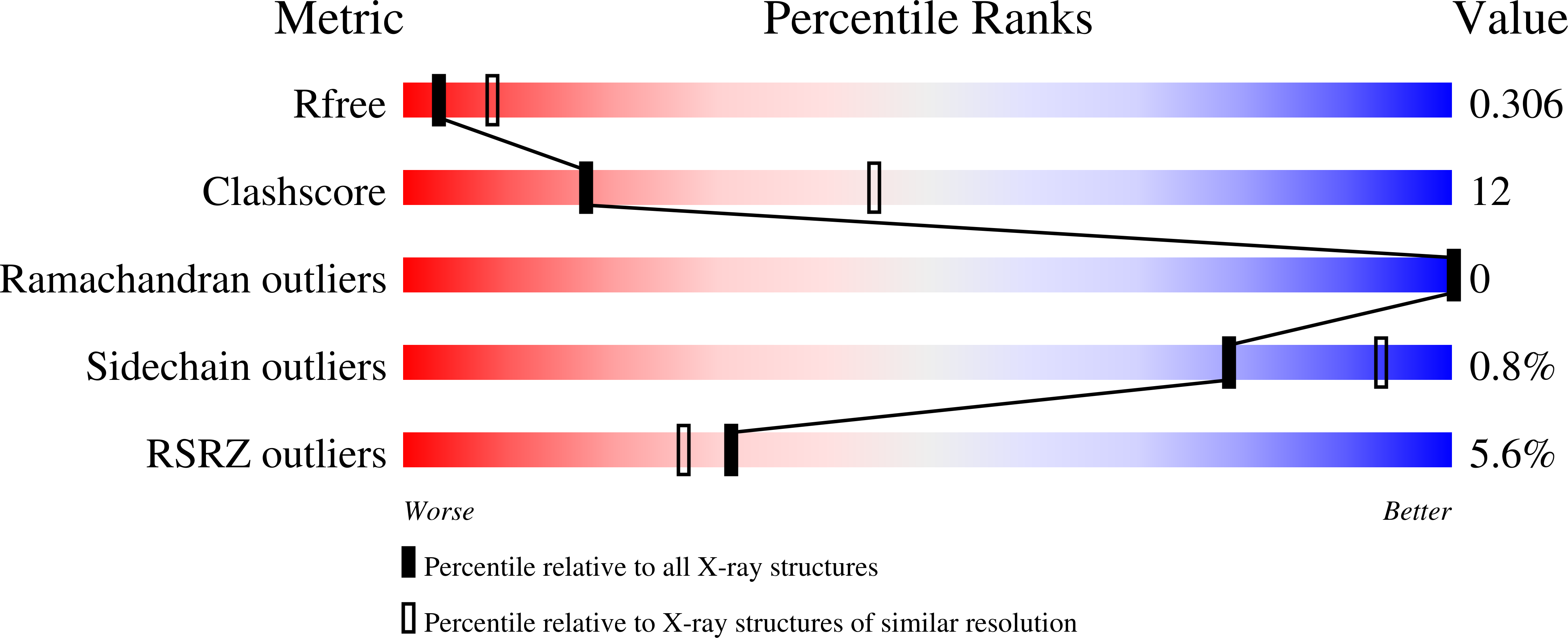
R-Value Free:
0.30
R-Value Work:
0.26
R-Value Observed:
0.26
Space Group:
H 3 2
Macromolecular Entities
Structures with similar UniProt ID
Protein Blast
Polymer Type:polypeptide(L)
Molecule:Dehydrodolichyl diphosphate synthase complex subunit DHDDS
Gene (Uniprot):DHDDS
Chain IDs:A
Chain Length:340
Number of Molecules:1
Biological Source:Homo sapiens
Structures with similar UniProt ID
Protein Blast
Polymer Type:polypeptide(L)
Molecule:Dehydrodolichyl diphosphate synthase complex subunit NUS1
Gene (Uniprot):NUS1
Chain IDs:B
Chain Length:222
Number of Molecules:1
Biological Source:Homo sapiens
Ligand Molecules
Primary Citation
Structural mechanisms of allosteric regulation in the human cis-prenyltransferase complex.
Nat Commun 16 10786 10786 (2025)
PMID: 41315348 DOI: 10.1038/s41467-025-65833-6

Abstact

Human cis-prenyltransferase (hcis-PT) synthesizes long-chain isoprenoids essential for N-linked protein glycosylation. This heteromeric complex comprises the catalytic subunit DHDDS and the regulatory Nogo-B receptor (NgBR). Although NgBR dramatically enhances DHDDS activity, the molecular basis for this allosteric regulation remains unclear. Here, we combined crystallography, hydrogen-deuterium exchange mass spectrometry (HDX-MS), molecular dynamics simulations, and network analysis to uncover the structural dynamics and communication pathways within hcis-PT. By solving the apo structure of hcis-PT, we reveal only a localized flexibility at the active site and the NgBR C-terminus. However, HDX-MS demonstrated widespread substrate-induced stabilization, particularly at the NgBR βD-βE loop, highlighting it as an allosteric hub. Functional mutagenesis scanning identified NgBRS249 as critical for enzymatic activity, independent of structural perturbations. Network analysis of MD simulations pinpointed this residue as a central node in inter-subunit communication, with perturbations disrupting downstream allosteric pathways, altering enzymatic activity. Our findings reveal a dynamic regulatory network centered at the inter-subunit interface, wherein specific NgBR residues modulate DHDDS activity through allosteric signaling. This work elucidates a conserved mechanism of subunit coordination in long-chain cis-prenyltransferases and suggests avenues for therapeutic targeting of hcis-PT-related disorders.

Legend

Protein

Chemical

Disease

Primary Citation of related structures
Feedback Form
Name
Email
Institute
Feedback