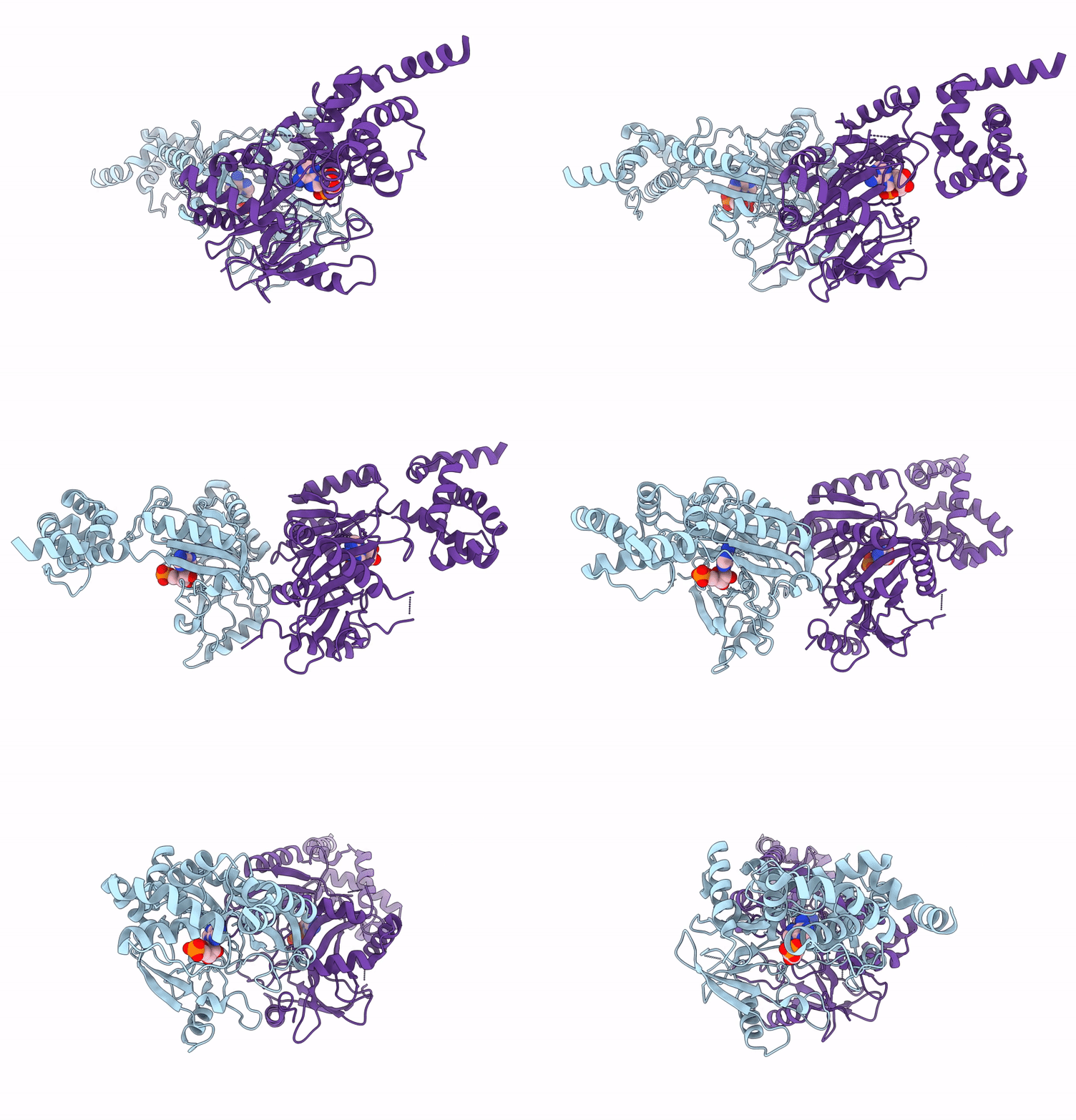
9QW7 image
Deposition Date 2025-04-14
Release Date 2025-09-17
Last Version Date 2025-12-10
Entry Detail
PDB ID:
9QW7
Keywords:
Title:
The crystal structure of the adenyly transferase domain of Candida glabrata tRNA ligase
Biological Source:
Source Organism:
Method Details:
Experimental Method:
Resolution:
2.75 Å
R-Value Free:
0.26
R-Value Work:
0.21
R-Value Observed:
0.21
Space Group:
P 32 2 1

Macromolecular Entities
Structures with similar UniProt ID
Protein Blast
Polymer Type:polypeptide(L)
Molecule:tRNA ligase
Gene (Uniprot):CAGL0M03091g
Chain IDs:A, B
Chain Length:384
Number of Molecules:2
Biological Source:Nakaseomyces glabratus
Primary Citation
The adaptability of the fungal tRNA ligase's ATP-binding pocket: a potential target for new antifungal drugs.
Nar Mol Med 2 ugaf028 ugaf028 (2025)
PMID: 41306651 DOI: 10.1093/narmme/ugaf028

Abstact

The transfer RNA (tRNA) ligase (TRL1) is a highly conserved multidomain protein that is the archetype of the recently characterized Rnl6 clade. This clade distinguishes itself through a distinct C-terminal domain that sets it apart from other RNA ligase families. TRL1 is an essential component of pre-tRNA splicing and the processing of the Ire1p (Inositol-requiring enzyme 1)-dependent noncanonical splicing of the messenger RNA (mRNA) coding for HAC-1 (Homologous to Activating Transcription Factor / cAMP Response Element-Binding Protein 1 (ATF/CREB1), a transcription factor critical for the unfolded protein response (UPR) in the kingdom of fungi. Here, we report the crystal structure of the N-terminal adenylyl transferase domain (LIG) from Candida glabrata (Nakaseomyces glabratus). The asymmetric unit contained two molecules in complex with noncovalently linked adenosine monophosphate (AMP), revealing conformational differences. In comparison to previous studies, we observe two distinct and partially overlapping ligand-binding pockets, implying new specific residues involved in ligand binding and recognition. These insights on TRL1's ligand adaptability have important implications for the development of targeted therapies.

Legend

Protein

Chemical

Disease

Primary Citation of related structures
Feedback Form
Name
Email
Institute
Feedback