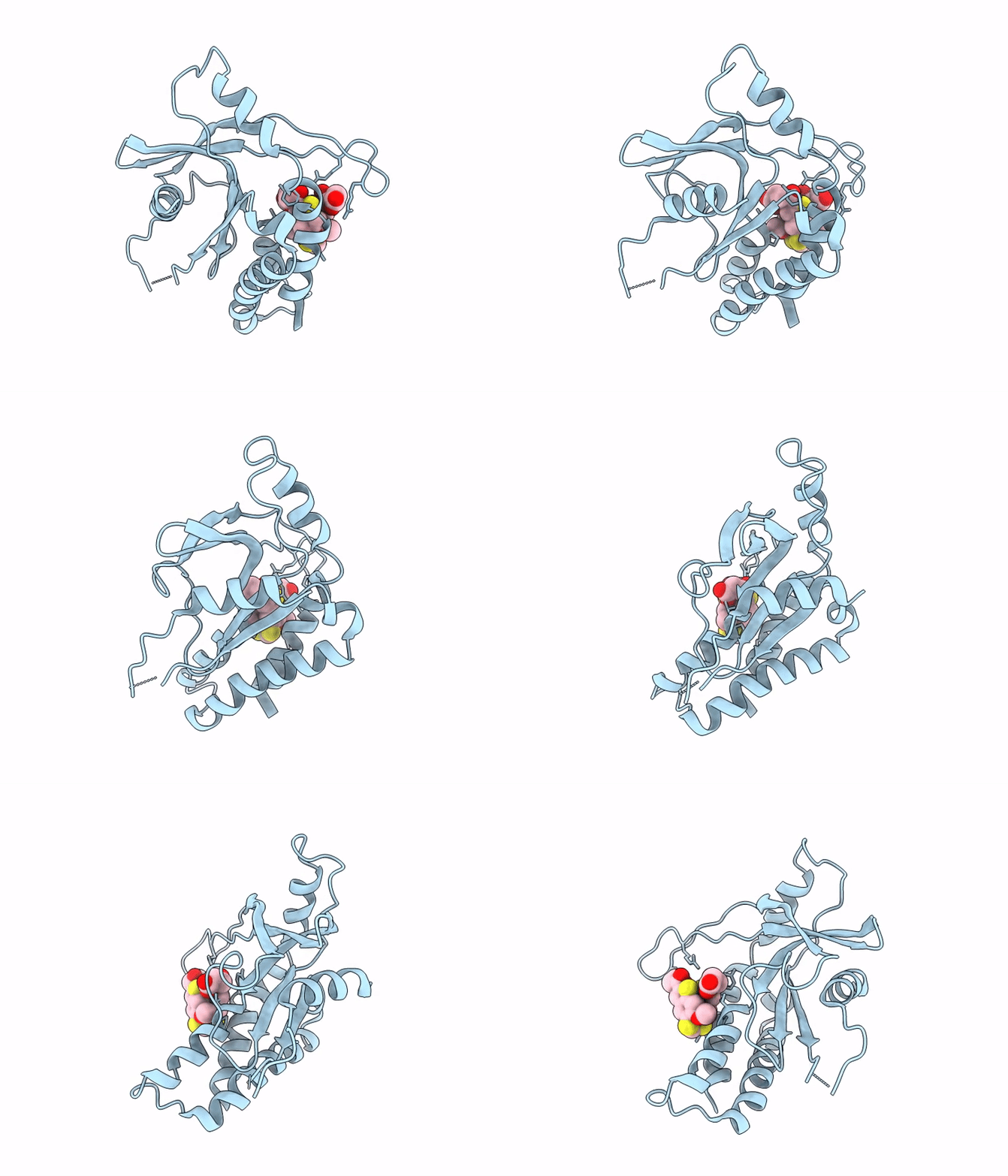
9QVT image
Deposition Date 2025-04-11
Release Date 2025-09-24
Last Version Date 2025-12-10
Entry Detail
PDB ID:
9QVT
Title:
Crystal structure of STING CTD in complex with potent agonist D5
Biological Source:
Source Organism:
Homo sapiens (Taxon ID: 9606)
Method Details:
Experimental Method:
Resolution:
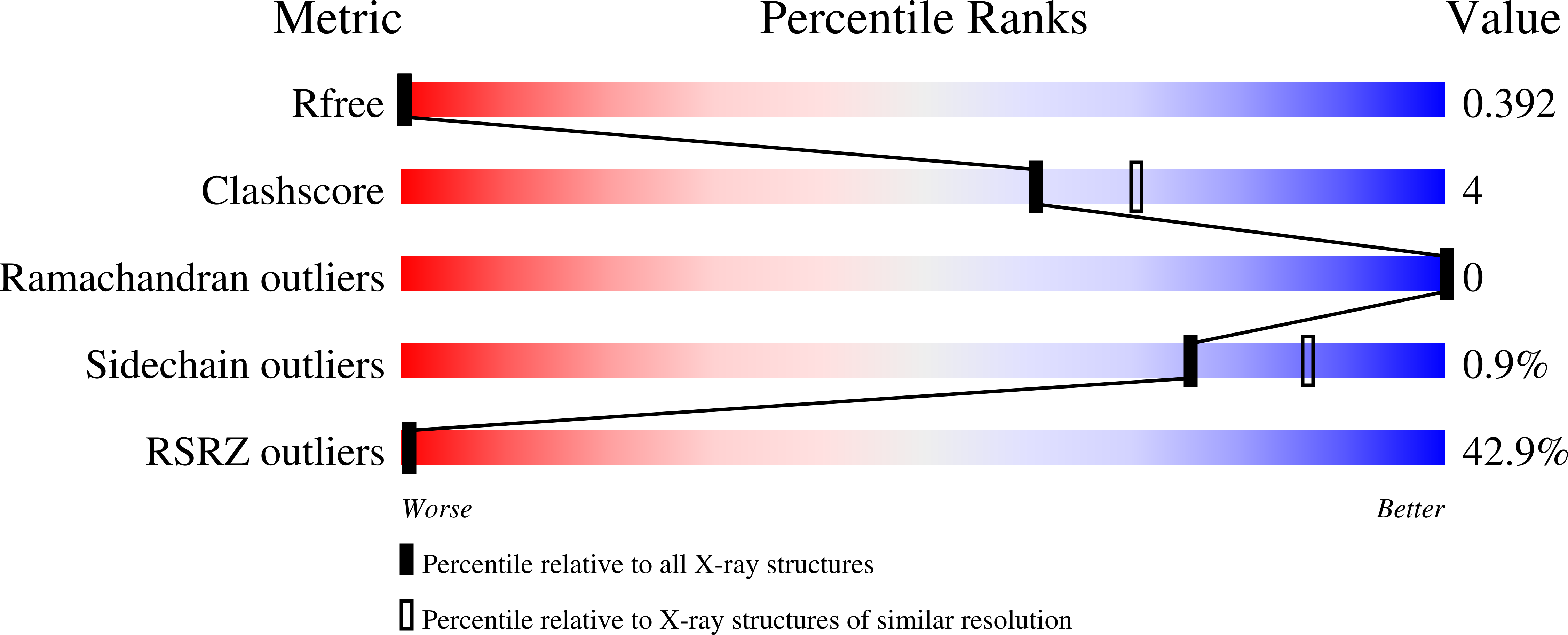
2.31 Å
R-Value Free:
0.38
R-Value Work:
0.34
Space Group:
C 1 2 1
Macromolecular Entities
Structures with similar UniProt ID
Protein Blast
Polymer Type:polypeptide(L)
Molecule:Stimulator of interferon genes protein
Gene (Uniprot):STING1
Mutagens:L139S,H232R
Chain IDs:A
Chain Length:242
Number of Molecules:1
Biological Source:Homo sapiens
Ligand Molecules
Primary Citation
Tumour-specific STING agonist synthesis via a two-component prodrug system.
Nat.Chem. 17 1941 1951 (2025)
PMID: 40957952 DOI: 10.1038/s41557-025-01930-9

Abstact

Pharmacological activation of STING holds promise in cancer treatment. A recent trend is the development of tumour-specific or conditionally activated STING agonists for enhanced safety and efficacy. Here we explore an unconventional prodrug activation strategy for on-tumour synthesis of a potent agonist. Leveraging the unique mechanism of MSA2, a small-molecule agonist that dimerizes non-covalently before binding to STING, we showed that its analogues bearing reactive functional groups readily and selectively form covalent dimers under mild conditions and in complex environments. We identified a reacting pair that led to a thioether-linked dimer with submicromolar potency in cell-based assays. Caging one of the reactants with a self-immolative β-glucuronide moiety resulted in a two-component prodrug system that near-exclusively formed the active compounds in tumours overexpressing β-glucuronidase. These results exemplify the use of small-molecule recognition for on-site generation of active compounds from benign precursors.

Legend

Protein

Chemical

Disease

Primary Citation of related structures
Feedback Form
Name
Email
Institute
Feedback