9QUX image
Deposition Date 2025-04-11
Release Date 2025-12-03
Last Version Date 2025-12-03
Entry Detail
PDB ID:
9QUX
Title:
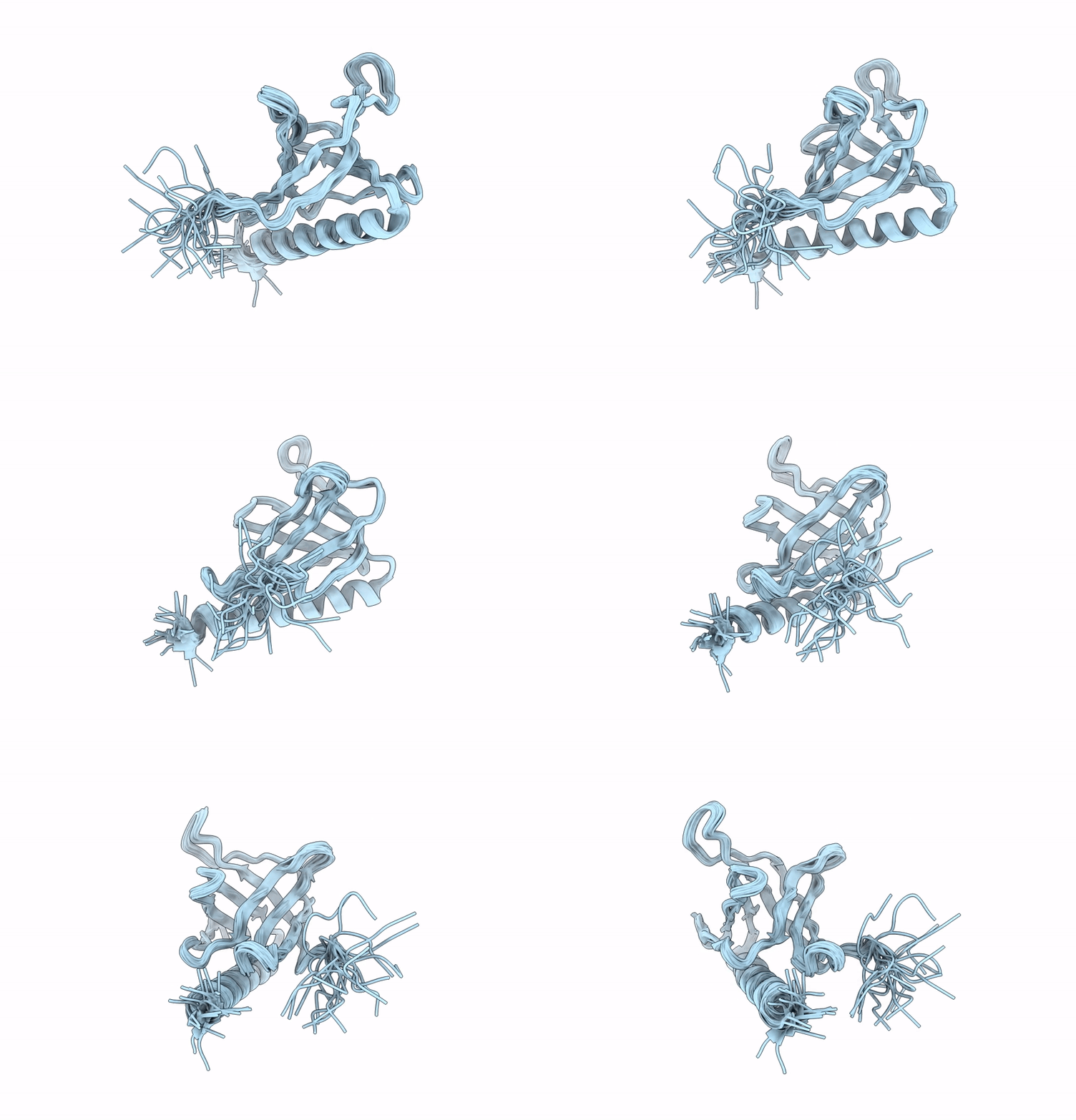
Solution structure of the Homer1 EVH1 domain
Biological Source:
Source Organism:
Mus musculus (Taxon ID: 10090)
Method Details:
Experimental Method:
Conformers Calculated:
100
Conformers Submitted:
20
Selection Criteria:
structures with the lowest energy
Macromolecular Entities
Structures with similar UniProt ID
Protein Blast
Polymer Type:polypeptide(L)
Molecule:Homer protein homolog 1
Gene (Uniprot):Homer1
Chain IDs:A
Chain Length:121
Number of Molecules:1
Biological Source:Mus musculus
Ligand Molecules
Primary Citation
Structural Modeling and Dynamics of the Full-Length Homer1 Multimer.
Proteins ? ? ? (2025)
PMID: 41267651 DOI: 10.1002/prot.70091

Abstact

Homer proteins are modular scaffold molecules that constitute an integral part of the protein network within the postsynaptic density. Full-length Homer1 forms a large homotetramer via a long coiled coil region, and can interact with proline-rich target sequences with its globular EVH1 domain. Here we report an atomistic model of the Homer1 coiled coil region along with the NMR solution structure and backbone dynamics of its EVH1 domain, with implications for the organization of the full-length tetramer. Compared to the already available EVH1 structures, our NMR ensemble exhibits subtle differences, mostly in and around its partner binding region, suggesting the presence of ligand-induced conformational transitions. Molecular dynamics simulations of the long coiled coil reveal distinct regions with different stability and flexibility, with the N-terminal part of the coiled coil exhibiting the largest motions. Interestingly, this segment is highly conserved, pointing to the functional relevance of the observed dynamical features. Our results indicate previously unexplored aspects of the flexibility of the full-length Homer1 tetramer that might contribute to the dynamic rearrangements of the postsynaptic protein network linked to its functional transitions.

Legend

Protein

Chemical

Disease

Primary Citation of related structures
Feedback Form
Name
Email
Institute
Feedback