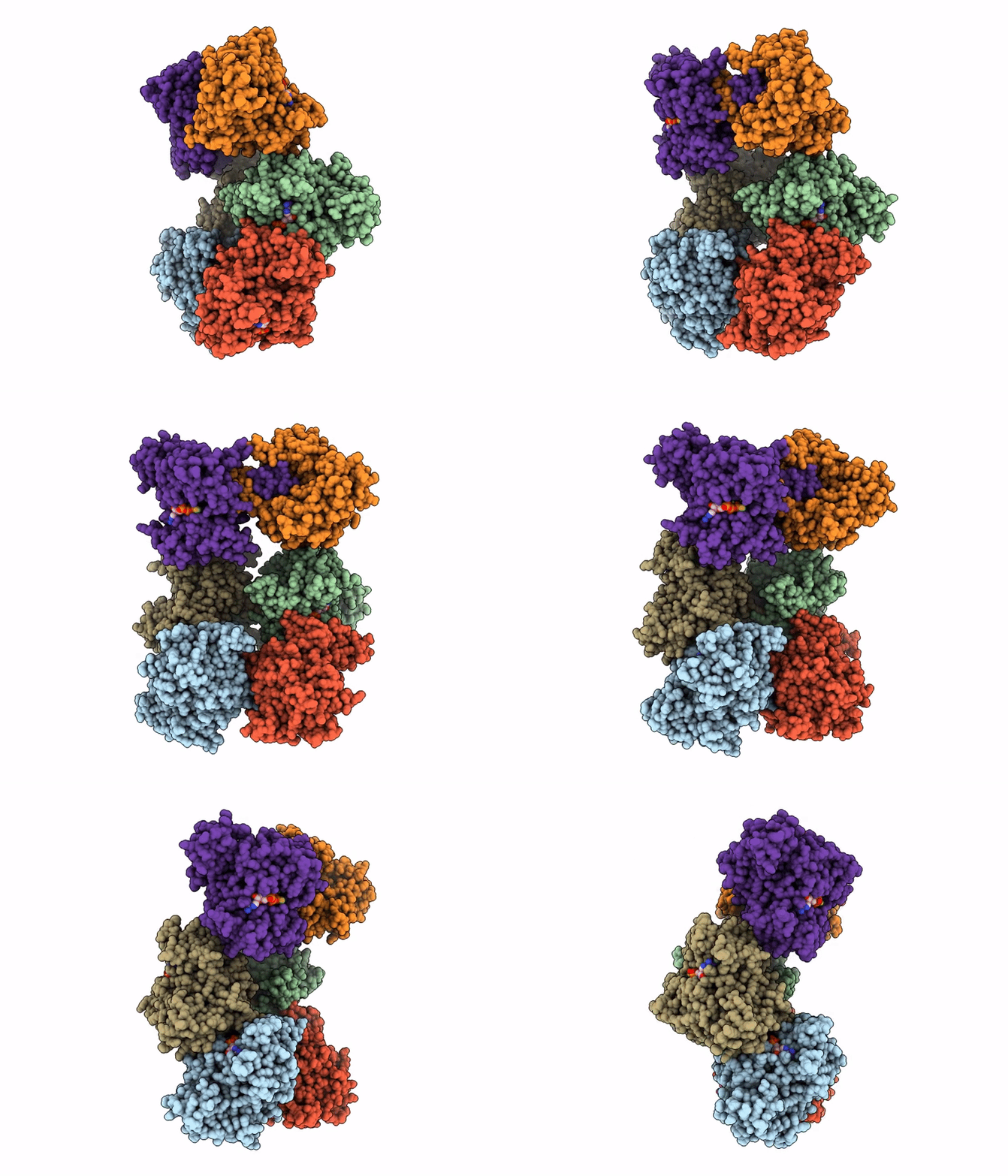
9QUR image
Deposition Date 2025-04-11
Release Date 2026-01-28
Last Version Date 2026-01-28
Entry Detail
PDB ID:
9QUR
Keywords:
Title:
Crystal structure of gamma-Glutamyl-Methylamide Synthetase from Methylovorus mays (MmGmaS) in complex with ATPgS
Biological Source:
Source Organism(s):
Expression System(s):
Method Details:
Experimental Method:
Resolution:
2.65 Å
R-Value Free:
0.25
R-Value Work:
0.22
R-Value Observed:
0.22
Space Group:
C 1 2 1

Macromolecular Entities
Structures with similar UniProt ID
Protein Blast
Polymer Type:polypeptide(L)
Molecule:Glutamate--methylamine ligase
Chain IDs:A, B, C, D, E, F
Chain Length:447
Number of Molecules:6
Biological Source:Methylovorus mays
Primary Citation
Harnessing Photosynthetic ATP for Whole-Cell Biocatalysis in the Cyanobacterium Synechocystis.
Acs Sustain Chem Eng 13 18667 18677 (2025)
PMID: 41199801 DOI: 10.1021/acssuschemeng.5c07236

Abstact

Photosynthetic organisms use sunlight to produce ATP and NADPH powering their metabolism. Harnessing these products for driving biocatalytic reactions would enable development of clean and sustainable alternatives for chemical reactions. In this study, we present the demonstration that ATP produced from the photosynthetic process can fuel a biocatalytic transformation in the whole-cell configuration. This result was achieved by expressing in the cyanobacterium Synechocystis sp. PCC 6803 an ATP-dependent enzyme, the γ-glutamyl-methylamide synthetase from Methylovorus mays No. 9 (MmGMAS). The expressed enzyme was able to drive, in the transgenic strain, the light-driven biosynthesis of l-theanine. Consumption of ATP by the recombinant MmGMAS was even beneficial under strong illumination, protecting the photosynthetic electron transport from photodamage. These findings demonstrate the possibility of using photosynthetic microorganisms like Synechocystis as a potential platform for sunlight driven biotransformations with wide potential biocatalytic applications. In this perspective, we further present the tridimensional structure of MmGMAS, which explains its promiscuous in vivo activity and provides the basis for its rational evolution.

Legend

Protein

Chemical

Disease

Primary Citation of related structures
Feedback Form
Name
Email
Institute
Feedback