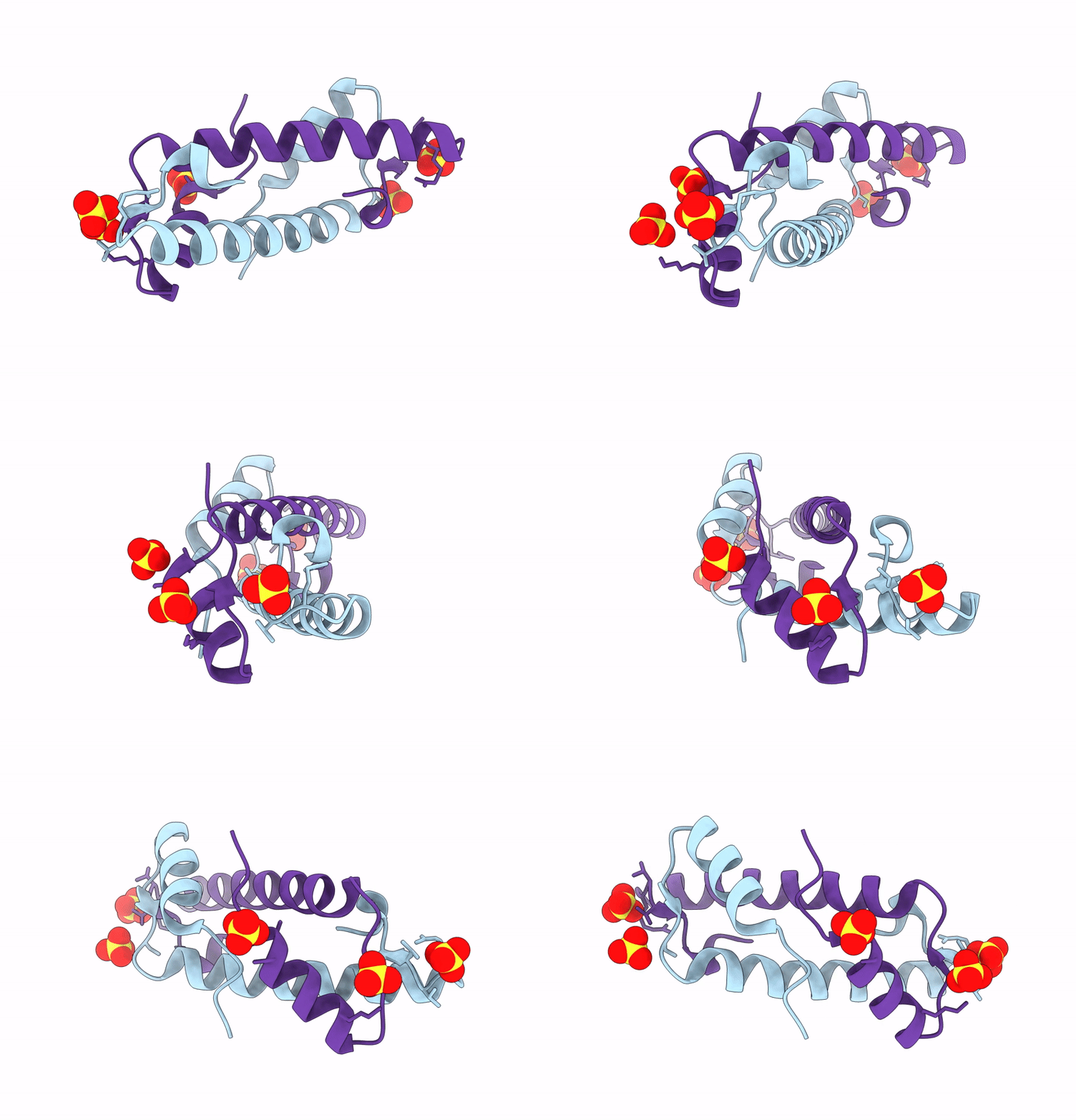
9QT0 image
Deposition Date 2025-04-07
Release Date 2025-12-24
Last Version Date 2025-12-24
Entry Detail
PDB ID:
9QT0
Title:
DNA-binding bacterial histone HLp from Leptospira perolatii
Biological Source:
Source Organism:
Host Organism:
Method Details:
Experimental Method:
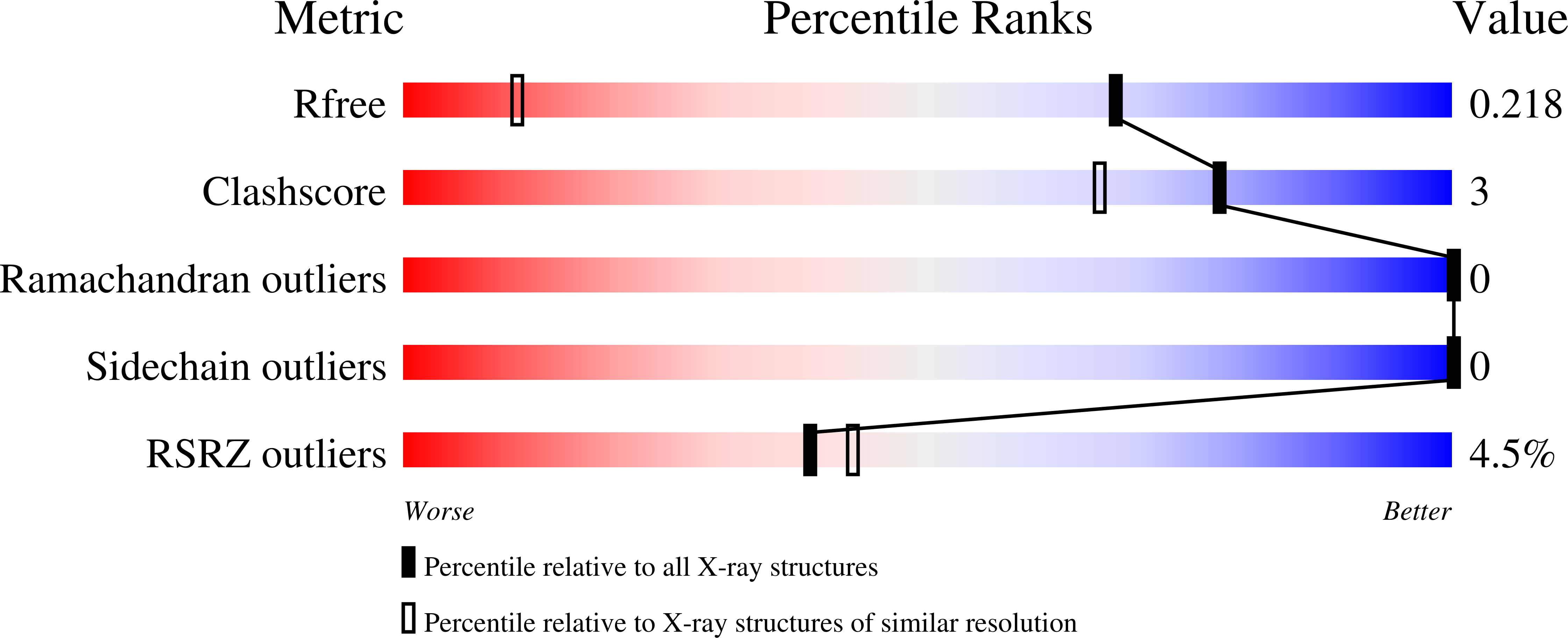
Resolution:
1.30 Å
R-Value Free:
0.21
R-Value Work:
0.17
R-Value Observed:
0.17
Space Group:
P 31 2 1
Macromolecular Entities
Structures with similar UniProt ID
Protein Blast
Polymer Type:polypeptide(L)
Molecule:DUF1931 domain-containing protein
Gene (Uniprot):CH360_07900, CH373_10155
Chain IDs:A, B
Chain Length:65
Number of Molecules:2
Biological Source:Leptospira perolatii
Ligand Molecules
Primary Citation
DNA Wrapping by a tetrameric bacterial histone.
Nat Commun 16 11108 11108 (2025)
PMID: 41381525 DOI: 10.1038/s41467-025-67425-w

Abstact

Histones are conserved DNA-packaging proteins found across all domains of life. In eukaryotes, canonical histones form octamers that wrap ~147 base pairs (bp) of DNA into nucleosomes, while in archaea they form dimers that polymerize into extended hypernucleosomes. Although bacteria were long thought to lack histones, homologs have now been identified in diverse lineages. We previously characterized the histone HBb from Bdellovibrio bacteriovorus, which binds and bends DNA as a dimer. Here, we describe HLp from Leptospira perolatii and show by crystallographic and biophysical analyses that, unlike HBb, it forms stable tetramers and binds DNA nonspecifically, wrapping ~60 bp of DNA around its core. Molecular dynamics simulations, DNA-binding assays, and heterologous expression in Escherichia coli, where HLp reorganizes the nucleoid, support a role in bacterial chromatin organization. These findings expand the repertoire of bacterial histone-DNA interactions and highlight the diversity of histone-based genome organization across the tree of life.

Legend

Protein

Chemical

Disease

Primary Citation of related structures
Feedback Form
Name
Email
Institute
Feedback