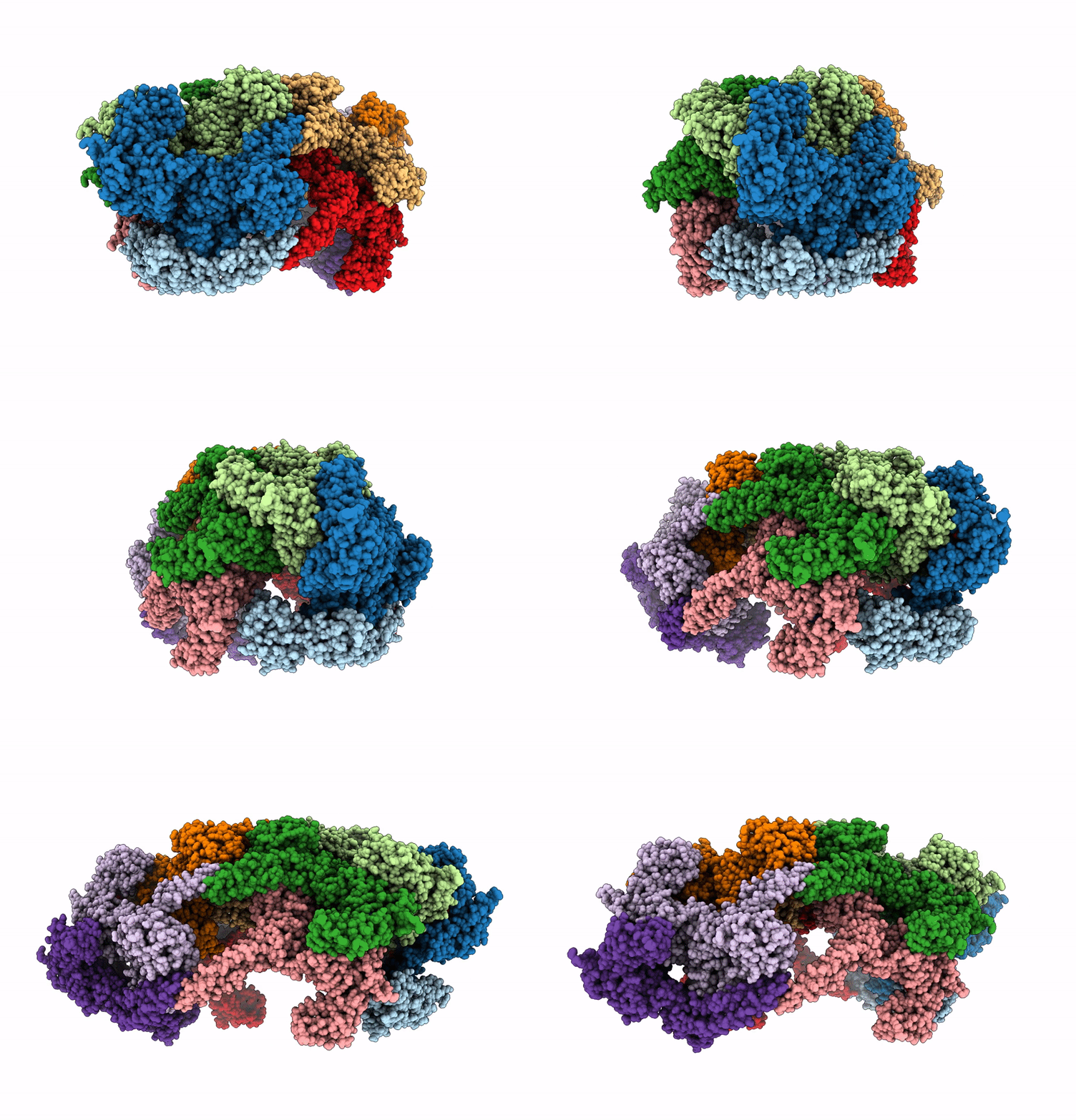
9QQR image
Deposition Date 2025-04-02
Release Date 2025-07-30
Last Version Date 2025-11-12
Entry Detail
PDB ID:
9QQR
Keywords:
Title:
S.aureus ClpC decameric resting state
Biological Source:
Source Organism:
Host Organism:
Method Details:
Experimental Method:
Resolution:
4.70 Å
Aggregation State:
PARTICLE
Reconstruction Method:
SINGLE PARTICLE
Macromolecular Entities
Structures with similar UniProt ID
Protein Blast
Polymer Type:polypeptide(L)
Molecule:ATP-dependent Clp protease ATP-binding subunit ClpC
Gene (Uniprot):clpC
Chain IDs:A (auth: F), B (auth: G), C (auth: H), D (auth: I), E (auth: J), F (auth: E), G (auth: D), H (auth: C), I (auth: B), J (auth: A)
Chain Length:818
Number of Molecules:10
Biological Source:Staphylococcus aureus
Primary Citation
Allosteric control of the bacterial ClpC/ClpP protease and its hijacking by antibacterial peptides.
Embo J. 44 6273 6296 (2025)
PMID: 41023306 DOI: 10.1038/s44318-025-00575-1

Abstact

The hexameric AAA+ protein ClpC, combined with peptidase ClpP, forms a critical ATP-dependent protease in bacteria, essential for virulence. ClpC is usually repressed in an inactive resting state, where two ClpC spirals interact via coiled-coil M-domains. Antibacterial peptides and partner proteins trigger ClpC activation by binding to its N-terminal domain (NTD). This study reveals that the NTD stabilizes the resting state through multiple anchoring points to M-domains and ATPase domains. The same NTD sites also serve as binding sites for adaptor proteins and substrates carrying phosphorylated arginines (pArg), disrupting resting state interactions and promoting active ClpC hexamer formation. This coupling ensures that ClpC activation aligns with substrate and partner protein availability. Toxic peptides exploit this regulatory mechanism, leading to continuous ClpC activation and harmful, uncontrolled proteolysis. These findings highlight the dual role of the NTD in maintaining resting state stability and mediating activation, emphasizing its critical role in bacterial protease regulation and its potential as a drug target.

Legend

Protein

Chemical

Disease

Primary Citation of related structures
Feedback Form
Name
Email
Institute
Feedback