9QPZ image
Deposition Date 2025-03-31
Release Date 2025-07-23
Last Version Date 2025-08-06
Entry Detail
PDB ID:
9QPZ
Keywords:
Title:
KRAS-WT(1-169) - GDP IN COMPLEX WITH compound (R)-1
Biological Source:
Source Organism:
Homo sapiens (Taxon ID: 9606)
Host Organism:
Method Details:
Experimental Method:
Resolution:
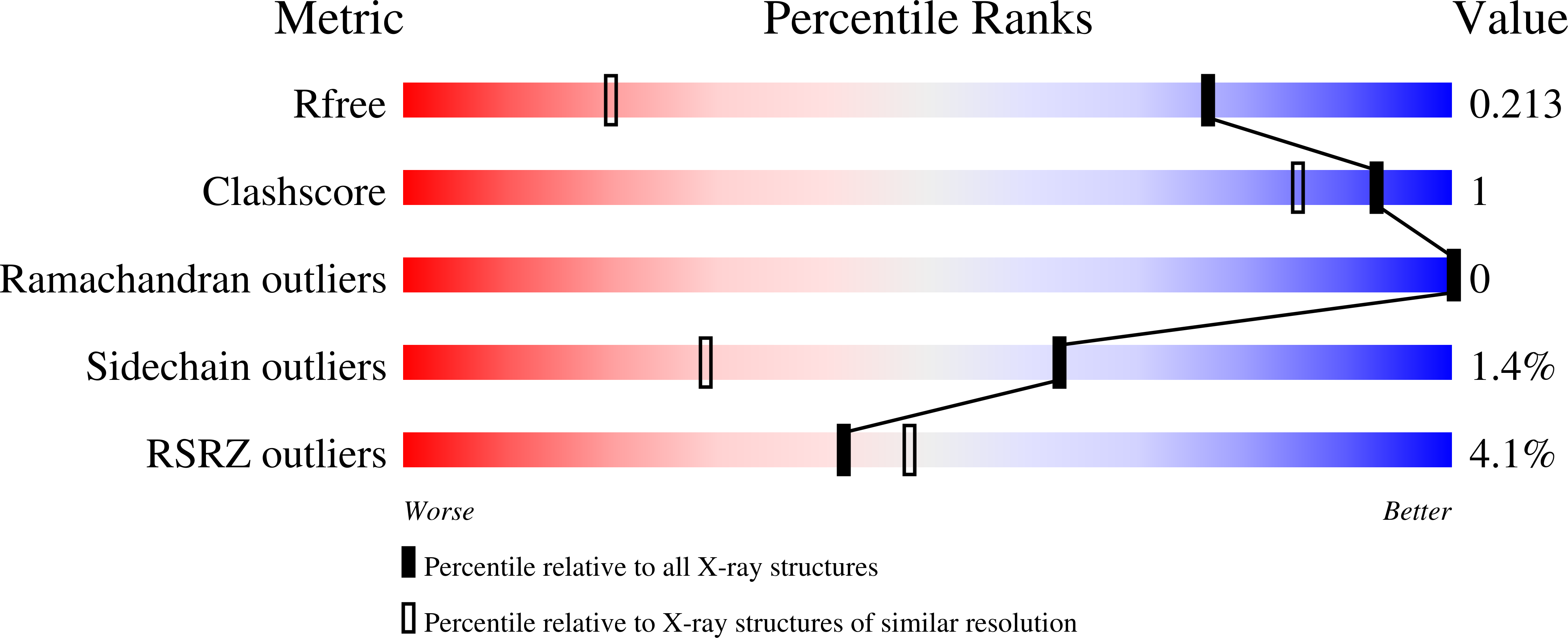
1.31 Å
R-Value Free:
0.21
R-Value Work:
0.19
R-Value Observed:
0.19
Space Group:
P 21 21 21
Macromolecular Entities
Structures with similar UniProt ID
Protein Blast
Polymer Type:polypeptide(L)
Molecule:Isoform 2B of GTPase KRas
Gene (Uniprot):KRAS
Chain IDs:A
Chain Length:170
Number of Molecules:1
Biological Source:Homo sapiens
Primary Citation

Abstact

The clinical success of covalent KRASG12C inhibition prompts further expansion of the concept to target non-cysteine oncogenic mutation sites as in KRASG12D. This endeavor was hampered by the lack of suitable electrophiles for the selective, covalent engagement of aspartate. Thanks to the recent discovery of β-lactone-bearing covalent inhibitors, new opportunities are emerging. Based on X-ray crystallographic insights and quantum chemical calculations, we herein describe the elucidation of structure-activity and -stability correlations to advance such electrophiles for drug discovery. Guided by predictions of transition state barrier heights for the attack of aspartate 12 at the β-lactone electrophile and structure-based design, we generated substituted β-lactones aiming to balance specific reactivity and chemical and metabolic stability. Our optimization strategy is driven by MS-based and cellular covalent target occupancy assays and PD marker analysis, proteome-wide profiling, and synthetic chemistry. With this work, we aim to expand the use of β-lactones as chemoselective electrophiles in medicinal chemistry.

Legend

Protein

Chemical

Disease

Primary Citation of related structures
Feedback Form
Name
Email
Institute
Feedback