9QPB image
Deposition Date 2025-03-26
Release Date 2026-02-11
Last Version Date 2026-02-11
Entry Detail
PDB ID:
9QPB
Keywords:
Title:
APH(2'')-IVa with an inhibitor
Biological Source:
Source Organism(s):
Expression System(s):
Method Details:
Experimental Method:
Resolution:
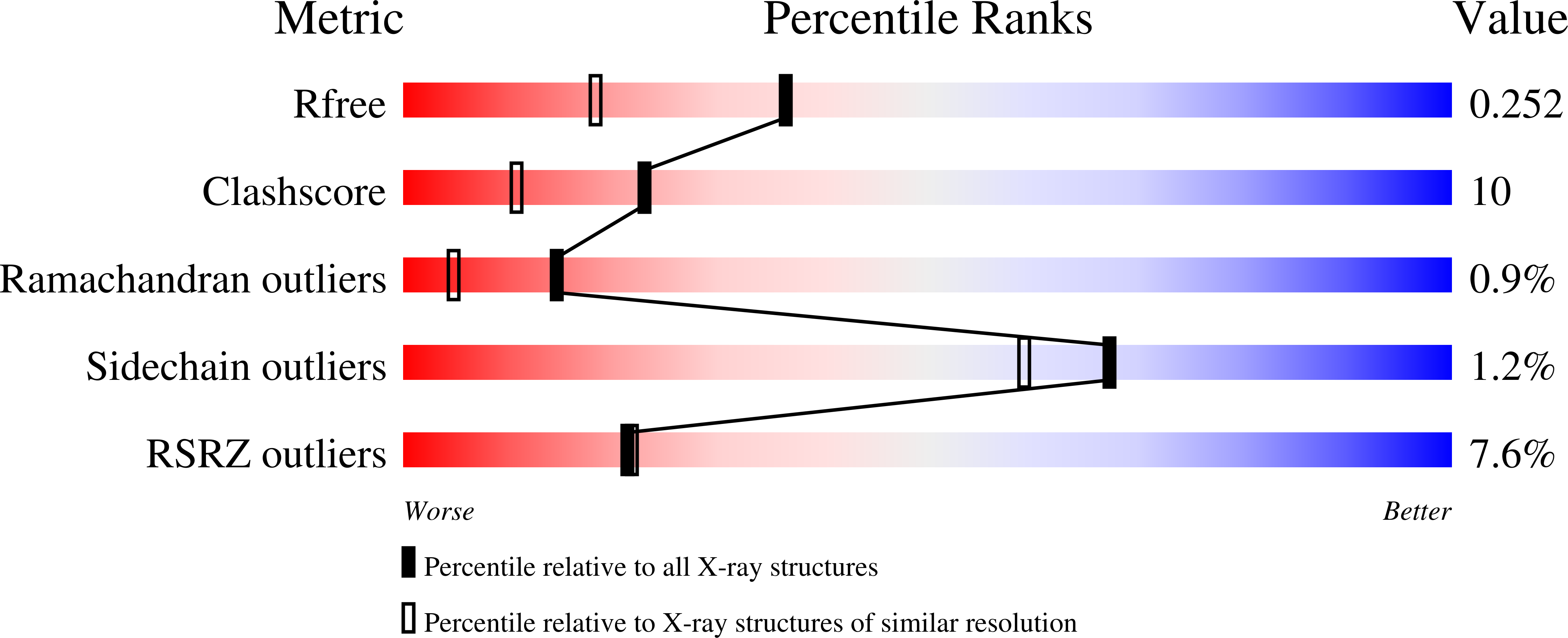
1.86 Å
R-Value Free:
0.25
R-Value Work:
0.21
R-Value Observed:
0.21
Space Group:
P 1 21 1
Macromolecular Entities
Structures with similar UniProt ID
Protein Blast
Polymer Type:polypeptide(L)
Molecule:APH(2'')-Id
Gene (Uniprot):aph(2'')-Id
Chain IDs:A (auth: B), B (auth: A)
Chain Length:321
Number of Molecules:2
Biological Source:Enterococcus casseliflavus
Primary Citation
Fragment-based drug design of a bacterial kinase inhibitor capable of increasing the antibiotic sensitivity of clinical isolates.
Commun Chem 8 417 417 (2025)
PMID: 41310159 DOI: 10.1038/s42004-025-01795-6

Abstact

According to the World Health Organization (WHO), antimicrobial resistance is a serious global health issue. Overcoming antibiotic resistance involves several strategies, including the inhibition of resistance mechanisms. Among the various resistance mechanisms, aminoglycoside phosphotransferases (APHs) catalyze the transfer of the γ-phosphate from a nucleotide donor to various aminoglycosides, leading to their inactivation. In this work, using a fragment-based drug design (FBDD) approach, we have identified and characterized a promising APH inhibitor capable of increasing the sensitivity of Pseudomonas aeruginosa and Staphylococcus aureus resistant to aminoglycosides. It is therefore a good candidate for the future development of APH inhibitors to be prescribed in combination with aminoglycosides. This molecule is a competitive inhibitor of adenosine 5'-triphosphate (ATP), the phosphate donor of APHs. Further studies are required to optimize this molecule to improve its specificity for APHs and its bioavailability in bacteria.

Legend

Protein

Chemical

Disease

Primary Citation of related structures
Feedback Form
Name
Email
Institute
Feedback