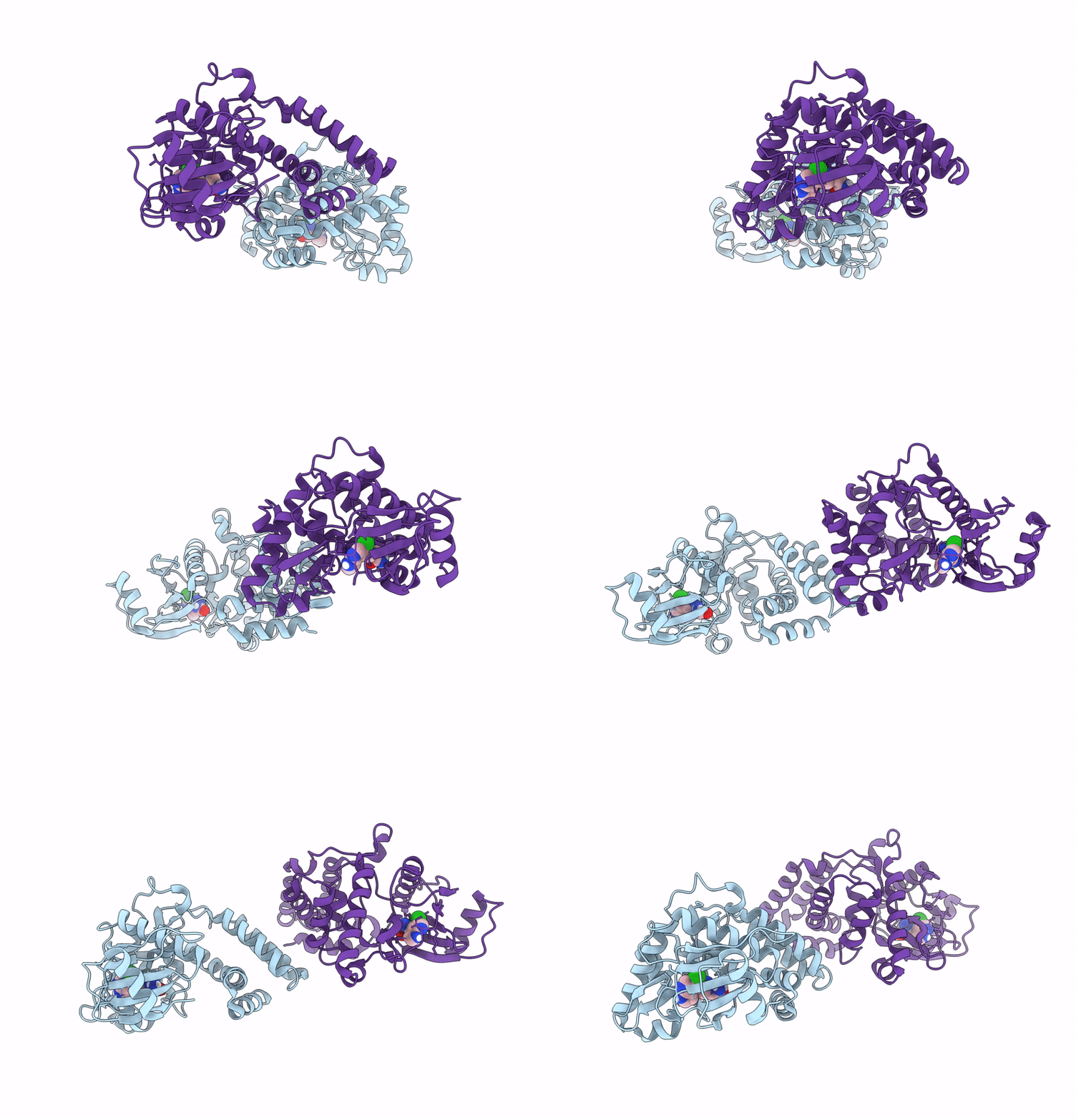
9QOW image
Deposition Date 2025-03-26
Release Date 2025-11-19
Last Version Date 2026-02-11
Entry Detail
PDB ID:
9QOW
Keywords:
Title:
APH(2'')-IVa with an inhibitor
Biological Source:
Source Organism(s):
Expression System(s):
Method Details:
Experimental Method:
Resolution:
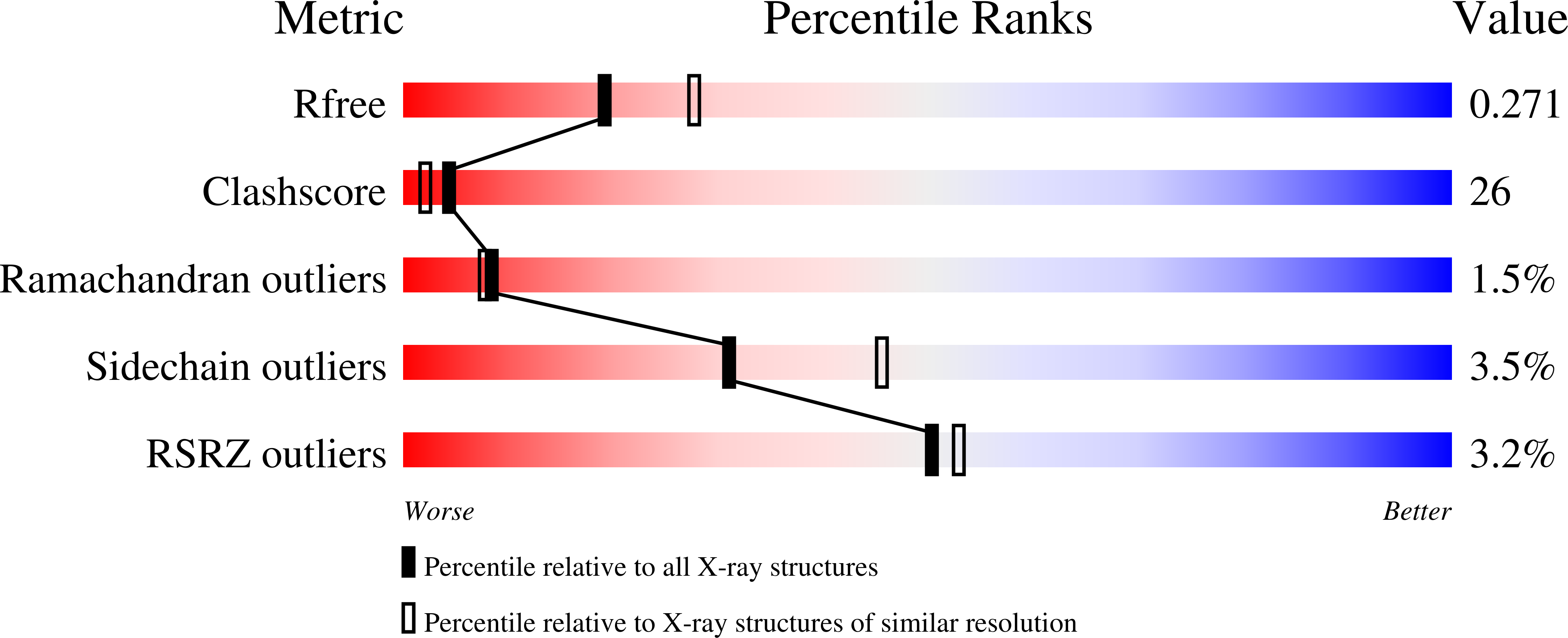
2.45 Å
R-Value Free:
0.27
R-Value Work:
0.21
R-Value Observed:
0.21
Space Group:
P 1 21 1
Macromolecular Entities
Structures with similar UniProt ID
Protein Blast
Polymer Type:polypeptide(L)
Molecule:APH(2'')-Id
Gene (Uniprot):aph(2'')-Id
Chain IDs:A (auth: B), B (auth: A)
Chain Length:321
Number of Molecules:2
Biological Source:Enterococcus casseliflavus
Primary Citation
Targeting bacterial kinases as a strategy to counteract antibiotic resistance.
Commun Chem 8 390 390 (2025)
PMID: 41345223 DOI: 10.1038/s42004-025-01794-7

Abstact

Antibiotic resistance is rapidly emerging as one of the most critical health threats, with resistant microorganisms progressively diminishing the effectiveness of established antibiotics. As a result, the development of therapeutic approaches that effectively target resistant pathogens is of utmost importance. In this study, we developed inhibitors for APH(2")-IVa, a bacterial kinase conveying resistance to aminoglycoside antibiotics. Starting from a hit of a fragment-based screening, we explored the inhibitory motif by structure-based design, ultimately leading to a series of triazole analogues. Advanced analogues displayed promising ADME properties, emerging selectivity vs a panel of human kinases, permeability in both Gram-positive and Gram-negative bacteria, and a moderate antibiotic efficacy for clinical strains of P. aeruginosa. Taken together, our results suggest inhibition of bacterial kinases could be a promising option to reinstall the efficacy of aminoglycoside antibiotics.

Legend

Protein

Chemical

Disease

Primary Citation of related structures
Feedback Form
Name
Email
Institute
Feedback