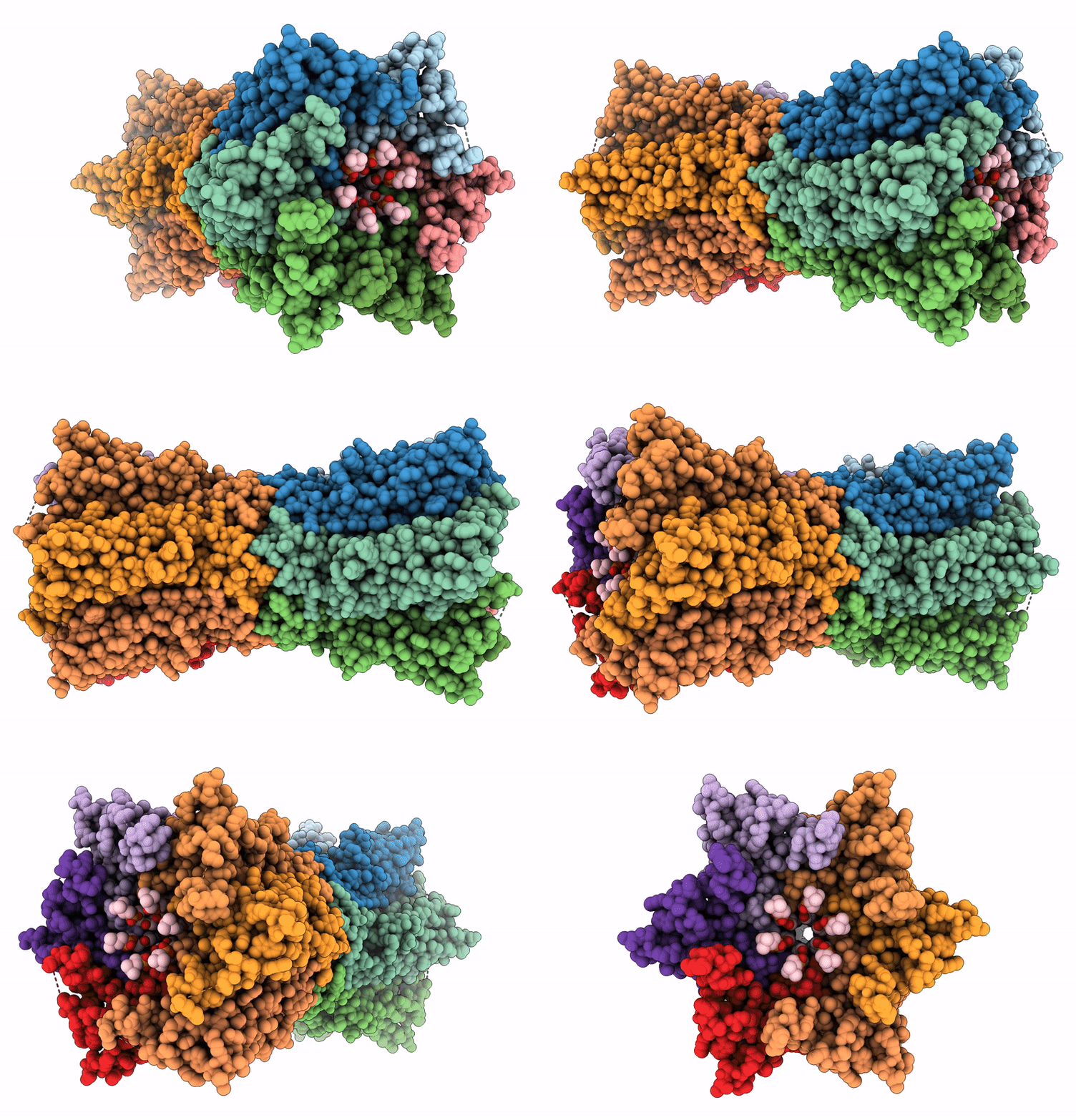
9QNF image
Deposition Date 2025-03-25
Release Date 2025-12-17
Last Version Date 2026-01-21
Entry Detail
PDB ID:
9QNF
Title:
Connexin-32 (Cx32) in MSP2N2 nanodiscs with POPC
Biological Source:
Source Organism(s):
Homo sapiens (Taxon ID: 9606)
Expression System(s):
Method Details:
Experimental Method:
Resolution:
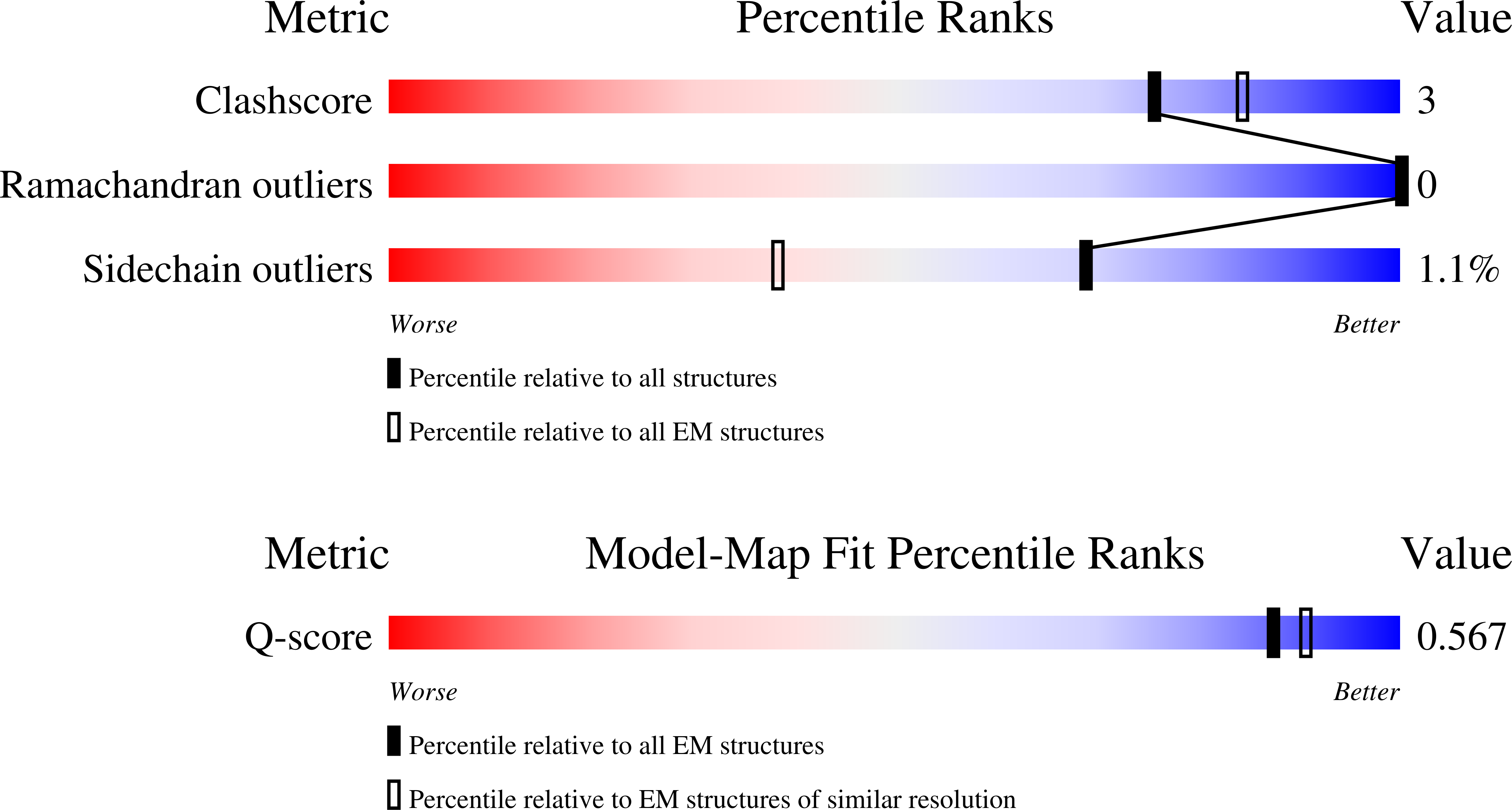
3.16 Å
Aggregation State:
PARTICLE
Reconstruction Method:
SINGLE PARTICLE
Macromolecular Entities
Protein Blast
Polymer Type:polypeptide(L)
Molecule:Gap junction beta-1 protein,Green fluorescent protein
Gene (Uniprot):GJB1, GFP
Chain IDs:A, B, C, D, E, F, G, H, I, J, K, L
Chain Length:566
Number of Molecules:12
Biological Source:Homo sapiens
Primary Citation
Lipid dependence of connexin-32 gap junction channel conformations.
Nat Commun 17 316 316 (2025)
PMID: 41350533 DOI: 10.1038/s41467-025-67004-z

Abstact

Connexin-32 (Cx32) gap junction channels (GJCs) mediate intercellular coupling in various tissues, including myelinating Schwann cells. Mutations in Cx32, such as W3S, are associated with X-linked Charcot-Marie-Tooth (CMT1X) disease. Lipids regulate Cx32 GJC permeation, although the regulatory mechanism is unclear. Here, we determine the cryo-EM structures of Cx32 GJCs reconstituted in nanodiscs, revealing that phospholipids block the Cx32 GJC pore by binding to the site formed by N-terminal gating helices. The phospholipid-bound state is contingent on the presence of a sterol molecule in a hydrophobic pocket formed by the N-terminus: the N-terminal helix of Cx32 fails to sustain a phospholipid binding site in the absence of cholesterol hemisuccinate. The CMT1X-linked W3S mutant which has an impaired sterol binding site adopts a conformation of the N-terminus incompatible with phospholipid binding. Our results indicate that different lipid species control connexin channel gating directly by influencing the conformation of the N-terminal gating helix.

Legend

Protein

Chemical

Disease

Primary Citation of related structures
Feedback Form
Name
Email
Institute
Feedback