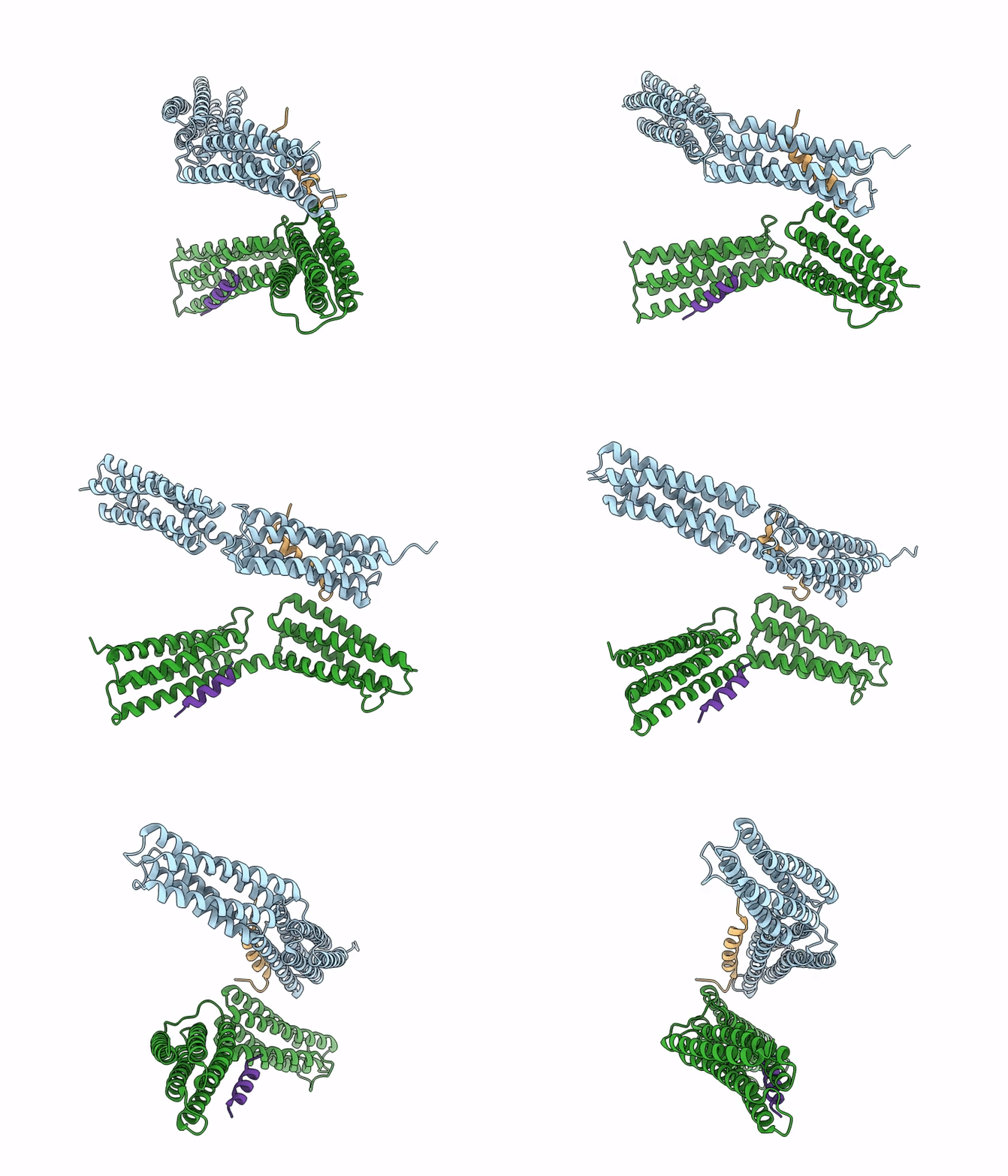
9QN7 image
Deposition Date 2025-03-24
Release Date 2025-10-08
Last Version Date 2025-12-03
Entry Detail
PDB ID:
9QN7
Keywords:
Title:
Structure of talin in complex with a peptide fragment
Biological Source:
Source Organism(s):
Mus musculus (Taxon ID: 10090)
Homo sapiens (Taxon ID: 9606)
Expression System(s):
Method Details:
Experimental Method:
Resolution:
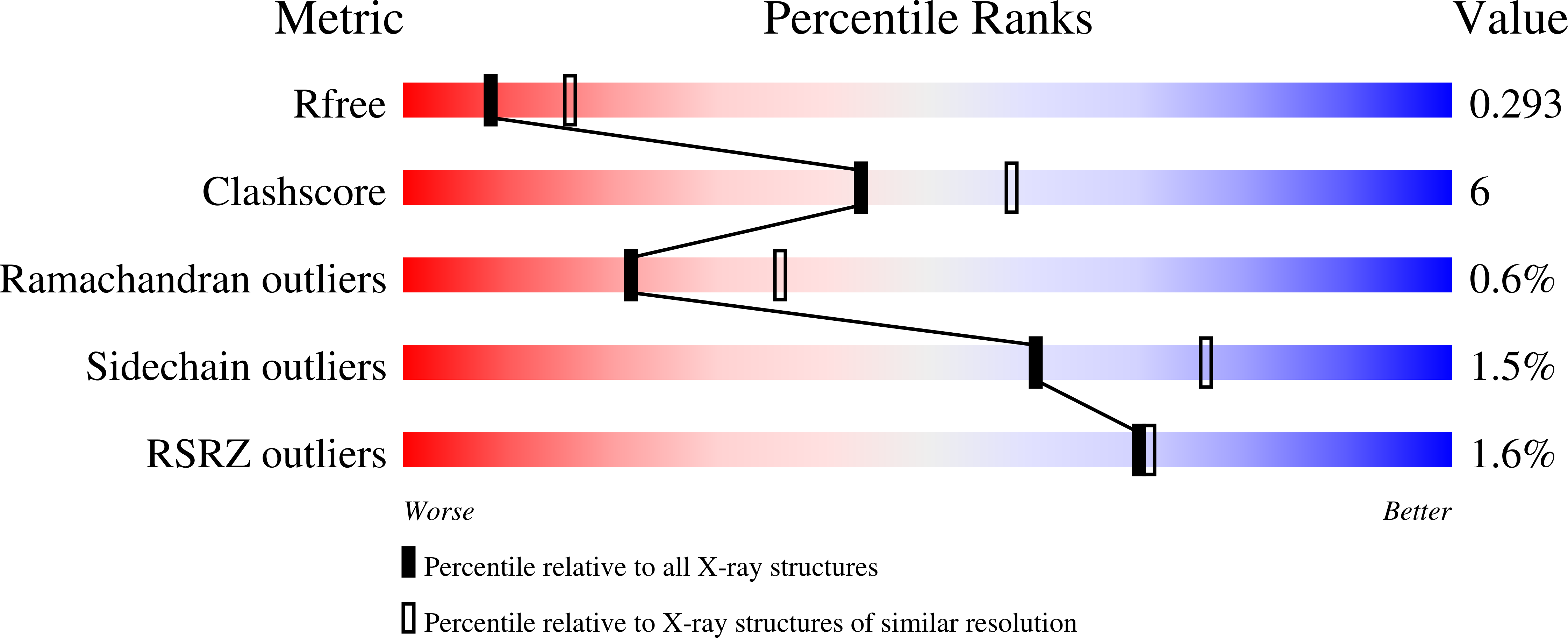
2.76 Å
R-Value Free:
0.29
R-Value Work:
0.25
R-Value Observed:
0.25
Space Group:
P 43 21 2
Macromolecular Entities
Structures with similar UniProt ID
Protein Blast
Polymer Type:polypeptide(L)
Molecule:Talin-1
Gene (Uniprot):Tln1
Chain IDs:A, B
Chain Length:330
Number of Molecules:2
Biological Source:Mus musculus
Structures with similar UniProt ID
Protein Blast
Polymer Type:polypeptide(L)
Molecule:Tensin-3
Gene (Uniprot):TNS3
Chain IDs:C, D
Chain Length:27
Number of Molecules:2
Biological Source:Homo sapiens
Primary Citation
Talin-tensin3 interactions regulate fibrillar adhesion formation and tensin3 phase separation.
J.Cell Biol. 225 ? ? (2026)
PMID: 41269158 DOI: 10.1083/jcb.202503155

Abstact

Integrin-mediated cell-matrix adhesions regulate communication between cells and the extracellular matrix. In matrix-secreting cells, fibrillar adhesions (FBs) containing high levels of α5β1 integrins and the tensin3 adaptor protein are essential for fibronectin (FN) fibrillogenesis. Here, we demonstrate that tensin3 binds to four helical regions (R3, R4, R8, and R11) of talin, the principal integrin activator. Structural analysis revealed the residues critical for the tensin3-talin interaction, and mutational analysis showed that talin R8 and R11 are essential for FB formation and FN fibrillogenesis. Cellular experiments demonstrate that tensin3 binding to talin not only regulates integrin activation, but also modulates tensin3's propensity to undergo liquid-liquid phase separation (LLPS). Formation of such LLPS condensates increased when cells were plated on soft substrates compared with stiff ones. This effect was abolished by blocking the interaction between tensin3 and talin. Our data suggest a model in which LLPS condensates provide a signaling platform involved in cellular responses to sudden changes in tissue mechanics.

Legend

Protein

Chemical

Disease

Primary Citation of related structures
Feedback Form
Name
Email
Institute
Feedback