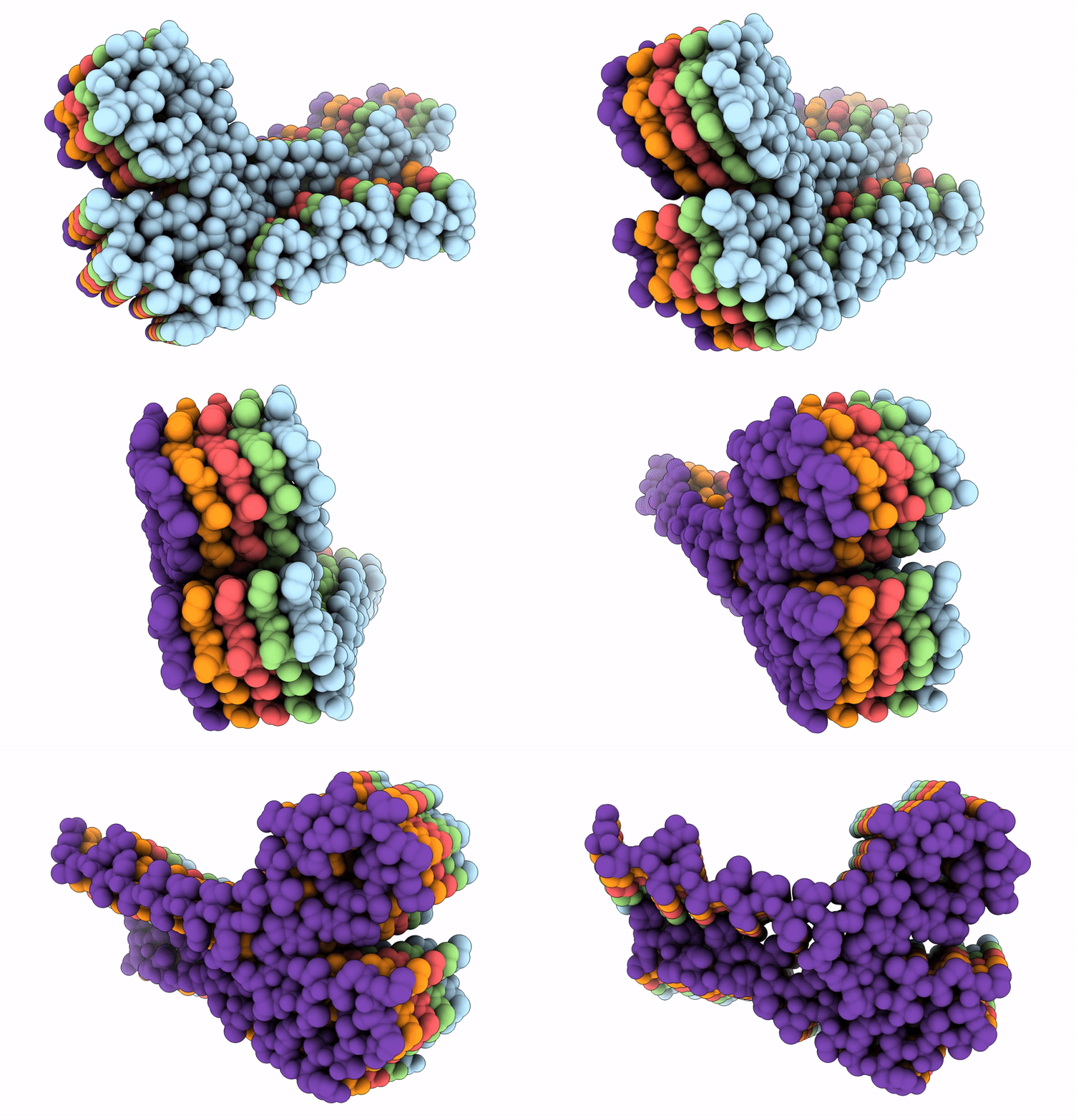
9QLU image
Deposition Date 2025-03-21
Release Date 2025-05-14
Last Version Date 2025-11-26
Entry Detail
PDB ID:
9QLU
Keywords:
Title:
Amyloid structure of 17kDa alpha-amylase/trypsin inhibitor 2 (Uniprot ID: AI172_ORYSJ)
Biological Source:
Source Organism:
Method Details:
Experimental Method:
Resolution:
2.54 Å
Aggregation State:
FILAMENT
Reconstruction Method:
HELICAL
Macromolecular Entities
Structures with similar UniProt ID
Protein Blast
Polymer Type:polypeptide(L)
Molecule:17kDa alpha-amylase/trypsin inhibitor 2
Gene (Uniprot):OJ1080_F08.106, OJ1779_B07.133, OsJ_23556
Chain IDs:A, B, C, D, E
Chain Length:159
Number of Molecules:5
Biological Source:Oryza sativa Japonica Group
Ligand Molecules
Primary Citation
Impurities in amyloid studies: The power of automated model building within a cautionary tale for structural biologists.
Protein Sci. 34 e70353 e70353 (2025)
PMID: 41123416 DOI: 10.1002/pro.70353

Abstact

The purity of protein samples of biological origin is often difficult to ascertain, leading the naïve or optimistic scientist to underestimate contaminants in their research. Even after extensive purification, protein samples can contain nucleic acids, truncated degradation products, or other protein contaminants. While in many cases, and when present at low concentrations, such contaminants are unlikely to alter experimental results significantly, they must be considered when studying protein aggregation. Such reactions can be sensitive to small environmental changes in their early stages due to a nucleation-dependent mechanism, where minor differences can be amplified during the subsequent exponential growth phase. During a recent study of the amyloid formation of human lysozyme, we encountered a significant amyloid-forming protein contaminant derived from the expression host Oryza sativa japonica. Further investigation of this widely used commercial source of human lysozyme revealed at least a dozen protein contaminants. These discoveries led to intriguing observations, including an underdeveloped branch of plant amyloid research and a possible link between the amyloid fold and allergens. Here, we present our findings within a cautionary tale for structural biologists: a surprising variety of contaminants in a commercial protein sample and the accidental yet definitive identification of one of them by cryo-electron microscopy helical reconstruction. The resulting 2.54 Å model of the 17 kDa alpha-amylase/trypsin inhibitor Type 2 marks the first known amyloid structure of a plant protein.

Legend

Protein

Chemical

Disease

Primary Citation of related structures
Feedback Form
Name
Email
Institute
Feedback