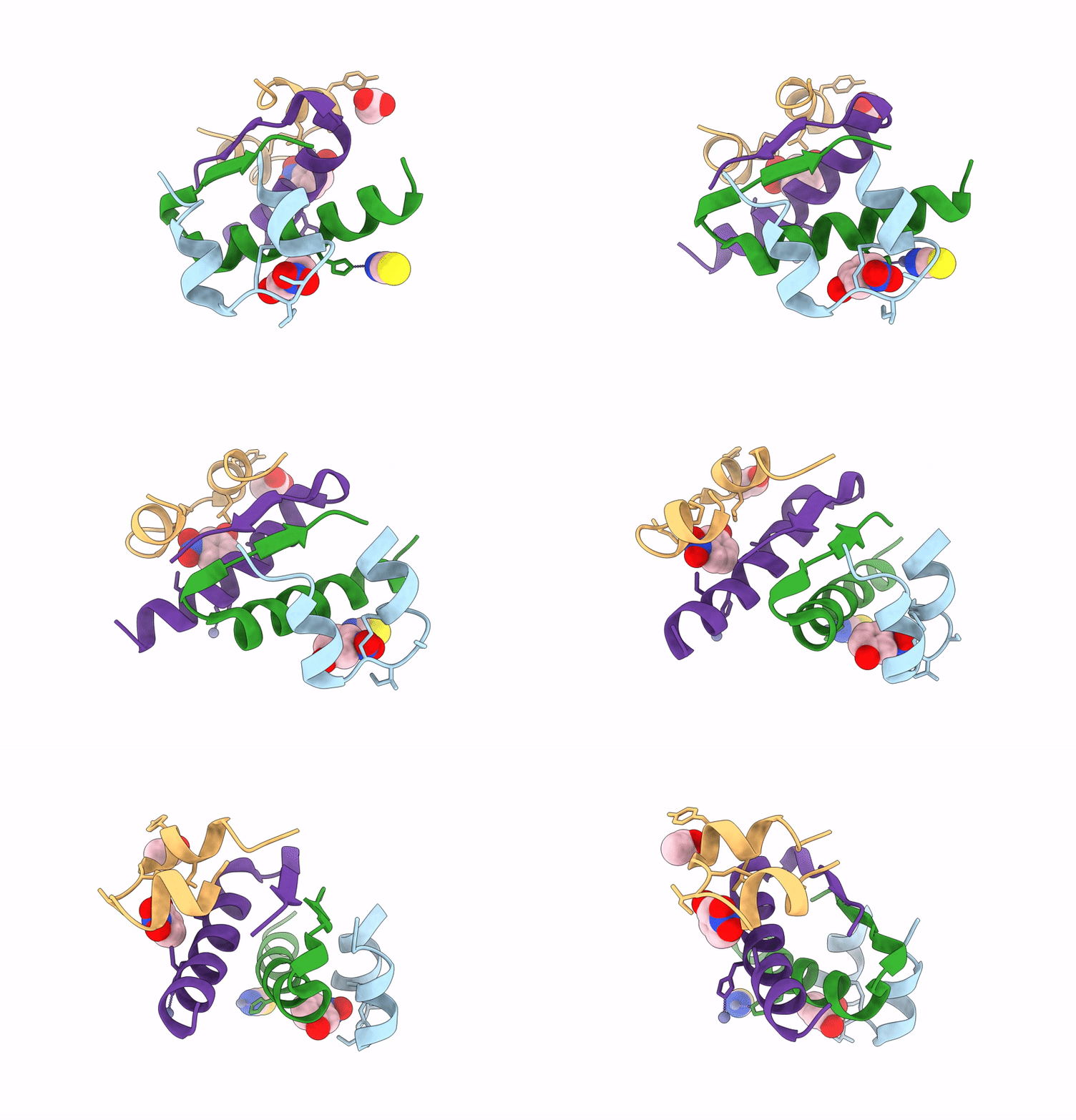
9QLD image
Deposition Date 2025-03-20
Release Date 2025-10-29
Last Version Date 2026-01-28
Entry Detail
PDB ID:
9QLD
Keywords:
Title:
Rhombohedral crystalline form of human insulin complexed with m-nitrophenol
Biological Source:
Source Organism(s):
Homo sapiens (Taxon ID: 9606)
Expression System(s):
Method Details:
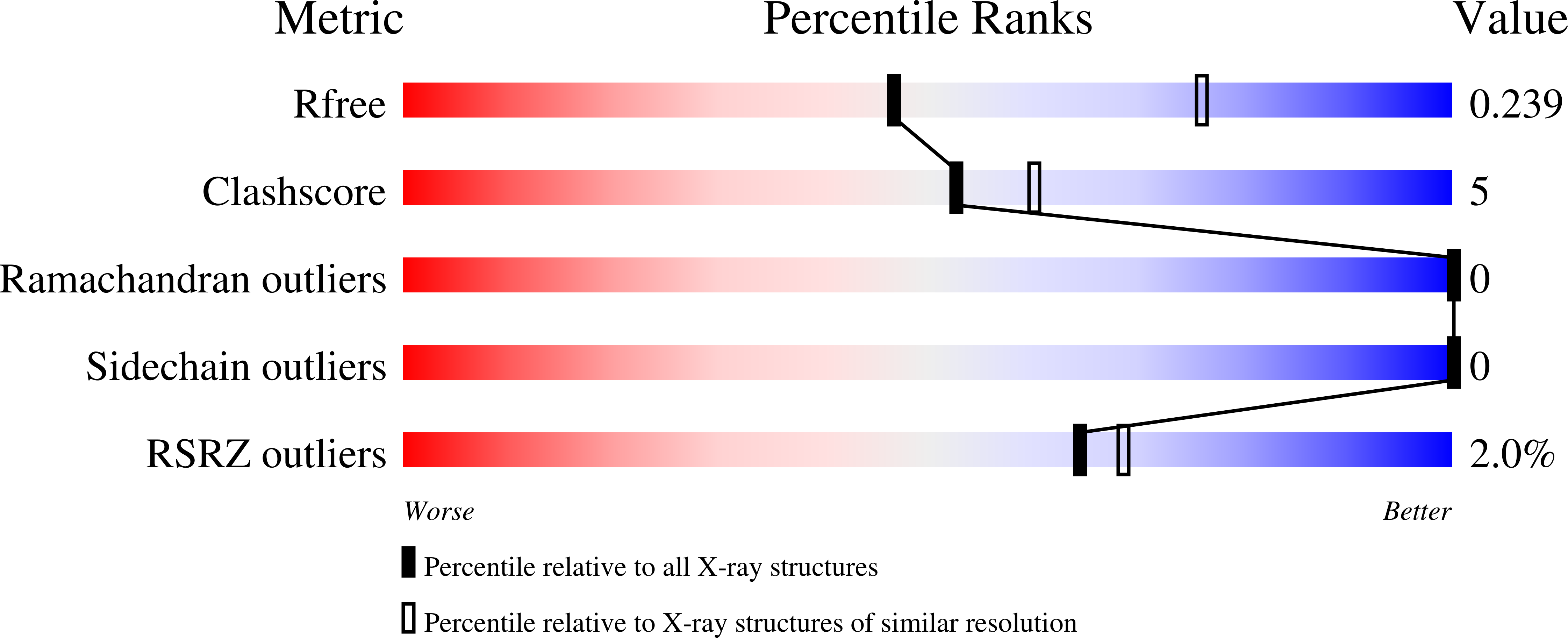
Experimental Method:
Resolution:
2.55 Å
R-Value Free:
0.24
R-Value Work:
0.19
R-Value Observed:
0.19
Space Group:
H 3
Macromolecular Entities
Structures with similar UniProt ID
Protein Blast
Polymer Type:polypeptide(L)
Molecule:Insulin A chain
Gene (Uniprot):INS
Chain IDs:A, C
Chain Length:21
Number of Molecules:2
Biological Source:Homo sapiens
Structures with similar UniProt ID
Protein Blast
Polymer Type:polypeptide(L)
Molecule:Insulin B chain
Gene (Uniprot):INS
Chain IDs:B, D
Chain Length:30
Number of Molecules:2
Biological Source:Homo sapiens
Primary Citation
Exploring humidity effects on polycrystalline human insulin-ligand complexes: preliminary crystallographic insights.
J.Appl.Crystallogr. 58 1920 1935 (2025)
PMID: 41551492 DOI: 10.1107/S1600576725007484

Abstact

This study investigates the effect of relative humidity (RH) on the crystal structures of human insulin (HI) complexes with organic ligands, m-cresol and m-nitro-phenol, using in situX-ray powder diffraction (XRPD) with a controlled-humidity chamber. Co-crystallization at pH 7.5 produced hexagonal microcrystals (space group R3) for both protein-ligand complexes. The corresponding single-crystal X-ray diffraction structures were solved: HI-m-cresol (PDB entry 9ibb, 1.84 Å) and HI-m-nitro-phenol (PDB entry 9qld, 2.55 Å). Pawley analysis of the in situ XRPD data revealed structural stability up to 70% RH, with no phase transitions observed. At lower humidity levels, reduced diffraction intensities indicated loss of crystallinity, which was fully restored upon rehydration to 95% RH. Notably, each complex exhibited distinct changes in unit-cell parameters during dehydration-rehydration cycles. These results highlight the critical role of controlling environmental factors in structure-based drug design and pharmaceutical manufacturing, and demonstrate how organic ligands can enhance the stability of protein crystals, offering valuable insights for pharmaceutical development.

Legend

Protein

Chemical

Disease

Primary Citation of related structures
Feedback Form
Name
Email
Institute
Feedback