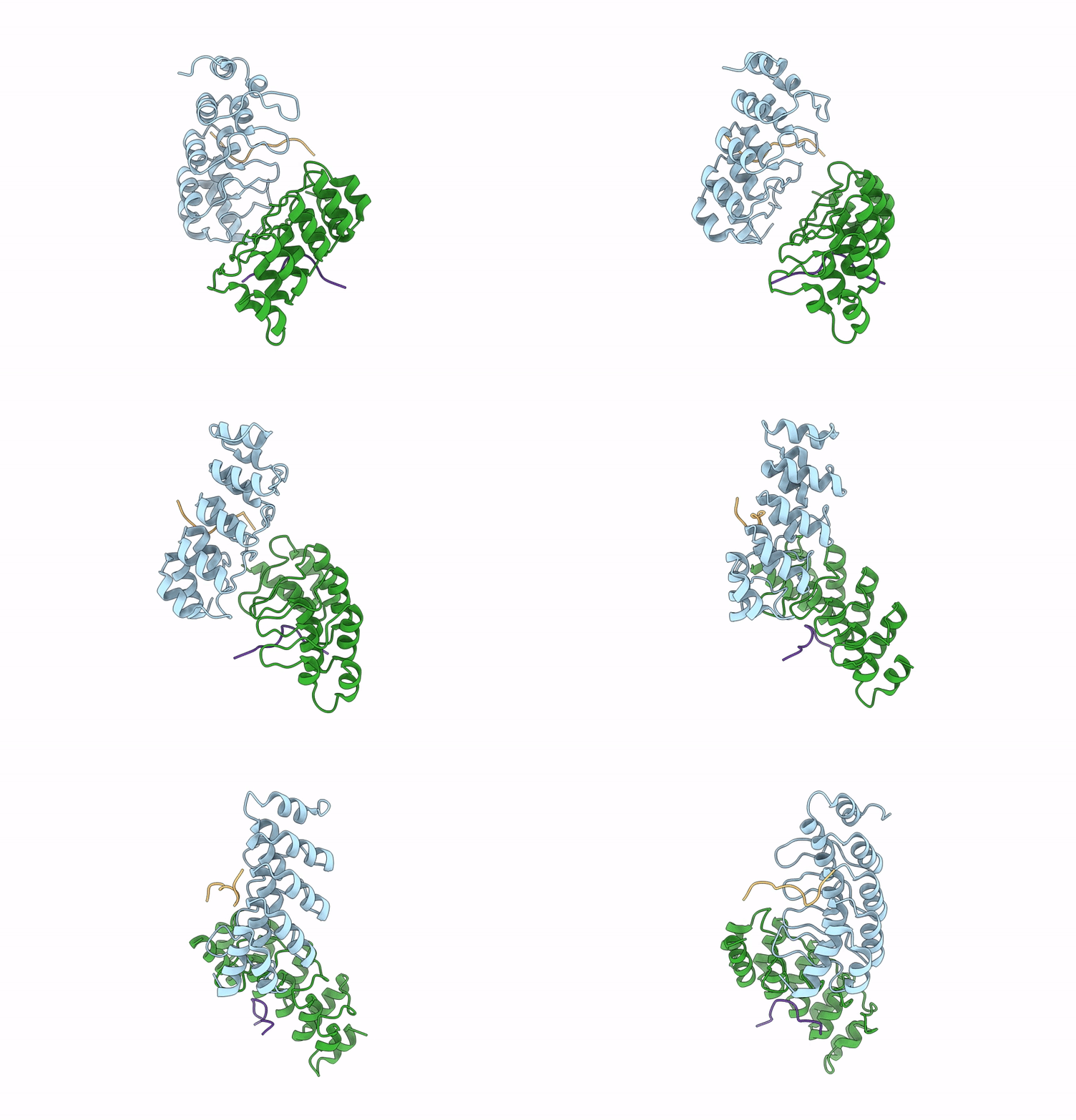
9QJZ image
Deposition Date 2025-03-19
Release Date 2025-11-05
Last Version Date 2025-11-05
Entry Detail
PDB ID:
9QJZ
Title:
Crystal structure of ARC4 from human Tankyrase 2 in complex with phosphorylated peptide from human MDC1
Biological Source:
Source Organism:
Homo sapiens (Taxon ID: 9606)
Host Organism:
Method Details:
Experimental Method:
Resolution:
2.31 Å
R-Value Free:
0.22
R-Value Work:
0.18
R-Value Observed:
0.18
Space Group:
P 65

Macromolecular Entities
Structures with similar UniProt ID
Protein Blast
Polymer Type:polypeptide(L)
Molecule:Poly [ADP-ribose] polymerase tankyrase-2
Gene (Uniprot):TNKS2
Chain IDs:A, B
Chain Length:167
Number of Molecules:2
Biological Source:Homo sapiens
Structures with similar UniProt ID
Protein Blast
Polymer Type:polypeptide(L)
Molecule:Mediator of DNA damage checkpoint protein 1
Gene (Uniprot):MDC1
Chain IDs:C, D
Chain Length:16
Number of Molecules:2
Biological Source:Homo sapiens
Modified Residue
Compound ID Chain ID Parent Comp ID Details 2D Image
SEP C SER modified residue
Primary Citation
Phosphorylation as a candidate regulatory mechanism for effector recruitment to tankyrase.
R Soc Open Sci. 12 250824 250824 (2025)
PMID: 41103766 DOI: 10.1098/rsos.250824

Abstact

The ADP-ribosyltransferase tankyrase (with two paralogues, TNKS and TNKS2) plays pivotal roles in diverse cellular processes that encompass signal transduction, including Wnt/β-catenin, Hippo and toll-like receptor (TLR) signalling, mitotic spindle assembly, glucose homeostasis and telomere maintenance, among many other functions. Tankyrase recruits its effectors (substrates and binders) via a degenerate tankyrase-binding motif (TBM) and exerts its activities by subsequent substrate ADP-ribosylation and/or scaffolding. Variants of the TBM, found in diverse proteins, engage the ankyrin repeat cluster (ARC) domains of tankyrase. Yet, whether effector recruitment to tankyrase can be regulated has remained unknown. In this study, we propose that phosphorylation at position eight of the TBM enhances the affinity of effectors for the ARC domains of tankyrase. Using isolated TBM peptides, we demonstrate that phosphorylation of serine, but not tyrosine, strengthens ARC binding by up to an order of magnitude. Interrogation of proteome-wide phosphorylation data reveals that phosphorylation at position eight in the TBM is enriched in proteins that support centrosome function/localization. Our findings suggest that TBM phosphorylation may serve as an effector-specific mechanism for tankyrase recruitment/retention, providing an additional layer of regulation to control tankyrase.

Legend

Protein

Chemical

Disease

Primary Citation of related structures
Feedback Form
Name
Email
Institute
Feedback