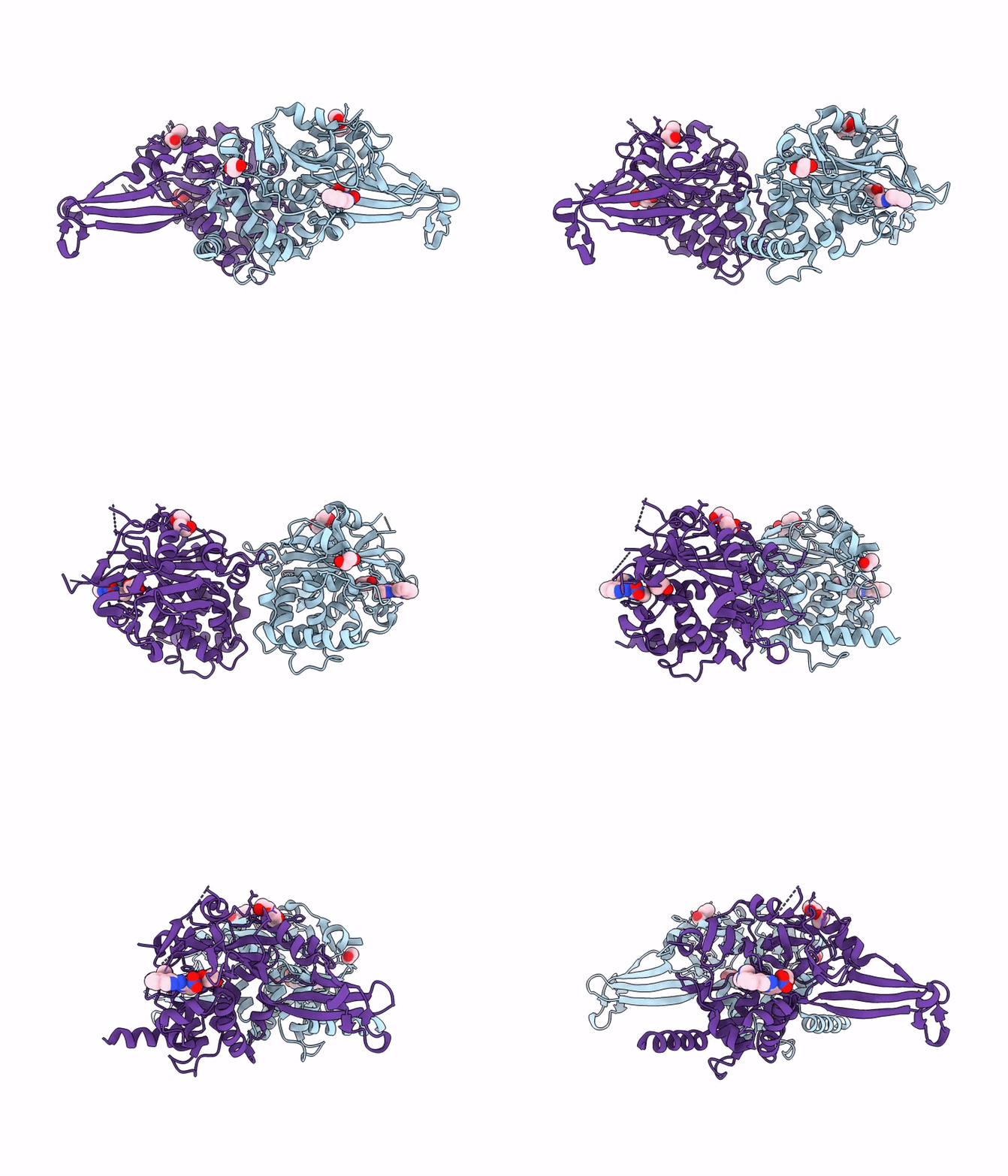
9QJE image
Deposition Date 2025-03-19
Release Date 2025-09-10
Last Version Date 2025-09-10
Entry Detail
PDB ID:
9QJE
Keywords:
Title:
USP7 Covalently Bound to N-(6-Fluoro-3-nitropyridin-2-yl)-5-(1-methyl-1H-pyrazol-4-yl)isoquinolin-3-amine (GCL36, 7a) with Partial Occupancy
Biological Source:
Source Organism:
Homo sapiens (Taxon ID: 9606)
Method Details:
Experimental Method:
Resolution:
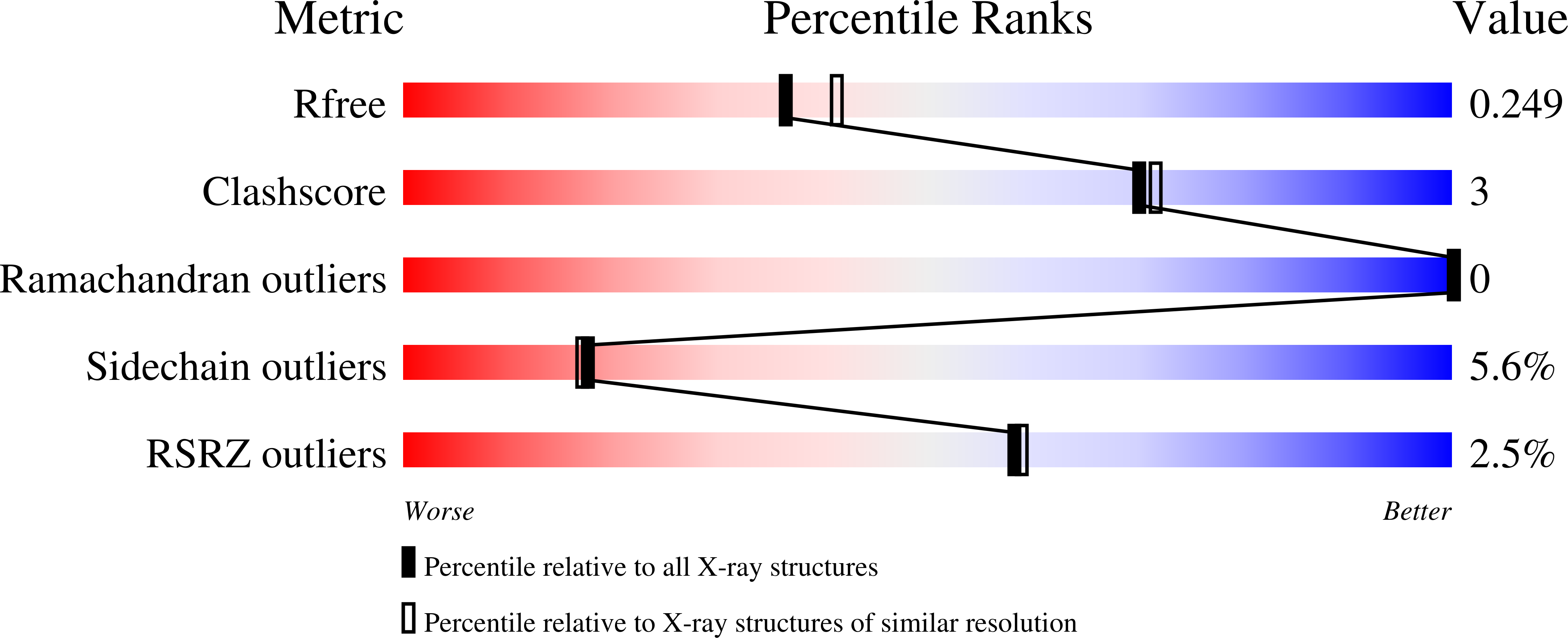
2.26 Å
R-Value Free:
0.24
R-Value Work:
0.20
R-Value Observed:
0.20
Space Group:
P 1 21 1
Macromolecular Entities
Structures with similar UniProt ID
Protein Blast
Polymer Type:polypeptide(L)
Molecule:Ubiquitin carboxyl-terminal hydrolase 7
Gene (Uniprot):USP7
Chain IDs:A, B
Chain Length:356
Number of Molecules:2
Biological Source:Homo sapiens
Primary Citation
Design, Synthesis, and Molecular Evaluation of S N Ar-Reactive N-(6-Fluoro-3-Nitropyridin-2-yl)Isoquinolin-3-Amines as Covalent USP7 Inhibitors Reveals an Unconventional Binding Mode.
Arch Pharm 358 e70053 e70053 (2025)
PMID: 40785232 DOI: 10.1002/ardp.70053

Abstact

The cysteine protease ubiquitin-specific protease 7 (USP7), also known as herpes-associated ubiquitin-specific protease (HAUSP), has gained increasing attention in recent years due to its proven overexpression in several cancer types and its role in tumorigenesis. Herein, after a design based on molecular docking experiments, we report the synthesis of a series of mildly electrophilic compounds that covalently modify the catalytic cysteine 223 in USP7 through a nucleophilic aromatic substitution (SNAr) reaction. The compounds were first evaluated using differential scanning fluorimetry (DSF) to describe their influence on the melting temperature of native and mutant USP7 variants. Furthermore, the possible formation of a covalent bond was analyzed using intact protein mass spectrometry (MS). For promising derivatives, IC50 values were determined in an enzyme activity assay to confirm an inhibitory effect on USP7. Finally, a co-crystal structure revealed that the prototype compound (7a) arylates the catalytic cysteine in the apo form of USP7 via an unconventional binding mode near the catalytic triad. The synthesis and biological evaluation of this compound series provides valuable structure-activity relationships (SAR) and reveals an interesting and unprecedented binding mode, thus providing a basis for improving USP7 inhibitors.

Legend

Protein

Chemical

Disease

Primary Citation of related structures
Feedback Form
Name
Email
Institute
Feedback