9QJ9 image
Deposition Date 2025-03-18
Release Date 2026-01-28
Last Version Date 2026-01-28
Entry Detail
PDB ID:
9QJ9
Keywords:
Title:
Crystal Structure of the Human Retinoid X Receptor DNA-Binding Domain Bound to Trim16 IR1 Response Element
Biological Source:
Source Organism(s):
Homo sapiens (Taxon ID: 9606)
Expression System(s):
Method Details:
Experimental Method:
Resolution:
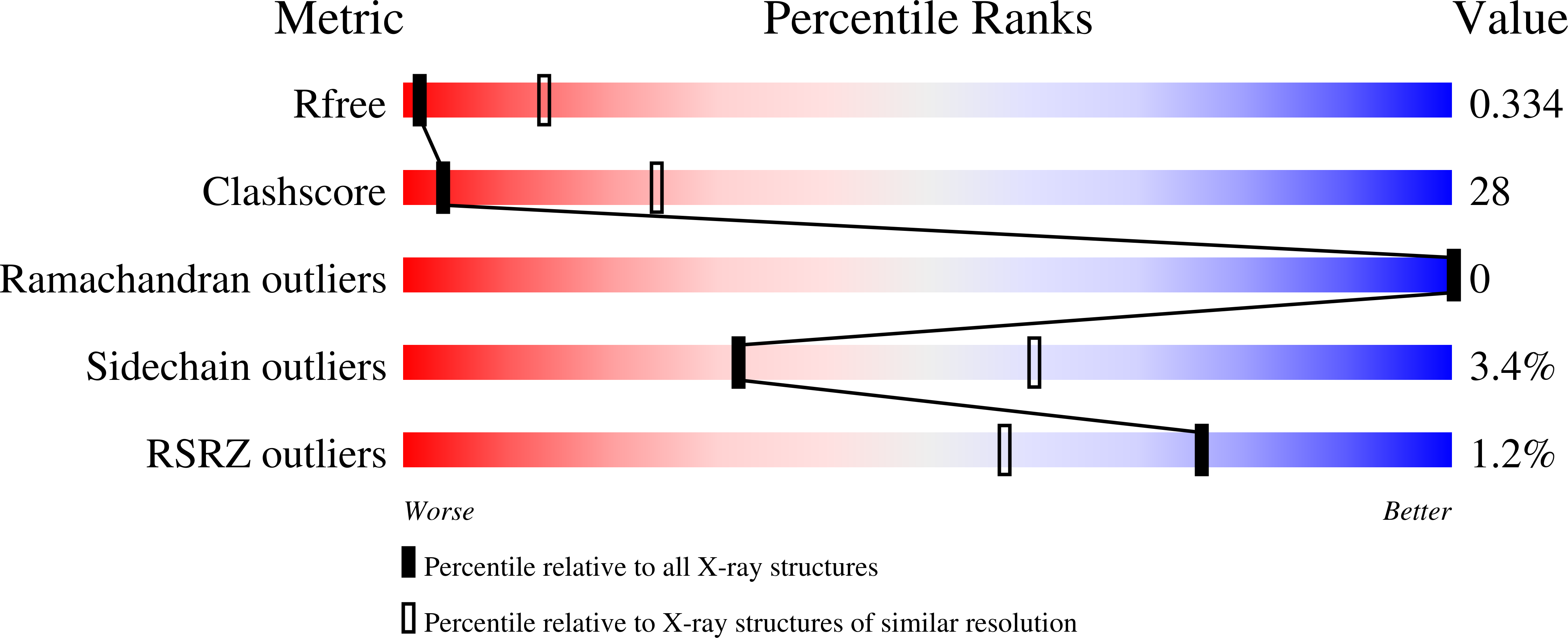
3.50 Å
R-Value Free:
0.33
R-Value Work:
0.26
R-Value Observed:
0.27
Space Group:
P 41 21 2
Macromolecular Entities
Structures with similar UniProt ID
Protein Blast
Polymer Type:polypeptide(L)
Molecule:Retinoic acid receptor RXR-alpha
Gene (Uniprot):RXRA
Chain IDs:A, B
Chain Length:87
Number of Molecules:2
Biological Source:Homo sapiens
Polymer Type:polydeoxyribonucleotide
Molecule:DNA (5'-D(P*GP*GP*GP*GP*TP*CP*AP*TP*GP*AP*CP*CP*CP*T)-3')
Chain IDs:C
Chain Length:16
Number of Molecules:1
Biological Source:Homo sapiens
Polymer Type:polydeoxyribonucleotide
Molecule:DNA (5'-D(P*GP*GP*GP*GP*TP*CP*AP*TP*GP*AP*CP*CP*CP*T)-3')
Chain IDs:D
Chain Length:16
Number of Molecules:1
Biological Source:Homo sapiens
Ligand Molecules
Primary Citation
New structural insights into the control of the retinoic acid receptors RAR/RXR by DNA, ligands, and transcriptional coregulators.
Nucleic Acids Res. 53 ? ? (2025)
PMID: 41036627 DOI: 10.1093/nar/gkaf967

Abstact

Retinoic acid receptors (RARs) are ligand-dependent transcription factors essential for various biological processes, including embryogenesis, differentiation, and apoptosis. RARs function as heterodimers with retinoid X receptors (RXRs) and regulate gene expression via retinoic acid response elements (RAREs). Their transcriptional activity is modulated by coregulators, with corepressors maintaining repression in the absence of ligand and coactivators enabling transcription upon ligand binding. Structural studies reveal that DNA binding induces conformational changes affecting coregulator interactions. However, the precise structural organization of RAR/RXR-coregulator complexes and the allosteric influence of DNA on receptor function remain incompletely understood. Our study presents an integrative analysis of the RAR/RXR heterodimer bound to four distinct and relevant RAREs (DR0, DR1, DR5, and IR0) in complex with either a corepressor (NCoR) or a coactivator (TIF-2) nuclear receptor interaction domain. By combining small-angle X-ray scattering, hydrogen/deuterium exchange mass spectrometry, and molecular dynamics simulations, we revealed that the heterodimer adopts distinct conformations depending on the DNA sequence, influencing interdomain distances and receptor interactions. Additionally, we uncovered the dynamic interplay between ligand, DNA, and coregulator binding. This study provides new insights into the structural features of coregulator proteins and highlights the allosteric influence of RAREs on receptor function.

Legend

Protein

Chemical

Disease

Primary Citation of related structures
Feedback Form
Name
Email
Institute
Feedback