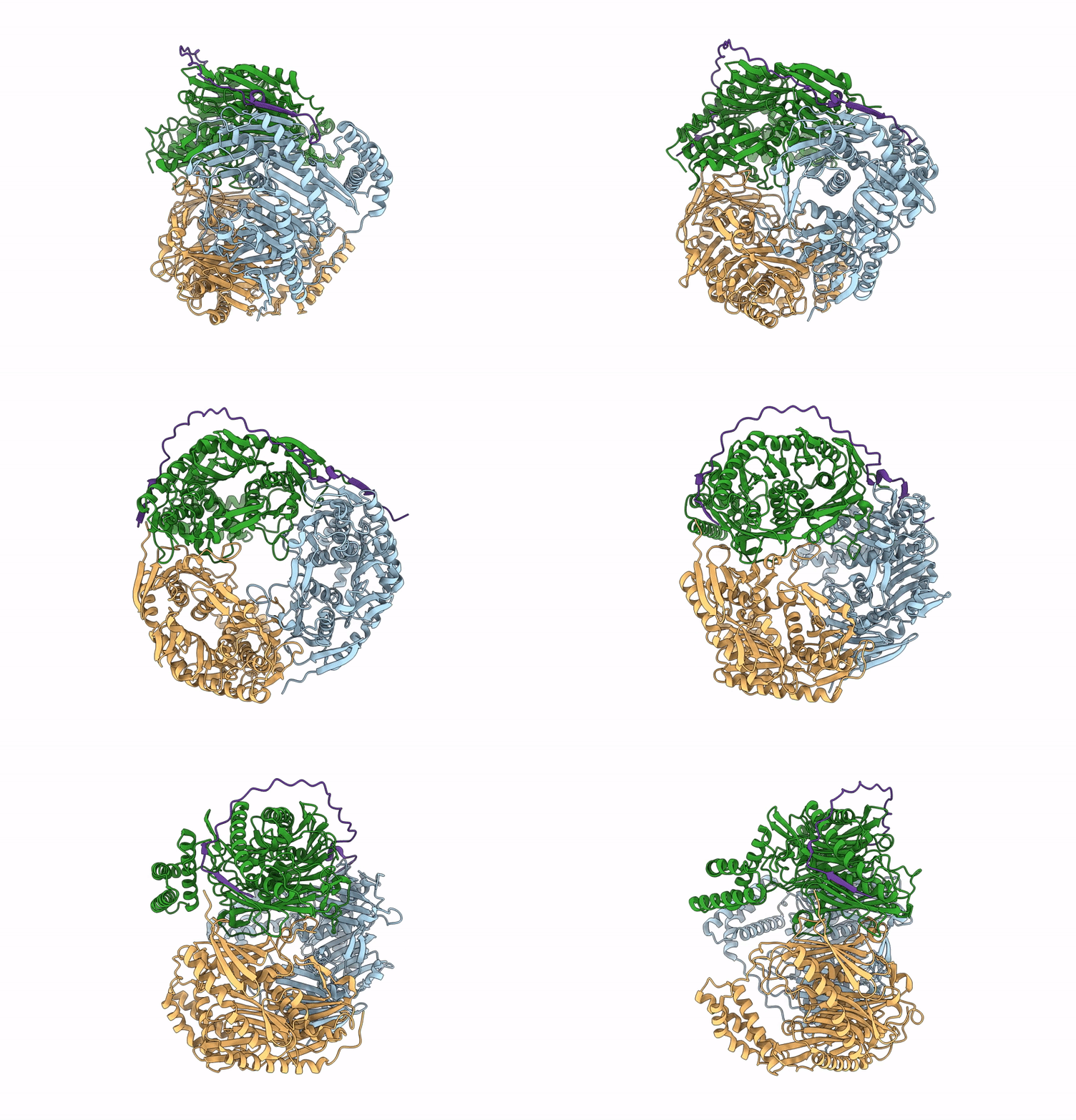
9QH0 image
Deposition Date 2025-03-14
Release Date 2025-04-23
Last Version Date 2025-11-05
Entry Detail
PDB ID:
9QH0
Title:
Escherichia coli polynucleotide phosphorylase in complex with recognition site of RNase E
Biological Source:
Source Organism:
Escherichia coli (Taxon ID: 562)
Method Details:
Experimental Method:
Resolution:
2.52 Å
Aggregation State:
PARTICLE
Reconstruction Method:
SINGLE PARTICLE
Macromolecular Entities
Structures with similar UniProt ID
Protein Blast
Polymer Type:polypeptide(L)
Molecule:Polyribonucleotide nucleotidyltransferase
Gene (Uniprot):pnp
Chain IDs:A, B, C
Chain Length:549
Number of Molecules:3
Biological Source:Escherichia coli
Structures with similar UniProt ID
Protein Blast
Polymer Type:polypeptide(L)
Molecule:Ribonuclease E
Gene (Uniprot):rne
Chain IDs:D
Chain Length:58
Number of Molecules:1
Biological Source:Escherichia coli
Primary Citation
A multi-dentate, cooperative interaction between endo- and exo-ribonucleases within the bacterial RNA degradosome.
Nucleic Acids Res. 53 ? ? (2025)
PMID: 41036625 DOI: 10.1093/nar/gkaf960

Abstact

In Escherichia coli and numerous other bacteria, two of the principal enzymes mediating messenger RNA decay and RNA processing-RNase E, an endoribonuclease, and polynucleotide phosphorylase (PNPase), an exoribonuclease-assemble into a multi-enzyme complex known as the RNA degradosome. While RNase E forms a homotetramer and PNPase a homotrimer, it remains unclear how these two enzymes interact within the RNA degradosome to potentially satisfy all mutual recognition sites. In this study, we used cryo-EM, biochemistry, and biophysical studies to discover and characterize a new binding mode for PNPase encompassing two or more motifs that are necessary and sufficient for strong interaction with RNase E. While a similar interaction is seen in Salmonella enterica, a different recognition mode arose for Pseudomonas aeruginosa, illustrating the evolutionary drive to maintain physical association of the two ribonucleases. The data presented here suggest a model for the quaternary organization of the RNA degradosome of E. coli, where one PNPase trimer interacts with one RNase E protomer. Conformational transitions are predicted to facilitate substrate capture and transfer to catalytic centres. The model suggests how the endo- and exo-ribonucleases might cooperate in cellular RNA turnover and recruitment of regulatory RNA by the degradosome assembly.

Legend

Protein

Chemical

Disease

Primary Citation of related structures
Feedback Form
Name
Email
Institute
Feedback