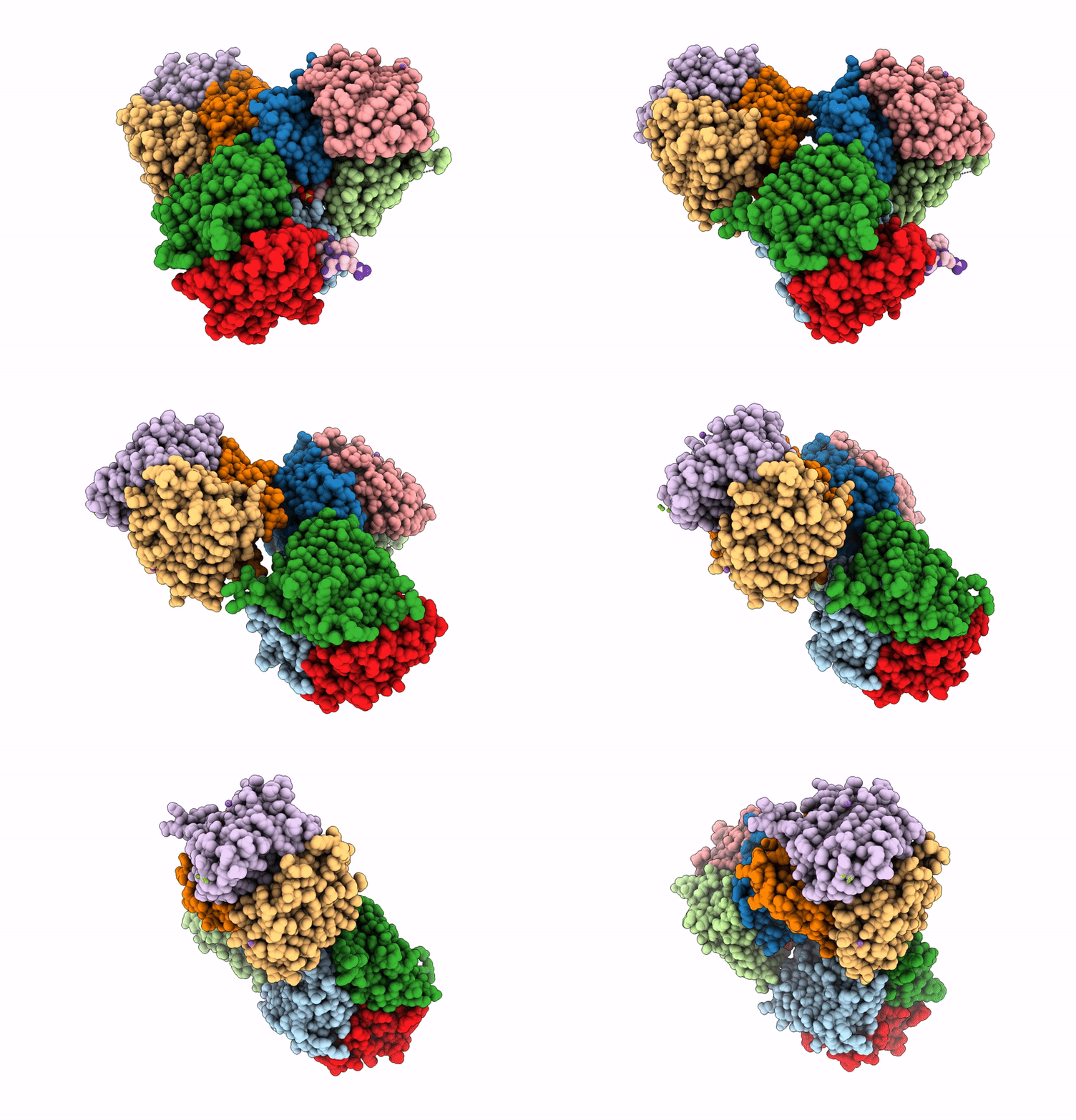
9QEZ image
Deposition Date 2025-03-11
Release Date 2025-12-10
Last Version Date 2025-12-10
Entry Detail
PDB ID:
9QEZ
Title:
Carbonic anhydrase mutant
Biological Source:
Source Organism:
Host Organism:
Method Details:
Experimental Method:
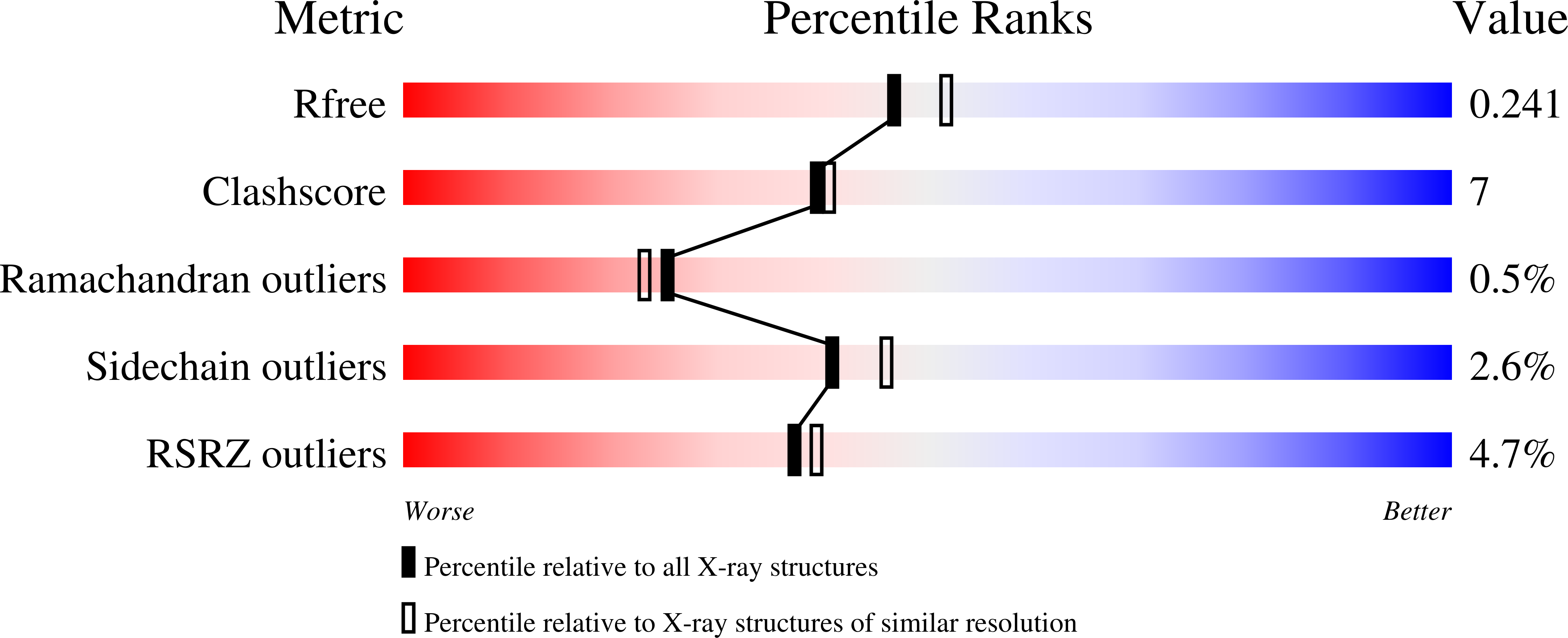
Resolution:
2.10 Å
R-Value Free:
0.24
R-Value Work:
0.20
R-Value Observed:
0.20
Space Group:
P 2 21 21
Macromolecular Entities
Polymer Type:polypeptide(L)
Molecule:Carbonic anhydrase mutant
Chain IDs:A (auth: D), B, C (auth: F), D (auth: E), E (auth: H), F (auth: C), G (auth: A), H (auth: I), I (auth: G)
Chain Length:180
Number of Molecules:9
Biological Source:Caloramator australicus RC3
Polymer Type:polypeptide(L)
Molecule:Peptide
Chain IDs:J (auth: L)
Chain Length:8
Number of Molecules:1
Biological Source:unidentified
Primary Citation
Structural and functional characterization of a metagenomically derived gamma-type carbonic anhydrase and its engineering into a hyperthermostable esterase.
Protein Sci. 34 e70396 e70396 (2025)
PMID: 41294346 DOI: 10.1002/pro.70396

Abstact

The 16S microbial community profiling of a metagenomics library from geothermal spring at Lisvori (Lesvos island, Greece) enabled the identification of a putative sequence exhibiting 95% identity to the γ-type carbonic anhydrase (γ-CA) from Caloramator australicus (γ-CaCA). The sequence of γ-CaCA was amplified by PCR, cloned, and expressed in E. coli. Activity assays showed that γ-CaCA possesses very low, but detectable, anhydrase activity, while exhibiting no measurable esterase activity. Differential scanning fluorimetry (DSF) revealed that the enzyme shows high thermal stability with a melting temperature (Tm) approximately 65-75°C in the pH range between 5.5 and 9.0. The structure of γ-CaCA was determined by X-ray crystallography at 1.11 Å resolution, the highest resolution reported so far for a γ-CA. The enzyme was crystallized as a trimer in the crystallographic asymmetric unit and contains three zinc-binding sites, one at each interface of neighboring subunits of the trimer. Structure-based rational design enabled the design and creation of a mutant enzyme (γ-CaCAmut) which possessed a heptapeptide insertion at the active-site loop and two-point mutations. Kinetic analysis demonstrated that γ-CaCAmut was successfully converted into a catalytically active esterase indicating successful activity gain through structure-guided engineering. The thermostability of γ-CaCAmut was significantly increased, aligning with the thermostability typically observed in hyperthermostable enzymes. X-ray crystallographic analysis of the γ-CaCAmut structure at 2.1 Å resolution, provided detailed structural insights into how the mutations impact the overall enzyme structure, function, and thermostability. These findings provide valuable structural and functional insights into γ-CAs and demonstrate a strategy for converting an inactive enzyme into a catalytically active form through rational design.

Legend

Protein

Chemical

Disease

Primary Citation of related structures
Feedback Form
Name
Email
Institute
Feedback