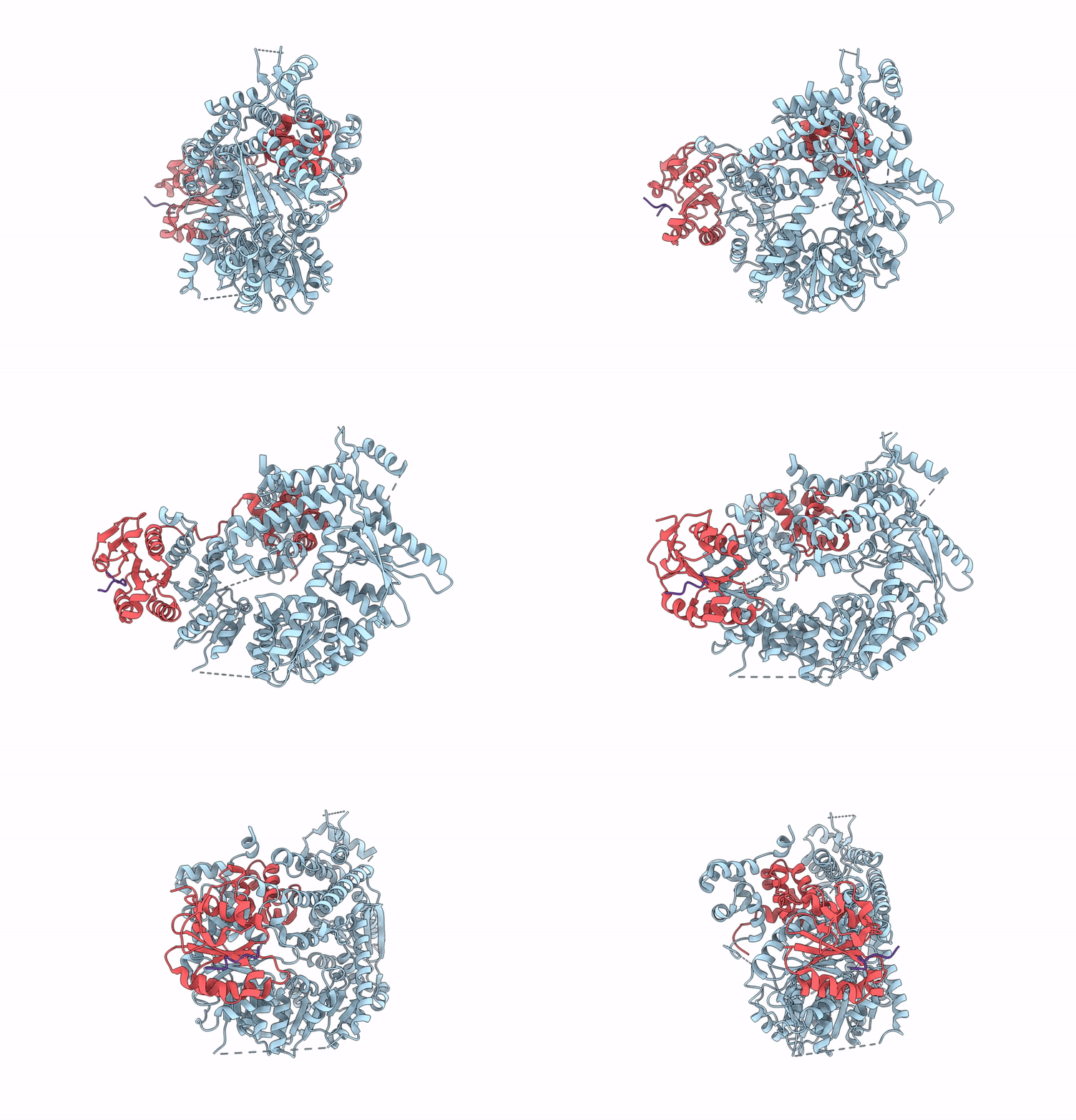
9QEC image
Deposition Date 2025-03-08
Release Date 2025-12-17
Last Version Date 2026-01-28
Entry Detail
PDB ID:
9QEC
Keywords:
Title:
Cryo-EM structure of the XPF-ERCC1-XPA complex
Biological Source:
Source Organism(s):
Homo sapiens (Taxon ID: 9606)
Expression System(s):
Method Details:
Experimental Method:
Resolution:
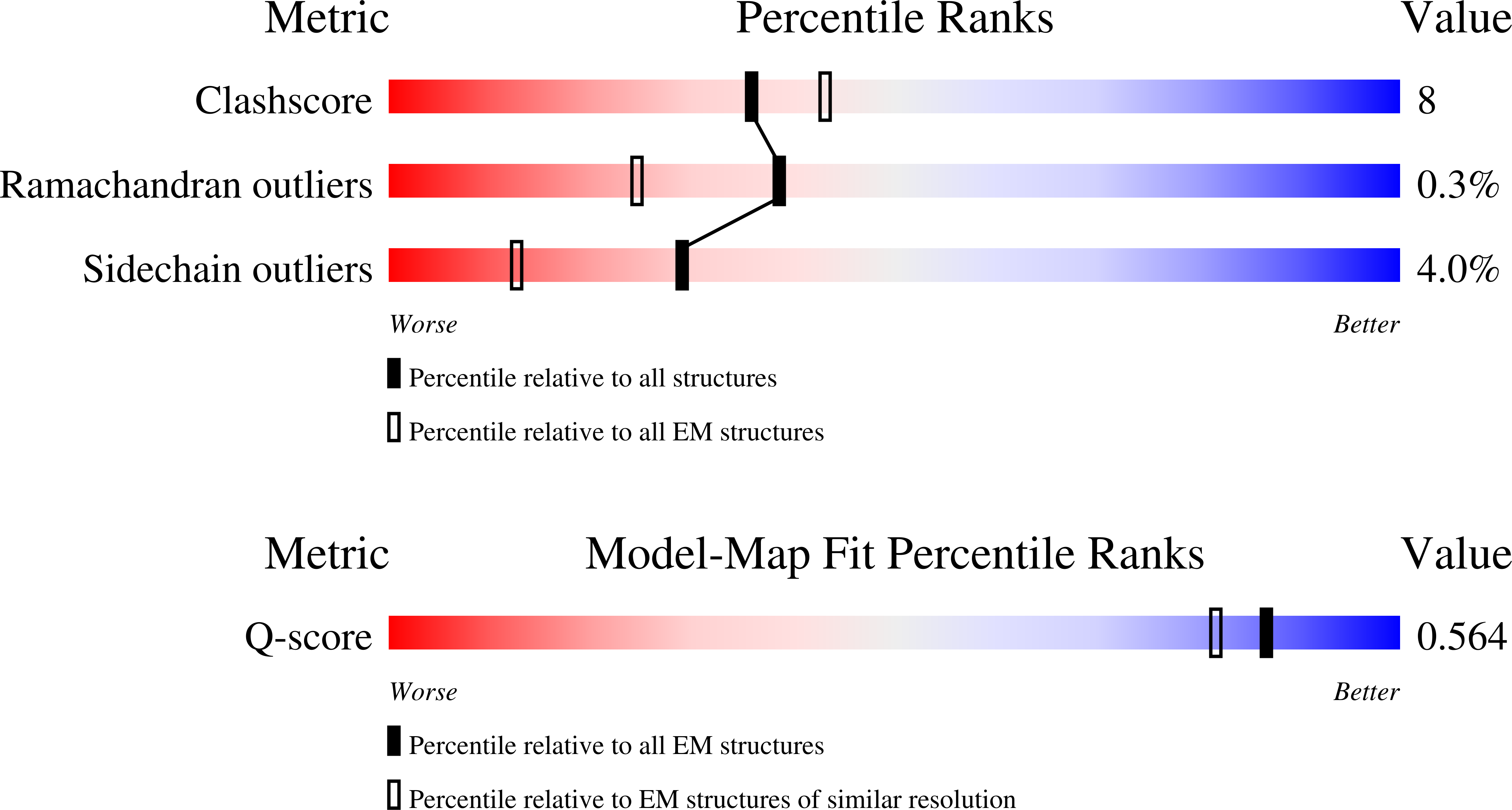
2.90 Å
Aggregation State:
PARTICLE
Reconstruction Method:
SINGLE PARTICLE
Macromolecular Entities
Structures with similar UniProt ID
Protein Blast
Polymer Type:polypeptide(L)
Molecule:DNA repair endonuclease XPF
Gene (Uniprot):ERCC4
Chain IDs:A
Chain Length:935
Number of Molecules:1
Biological Source:Homo sapiens
Structures with similar UniProt ID
Protein Blast
Polymer Type:polypeptide(L)
Molecule:DNA excision repair protein ERCC-1
Gene (Uniprot):ERCC1
Chain IDs:B
Chain Length:297
Number of Molecules:1
Biological Source:Homo sapiens
Structures with similar UniProt ID
Protein Blast
Polymer Type:polypeptide(L)
Molecule:DNA repair protein complementing XP-A cells
Gene (Uniprot):XPA
Chain IDs:C
Chain Length:273
Number of Molecules:1
Biological Source:Homo sapiens
Ligand Molecules
Primary Citation
Molecular basis of XPF-ERCC1 targeting to SLX4-dependent DNA repair pathways.
Nat Commun 17 522 522 (2025)
PMID: 41402316 DOI: 10.1038/s41467-025-67216-3

Abstact

The preservation and faithful propagation of genetic information is essential for all life forms and depends on cellular pathways that enable replication, recombination, and repair of DNA. The multifunctional XPF-ERCC1 DNA endonuclease complex acts in several DNA repair pathways and interacts with numerous partner proteins and large DNA repair assemblies, including the nucleotide excision repair machinery and the SMX tri-endonuclease complex. Here, we report structures of XPF-ERCC1 in complex with the DNA repair factors SLX4 and SLX4IP, thereby identifying key residues responsible for direct interactions with XPF-ERCC1. When introduced into human cells, point mutations in these interfaces impair the interactions between XPF-ERCC1 and SLX4 or SLX4IP, and disruption of the XPF-SLX4IP interface leads to cis-platin sensitivity. Furthermore, our data reveal the structure of the human XPF-ERCC1-SLX4IP-SLX4330-555 complex with DNA bound at its active site, and they complete the structural characterisation of molecular interactions required to assemble the SMX complex.

Legend

Protein

Chemical

Disease

Primary Citation of related structures
Feedback Form
Name
Email
Institute
Feedback