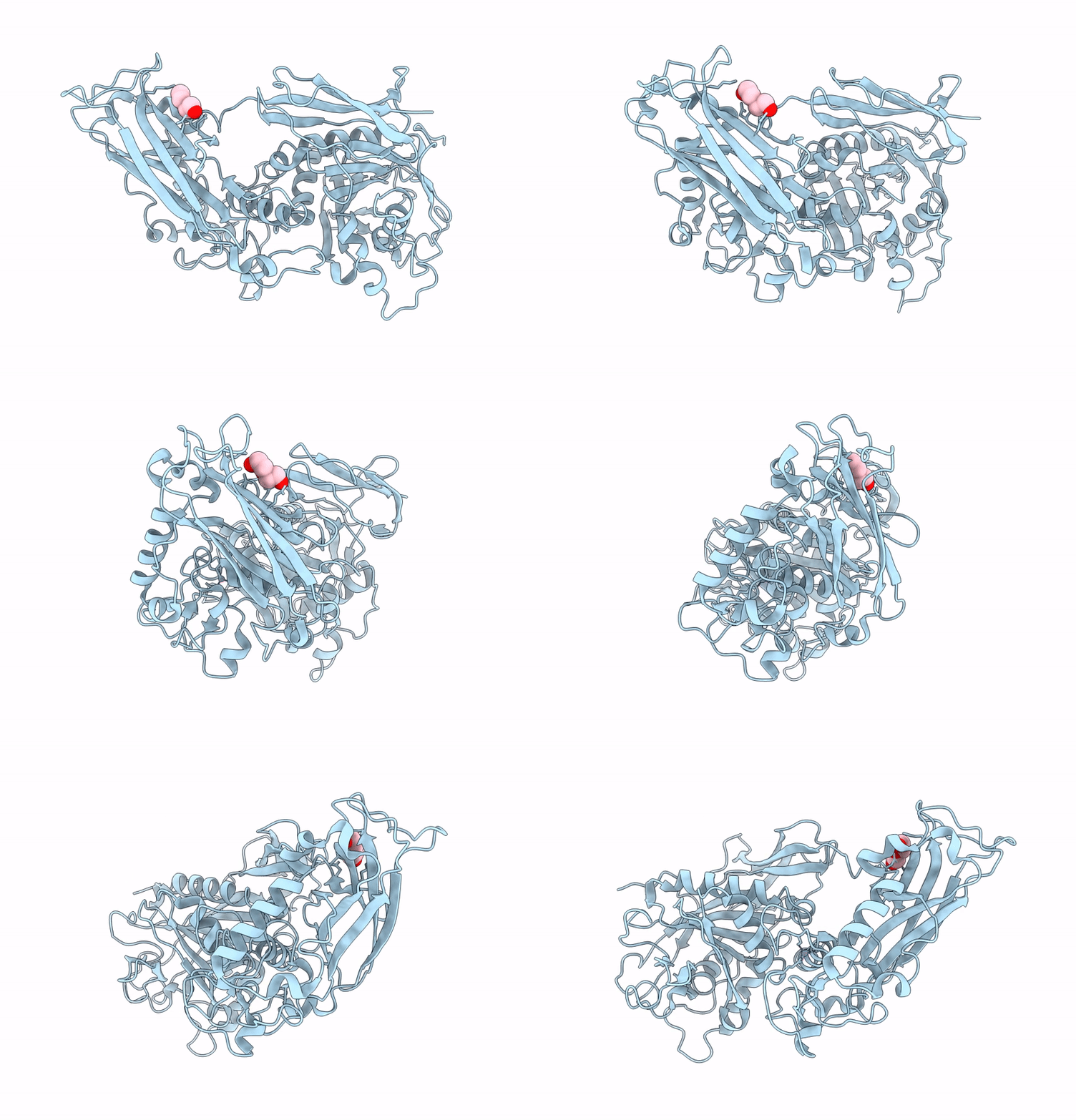
9QDH image
Deposition Date 2025-03-06
Release Date 2025-07-16
Last Version Date 2025-09-10
Entry Detail
PDB ID:
9QDH
Keywords:
Title:
Crystal structure of IgA protease (323-878) from Thomasclavelia ramosa
Biological Source:
Source Organism:
Method Details:
Experimental Method:
Resolution:
2.00 Å
R-Value Free:
0.24
R-Value Work:
0.19
R-Value Observed:
0.19
Space Group:
P 21 21 21
Macromolecular Entities
Structures with similar UniProt ID
Protein Blast
Polymer Type:polypeptide(L)
Molecule:IgA protease
Gene (Uniprot):iga
Chain IDs:A
Chain Length:560
Number of Molecules:1
Biological Source:Thomasclavelia ramosa
Primary Citation
Molecular basis of Fab-dependent IgA antibody recognition by gut-bacterial metallopeptidases.
Embo J. 44 4867 4898 (2025)
PMID: 40745064 DOI: 10.1038/s44318-025-00518-w

Abstact

Immunoglobulin A (IgA) is essential for mucosal immunity and has been implicated in autoimmune diseases, such as IgA nephropathy. Certain pathogenic and commensal bacteria produce IgA proteases that selectively cleave IgA, potentially aiding bacterial colonization as well as suggesting therapeutic avenues for IgA nephropathy. Here, we investigate the substrate specificities of two enzymes of the M64 metallopeptidase family, the IgA protease ThomasA from Thomasclavelia ramosa and BF3526 from Bacteroides fragilis. Our structural, biochemical, and mutagenesis analyses demonstrate that ThomasA cleaves IgA through exclusive recognition of the Fab region. This mechanism is distinct from that of other antibody-specific peptidases, which typically require engagement of the Fc region. In contrast, X-ray crystal structures of BF3526 in complex with substrate and product peptides, combined with enzymology assays, show that this enzyme targets the N-terminus of pre-digested proteins, but does not act on intact IgA. These findings reveal divergent substrate recognition strategies between M64 family members, while providing new structural insights into their conserved catalytic mechanism.

Legend

Protein

Chemical

Disease

Primary Citation of related structures
Feedback Form
Name
Email
Institute
Feedback