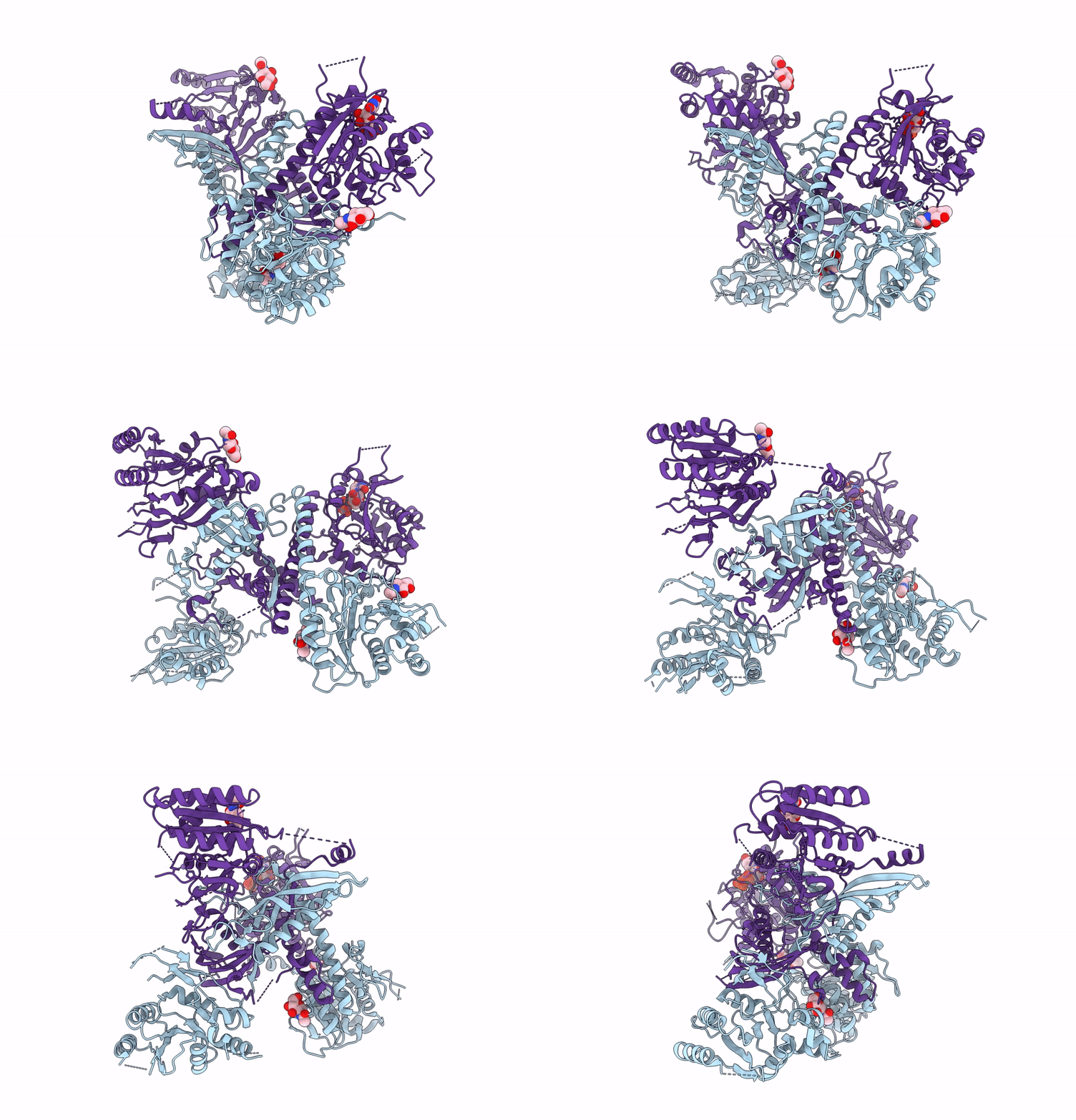
9Q8Z image
Deposition Date 2025-02-25
Release Date 2025-12-03
Last Version Date 2026-01-07
Entry Detail
PDB ID:
9Q8Z
Keywords:
Title:
Human chondroitin sulfate polymerase complex CHSY3-CHPF
Biological Source:
Source Organism(s):
Homo sapiens (Taxon ID: 9606)
Expression System(s):
Method Details:
Experimental Method:
Resolution:
3.00 Å
Aggregation State:
PARTICLE
Reconstruction Method:
SINGLE PARTICLE
Macromolecular Entities
Structures with similar UniProt ID
Protein Blast
Polymer Type:polypeptide(L)
Molecule:Chondroitin sulfate synthase 2
Gene (Uniprot):CHPF
Chain IDs:A
Chain Length:710
Number of Molecules:1
Biological Source:Homo sapiens
Structures with similar UniProt ID
Protein Blast
Polymer Type:polypeptide(L)
Molecule:Chondroitin sulfate synthase 3
Gene (Uniprot):CHSY3
Chain IDs:B
Chain Length:753
Number of Molecules:1
Biological Source:Homo sapiens
Primary Citation
Structural basis for human chondroitin sulfate chain polymerization.
Nat Commun 16 11663 11663 (2025)
PMID: 41298522 DOI: 10.1038/s41467-025-66787-5

Abstact

Chondroitin sulfates are complex polysaccharide chains that regulate various biological processes at the cell surface and within the extracellular matrix. Here, we identify four heterodimeric complexes responsible for chondroitin sulfate chain polymerization in humans: CHSY1-CHPF, CHSY1-CHPF2, CHSY3-CHPF, and CHSY3-CHPF2. Using a custom-tailored in vitro glycosylation assay based on chemo-enzymatically synthesized fluorescent substrates, we demonstrate that all four complexes exhibit chain polymerization activity. The cryo-EM structure of the CHSY3-CHPF complex provides molecular insights into the chondroitin sulfate chain polymerization reaction. The architecture of the catalytic sites suggests that CHSY1 and CHSY3 are enzymatically active, while CHPF and CHPF2 primarily play a stabilizing role. Mutational analysis of purified enzyme complexes, combined with an in cellulo complementation assay, confirms that only CHSY1 and CHSY3 have bifunctional glycosyltransferase activities. Based on the spatial arrangement of the catalytic sites, we propose that chondroitin sulfate chain polymerization follows a non-processive, distributive mechanism.

Legend

Protein

Chemical

Disease

Primary Citation of related structures
Feedback Form
Name
Email
Institute
Feedback