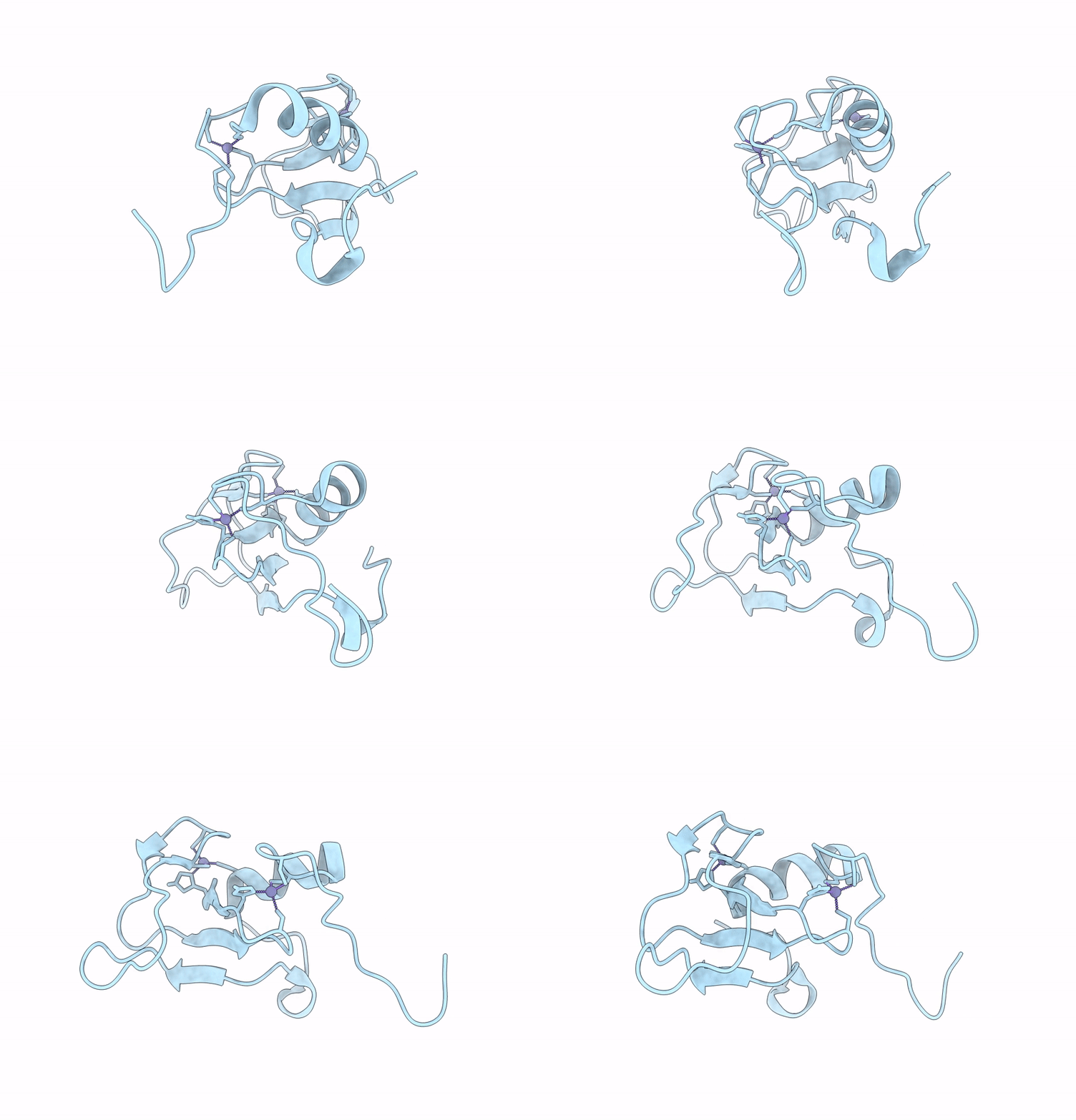
9Q88 image
Deposition Date 2025-02-23
Release Date 2025-07-30
Last Version Date 2025-08-20
Entry Detail
PDB ID:
9Q88
Keywords:
Title:
High-resolution structure of RNF38 RING domain
Biological Source:
Source Organism:
Homo sapiens (Taxon ID: 9606)
Method Details:
Experimental Method:
Resolution:
1.20 Å
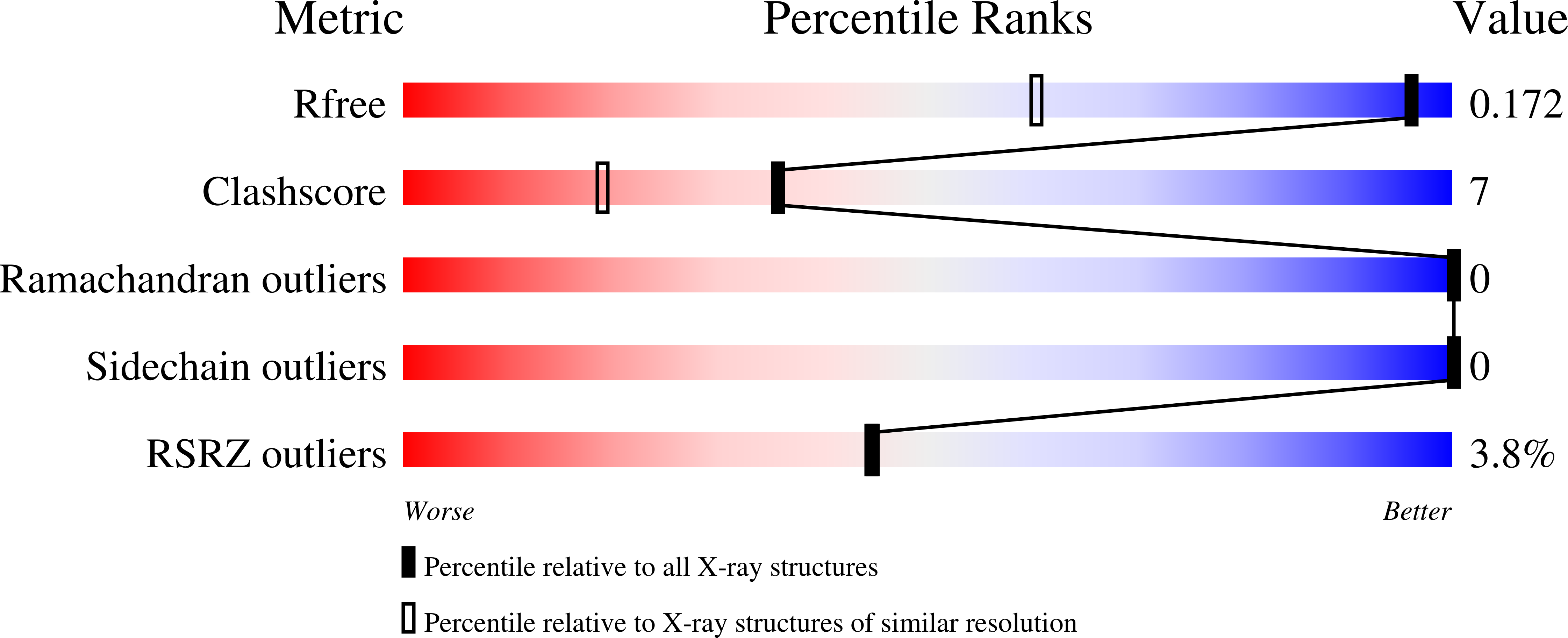
R-Value Free:
0.16
R-Value Work:
0.15
R-Value Observed:
0.15
Space Group:
P 21 21 21
Macromolecular Entities
Structures with similar UniProt ID
Protein Blast
Polymer Type:polypeptide(L)
Molecule:E3 ubiquitin-protein ligase RNF38
Gene (Uniprot):RNF38
Chain IDs:A
Chain Length:79
Number of Molecules:1
Biological Source:Homo sapiens
Ligand Molecules
Primary Citation
Tuning ubiquitin transfer by RING E3 ubiquitin ligases through the linchpin residue.
Life Sci Alliance 8 ? ? (2025)
PMID: 40763985 DOI: 10.26508/lsa.202503394

Abstact

RING family ubiquitin ligases (E3s) employ the RING domain to recruit the E2 thioester ubiquitin (E2∼Ub) intermediate to catalyze the transfer of ubiquitin (Ub) to substrates. A cationic Arg linchpin (LP) residue in the RING domain plays a key role in stabilizing the interface with E2∼Ub, but the identity of the LP residue varies across E3s. Here, we investigate how the LP residue contributes to ubiquitination. Using the model RNF38 system, we demonstrate that substitution of LPArg to the other 19 available amino acids modulates ubiquitination, ranging from minor reduction to complete abolition. The identity of the LP residue influences E2∼Ub binding but does not correlate with E3 activity. NMR and X-ray crystallography analyses reveal that RNF38 LPArg variants stabilize E2∼Ub in a catalytically competent conformation to varying degrees. By altering the LP residue in XIAP, we show that the XIAPY485R variant promotes E2∼Ub stabilization and enhances substrate ubiquitination in cells. Our work demonstrates the importance of the LP residue in modulating E2∼Ub conformation to control ubiquitination.

Legend

Protein

Chemical

Disease

Primary Citation of related structures
Feedback Form
Name
Email
Institute
Feedback