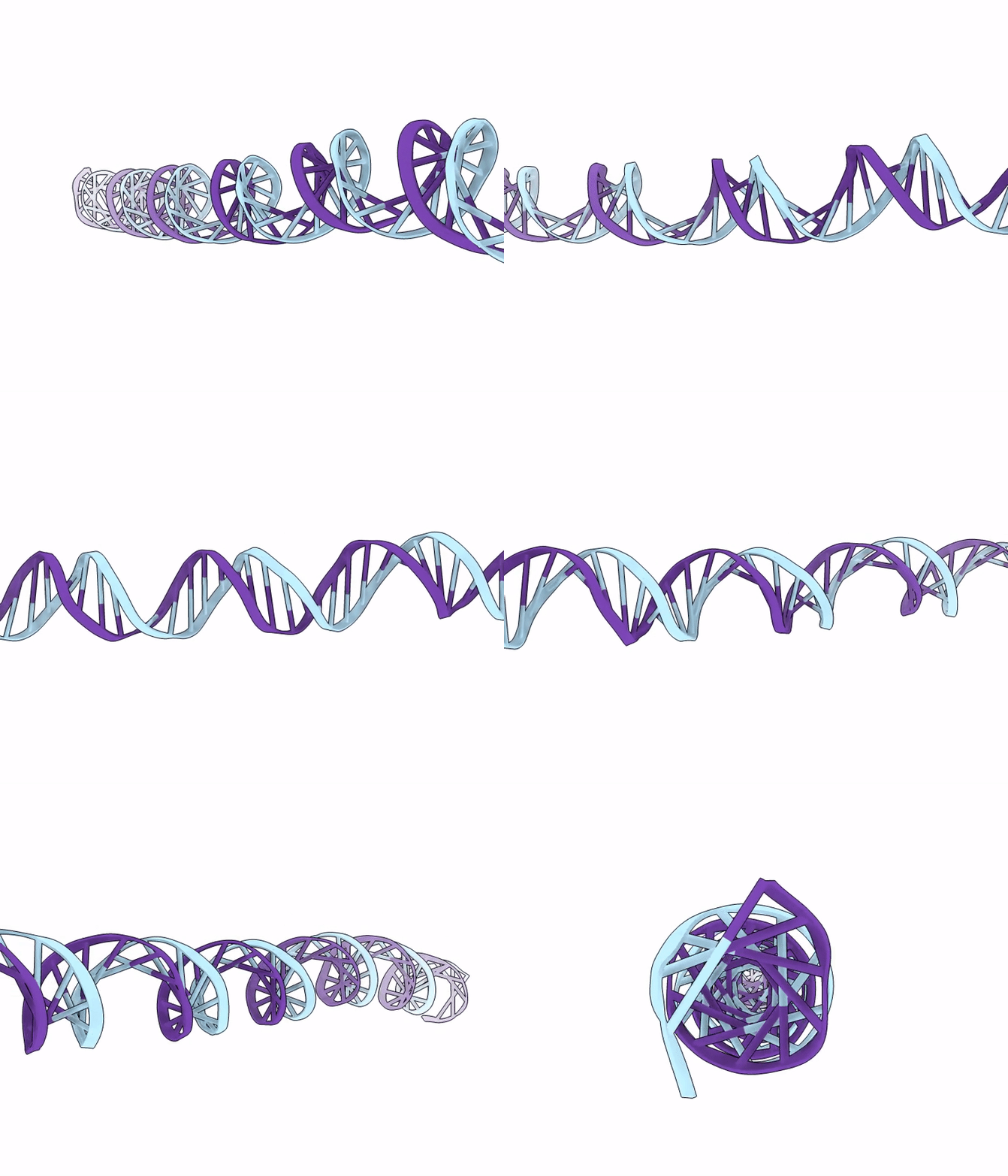
9Q7A image
Deposition Date 2025-08-22
Release Date 2026-01-28
Last Version Date 2026-01-28
Entry Detail
PDB ID:
9Q7A
Keywords:
Title:
dsDNA in the central channel of the bacteriophage P74-26 neck
Biological Source:
Source Organism(s):
Method Details:
Experimental Method:
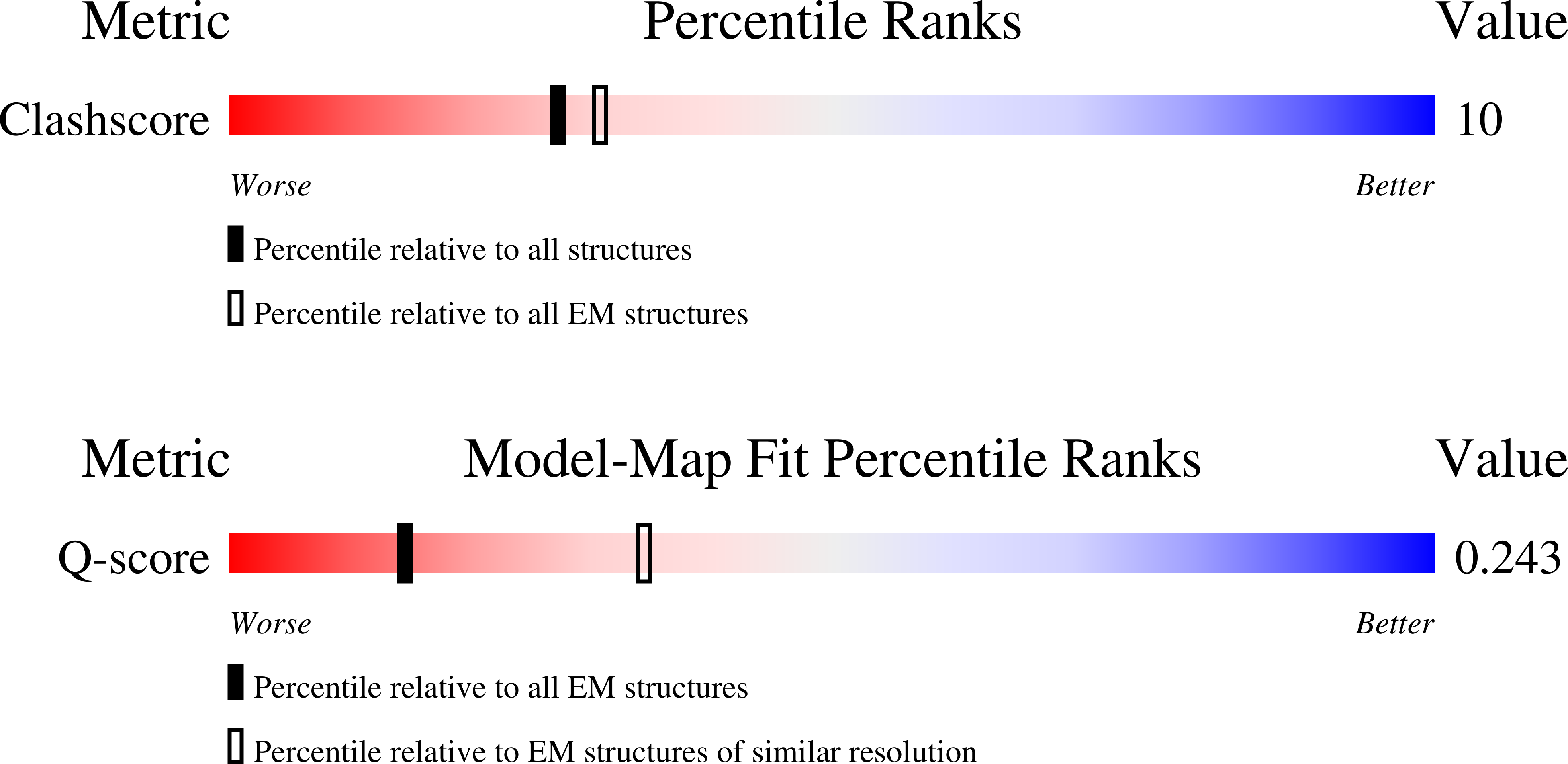
Resolution:
4.54 Å
Aggregation State:
PARTICLE
Reconstruction Method:
SINGLE PARTICLE
Macromolecular Entities
Polymer Type:polydeoxyribonucleotide
Molecule:DNA (66-MER)
Chain IDs:A (auth: Ka)
Chain Length:66
Number of Molecules:1
Biological Source:Oshimavirus P7426
Polymer Type:polydeoxyribonucleotide
Molecule:DNA (66-MER)
Chain IDs:B (auth: Kb)
Chain Length:66
Number of Molecules:1
Biological Source:Oshimavirus P7426
Ligand Molecules
Primary Citation
The structure of a thermostable phage's portal vertex and neck complex illuminates the headful maturation mechanism.
J.Mol.Biol. ? 169641 169641 (2026)
PMID: 41544933 DOI: 10.1016/j.jmb.2026.169641

Abstact

Viruses assemble from component parts inside their host cells, but the mechanisms coordinating this complex process are not completely understood. In tailed bacteriophages, the genome is packaged into its capsid shell through the portal complex. The portal complex then closes to retain DNA and connects to the tail, which is required for host recognition and infection. The trigger to stop pumping DNA and assemble the mature virus has been a longstanding conundrum in the field. We determined the structure of the portal, the proteins that connect it to the tail, and portal vertex in the hyperthermophilic phage Oshimavirus using cryo-Electron Microscopy (cryo-EM). We find highly intertwined loop structures, like in a wicker basket, potentially stabilizing the portal vertex against high temperatures. Moreover, we observe that the portal protrudes from the capsid in mature virions. We propose that portal is repositioned by packaged DNA, forming a pressure-sensitive switch that terminates genome packaging and triggers tail attachment in headful phages.

Legend

Protein

Chemical

Disease

Primary Citation of related structures
Feedback Form
Name
Email
Institute
Feedback