9Q55 image
Deposition Date 2025-08-20
Release Date 2025-09-10
Last Version Date 2026-02-18
Entry Detail
PDB ID:
9Q55
Title:
Structure of human endothelial nitric oxide synthase heme domain bound with 6-((2,3-difluoro-5-(2-(4-fluoropiperidin-1-yl)ethyl)phenoxy)methyl)-4-methylpyridin-2-amine
Biological Source:
Source Organism(s):
Homo sapiens (Taxon ID: 9606)
Expression System(s):
Method Details:
Experimental Method:
Resolution:
2.10 Å
R-Value Free:
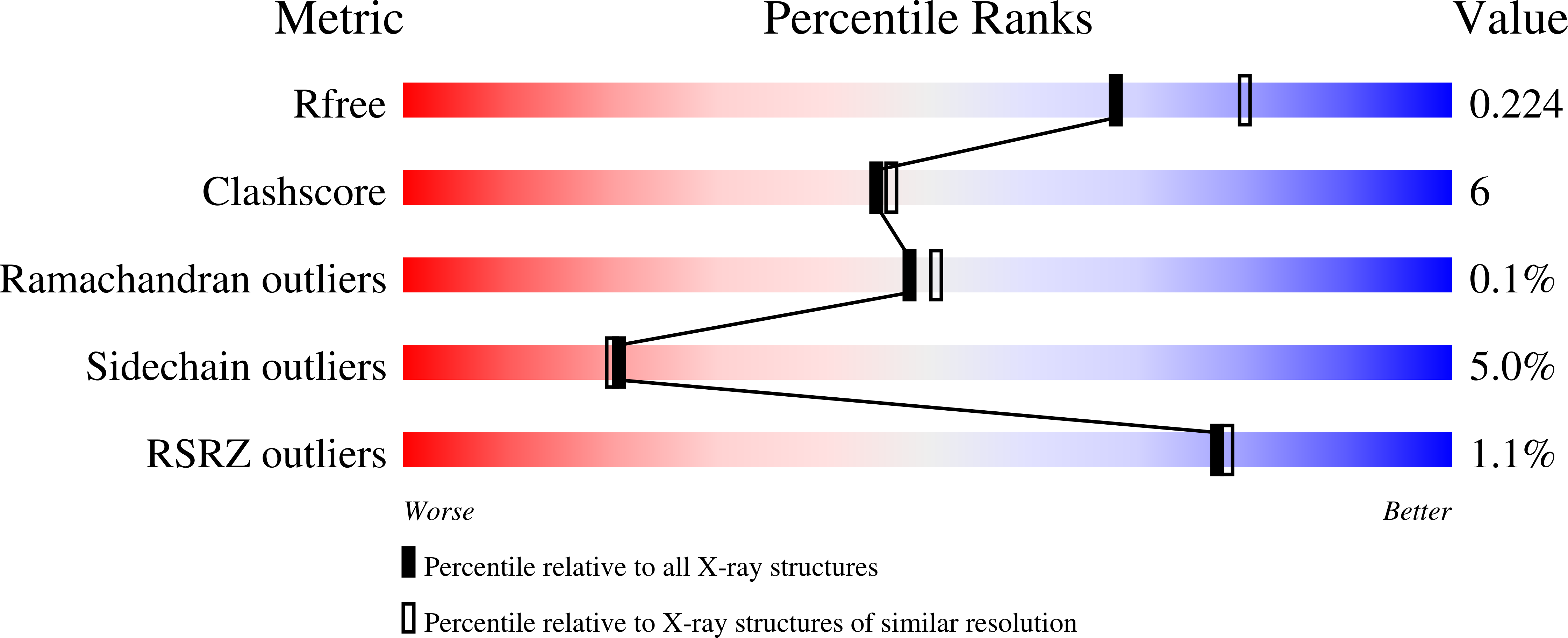
0.22
R-Value Work:
0.18
R-Value Observed:
0.18
Space Group:
P 1 21 1
Macromolecular Entities
Structures with similar UniProt ID
Protein Blast
Polymer Type:polypeptide(L)
Molecule:Nitric oxide synthase 3
Gene (Uniprot):NOS3
Chain IDs:A, B, C, D
Chain Length:440
Number of Molecules:4
Biological Source:Homo sapiens
Primary Citation
Potent, Selective, and Brain Penetrant Ether-Linked 2-Aminopyridine Inhibitors of Human Neuronal Nitric Oxide Synthase with Excellent Oral Bioavailability.
J.Med.Chem. ? ? ? (2026)
PMID: 41630196 DOI: 10.1021/acs.jmedchem.5c03568

Abstact

Neuronal nitric oxide synthase (nNOS) is a therapeutic target for the treatment of various neurological disorders and for melanoma. As part of our ongoing efforts to develop potent and selective nNOS inhibitors, we modified our previously reported compound 3 to 4 by introducing an ether linker, leading to a new series of ether-linked 2-aminopyridine-based compounds that exhibit high potency, isoform selectivity, and membrane permeability. Among them, lead compound 4 inhibits human nNOS with a Ki of 25 nM and exhibits 2300-fold selectivity over human endothelial NOS (eNOS) while also displaying high effective permeability in the parallel artificial membrane permeability assay for the blood-brain barrier (PAMPA-BBB) assay (Pe = 16.67 × 10⁻⁶ cm/s), indicating favorable blood-brain barrier penetration. Pharmacokinetic evaluation confirmed the brain penetrance of 4 and demonstrated a high oral bioavailability (77%). Moreover, the X-ray crystal structures of representative compounds bound to three NOS isoforms (hnNOS, rnNOS, and heNOS) revealed key binding interactions that contribute to both potency and selectivity.

Legend

Protein

Chemical

Disease

Primary Citation of related structures
Feedback Form
Name
Email
Institute
Feedback