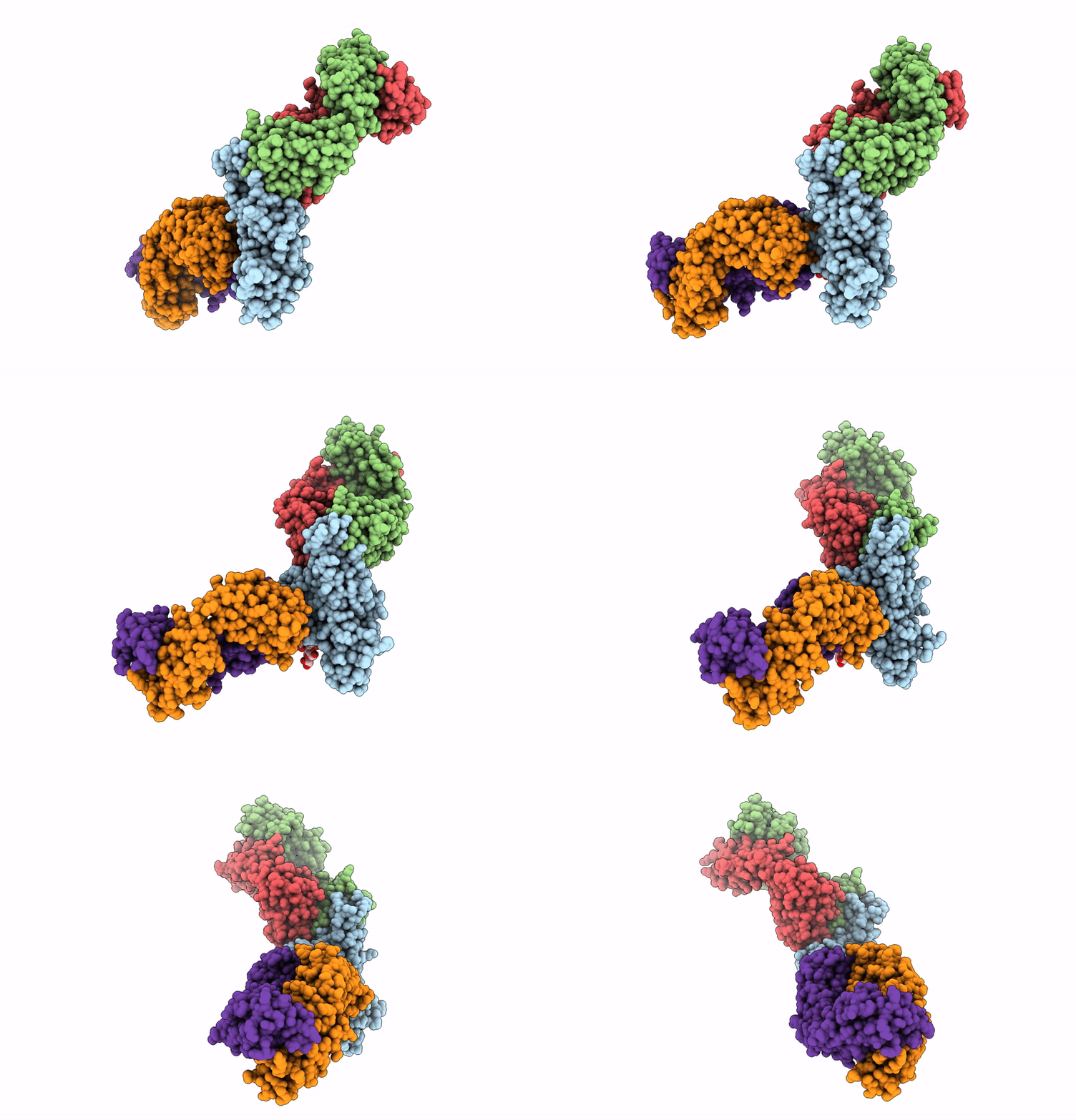
9PW4 image
Deposition Date 2025-08-04
Release Date 2025-11-19
Last Version Date 2026-01-14
Entry Detail
PDB ID:
9PW4
Keywords:
Title:
Structure of V30V4 in complex with SARS-CoV-2 spike
Biological Source:
Source Organism(s):
Expression System(s):
Method Details:
Experimental Method:
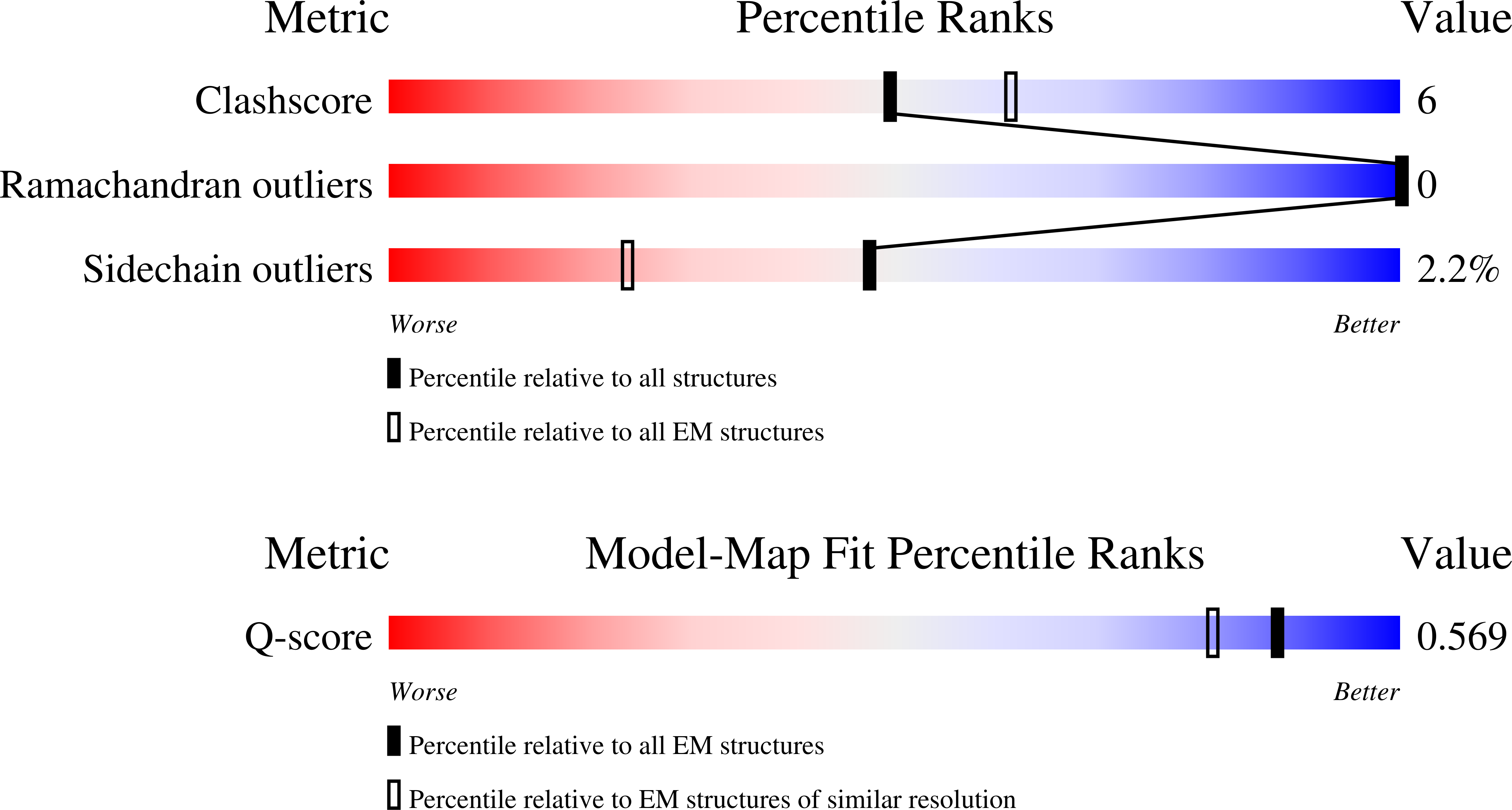
Resolution:
2.85 Å
Aggregation State:
PARTICLE
Reconstruction Method:
SINGLE PARTICLE
Macromolecular Entities
Structures with similar UniProt ID
Protein Blast
Polymer Type:polypeptide(L)
Molecule:Spike protein S1
Gene (Uniprot):S
Chain IDs:A
Chain Length:684
Number of Molecules:1
Biological Source:Severe acute respiratory syndrome coronavirus 2
Polymer Type:polypeptide(L)
Molecule:V30V4 FAB HEAVY CHAIN
Chain IDs:D (auth: C)
Chain Length:226
Number of Molecules:1
Biological Source:Homo sapiens
Polymer Type:polypeptide(L)
Molecule:V30V4 FAB LIGHT CHAIN
Chain IDs:B (auth: D)
Chain Length:216
Number of Molecules:1
Biological Source:Homo sapiens
Polymer Type:polypeptide(L)
Molecule:SP1-77 FAB HEAVY CHAIN
Chain IDs:E
Chain Length:225
Number of Molecules:1
Biological Source:Mus musculus
Polymer Type:polypeptide(L)
Molecule:SP1-77 FAB LIGHT CHAIN
Chain IDs:C (auth: F)
Chain Length:213
Number of Molecules:1
Biological Source:Mus musculus
Ligand Molecules
Primary Citation
Affinity maturation and light-chain-mediated paratope diversification anticipates viral evolution.
Cell Rep 45 116800 116800 (2025)
PMID: 41474620 DOI: 10.1016/j.celrep.2025.116800

Abstact

A key goal of vaccinology is to train the immune system to combat current pathogens while preparing it for future variants. Here, we investigate how Wuhan strain severe acute respiratory syndrome coronavirus 2 mRNA vaccination generates "anticipatory breadth" in an antibody family exhibiting germline complementarity to the ACE2 binding site on the receptor-binding-domain (RBD). IGHV3-53/66 antibodies from infection-naive vaccinees frequently neutralize Omicron variants and contain hallmark breadth-enhancing mutations. While Omicron breakthrough infection does not alter IGHV3-53/66 mutation frequencies, it modifies Ig light-chain pairing frequencies, suggesting variant-driven selection for favorable pairings. Structural analyses of IGHV3-53/66-RBD complexes show that hallmark heavy-chain mutations refine interactions with conserved RBD residues, while alternative Ig light-chain pairings modify contacts at Omicron mutation sites. Together, these findings support a cooperative model of anticipatory breadth involving targeting of a functionally constrained epitope, affinity maturation to establish an affinity buffer, and alternative Ig light-chain pairings to diversify paratopes-providing a mechanistic framework for anticipating viral evolution.

Legend

Protein

Chemical

Disease

Primary Citation of related structures
Feedback Form
Name
Email
Institute
Feedback