9PSS image
Deposition Date 2025-07-26
Release Date 2026-01-28
Last Version Date 2026-01-28
Entry Detail
PDB ID:
9PSS
Title:
IRAK4 in Complex with Compound 3
Biological Source:
Source Organism(s):
Homo sapiens (Taxon ID: 9606)
Expression System(s):
Method Details:
Experimental Method:
Resolution:
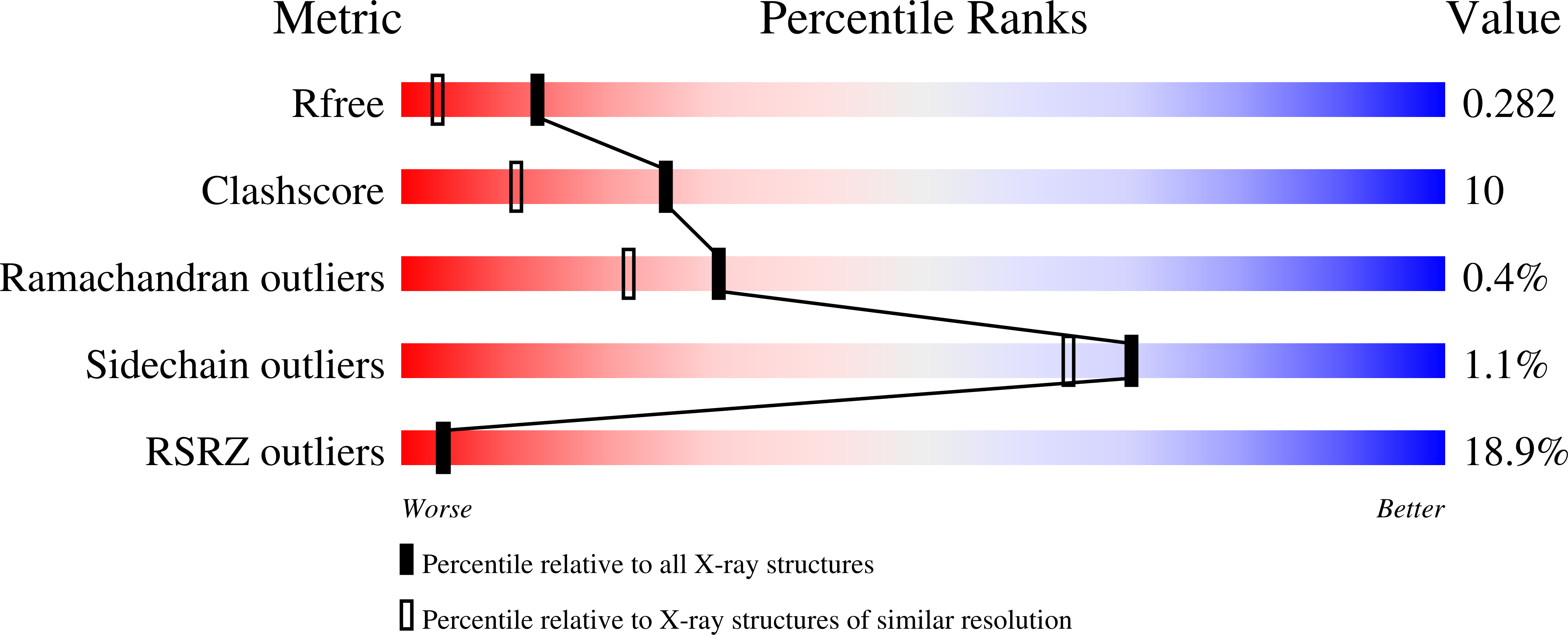
1.93 Å
R-Value Free:
0.28
R-Value Work:
0.24
R-Value Observed:
0.24
Space Group:
I 2 2 2
Macromolecular Entities
Structures with similar UniProt ID
Protein Blast
Polymer Type:polypeptide(L)
Molecule:Interleukin-1 receptor-associated kinase 4
Gene (Uniprot):IRAK4
Chain IDs:A, B
Chain Length:304
Number of Molecules:2
Biological Source:Homo sapiens
Modified Residue
Compound ID Chain ID Parent Comp ID Details 2D Image
SEP A SER modified residue
TPO A THR modified residue
Primary Citation
Examination of Noncanonical Kinase Hinge Binders Leads to Thiadiazoles as Potent IRAK4 Inhibitors.
Acs Med.Chem.Lett. 17 175 182 (2026)
PMID: 41531974 DOI: 10.1021/acsmedchemlett.5c00602

Abstact

A hallmark of most known small-molecule orthosteric kinase inhibitors is hydrogen-bonding to the hinge-region of the kinase to mimic the hinge interaction of adenine. Herein we report our studies on deviation from canonical hinge-binders in the context of IRAK4 inhibitors. Small-molecule inhibitors of IRAK4 have generated interest as potential treatments for inflammatory diseases. Notably, in our discovery efforts we identified pyridinyl-thiadiazoles as noncanonical hinge-binders. X-ray structural evidence supports that the thiadiazole moiety engages in a rare intermolecular noncovalent sulfur-oxygen interaction. This thiadiazole series, exemplified by compounds 19 and 22, has shown promise for potent, selective, orally bioavailable IRAK4 inhibitors.

Legend

Protein

Chemical

Disease

Primary Citation of related structures
Feedback Form
Name
Email
Institute
Feedback