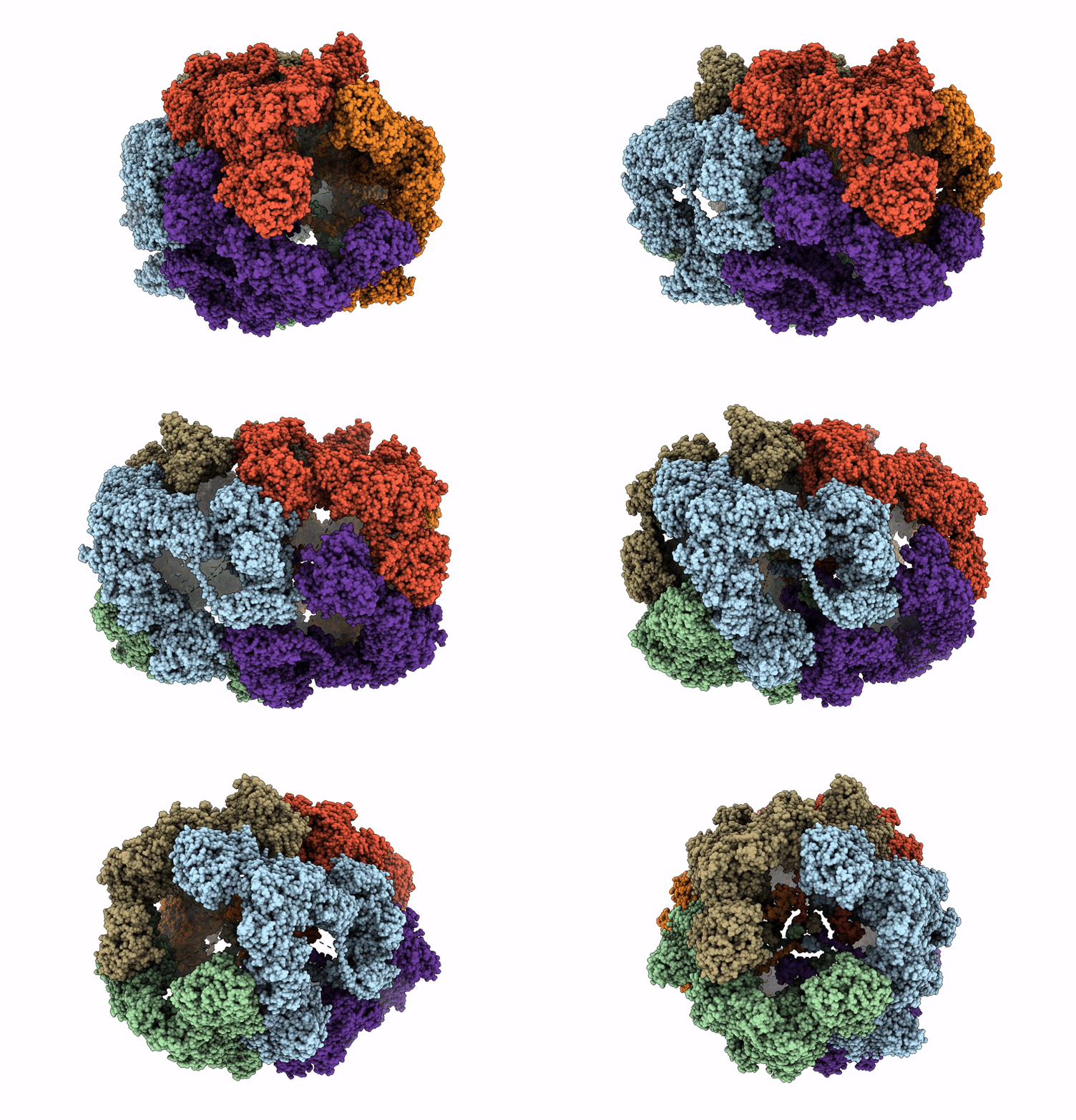
9PQX image
Deposition Date 2025-07-23
Release Date 2025-12-10
Last Version Date 2026-01-14
Entry Detail
PDB ID:
9PQX
Title:
Structure of M. tuberculosis type-I FAS in the apo state
Biological Source:
Source Organism(s):
Expression System(s):
Method Details:
Experimental Method:
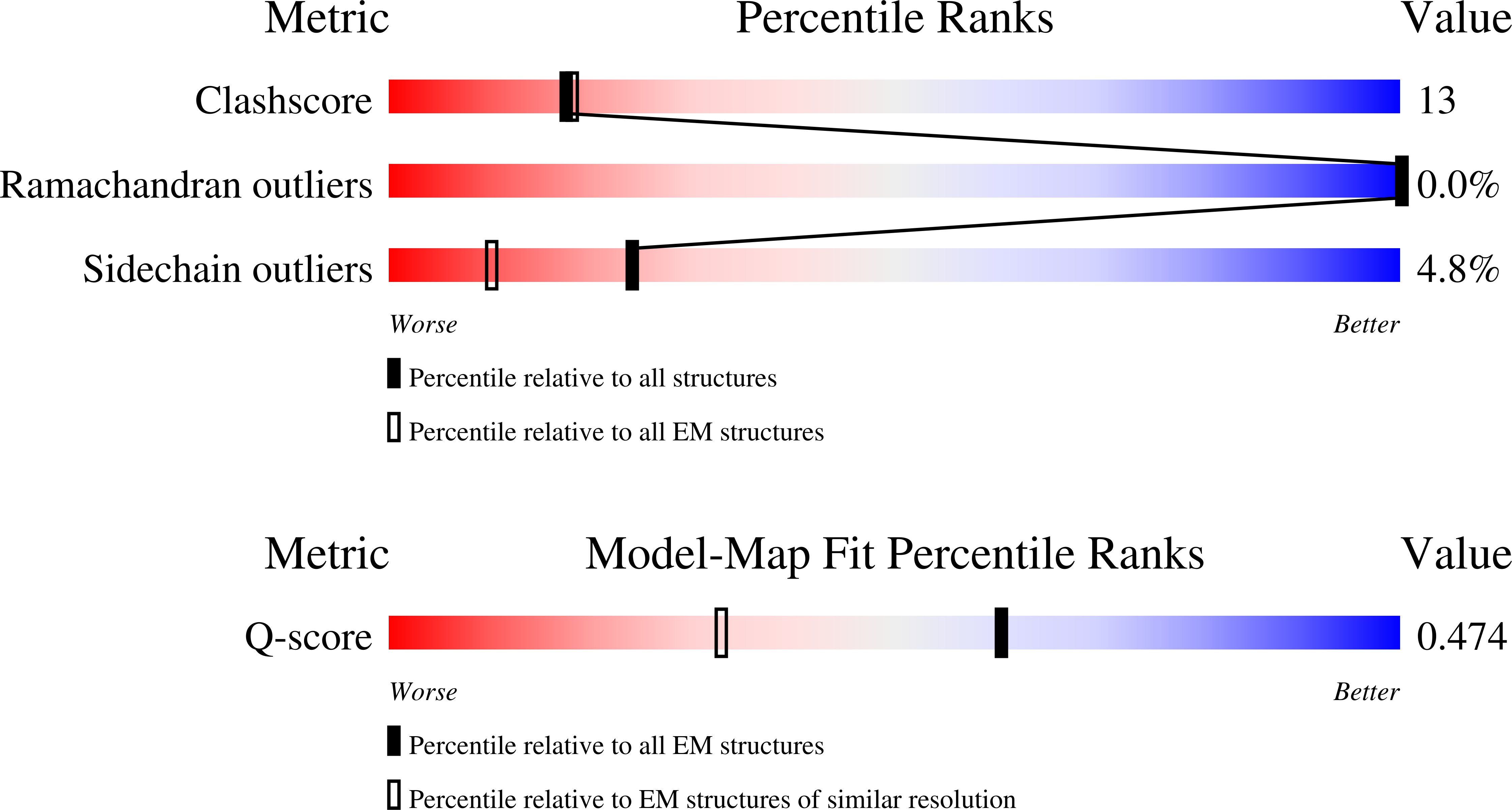
Resolution:
2.83 Å
Aggregation State:
PARTICLE
Reconstruction Method:
SINGLE PARTICLE
Macromolecular Entities
Structures with similar UniProt ID
Protein Blast
Polymer Type:polypeptide(L)
Molecule:3-oxoacyl-ACP synthase
Gene (Uniprot):kasA_2
Chain IDs:A, B, C, D, E, F
Chain Length:3069
Number of Molecules:6
Biological Source:Mycobacterium tuberculosis
Ligand Molecules
Primary Citation
Structural basis of product recognition by Mycobacterium tuberculosis fatty acid synthase.
Protein Sci. 35 e70412 e70412 (2026)
PMID: 41427673 DOI: 10.1002/pro.70412

Abstact

Microbial iterative fatty acid synthases (FAS) are versatile multienzymes under scrutiny for their potential as anti-infectious targets and their biotechnological applications. They produce saturated fatty acids with defined chain length and release them as coenzyme A-conjugates. How they recognize appropriate acyl length to initiate the process of product release is unknown. Here, we resolved two intermediate state structures of FAS, one from each of the two organisms: bacterium Mycobacterium tuberculosis and yeast Saccharomyces cerevisiae. These structures reveal how acyl carrier protein (ACP) domain and nascent fatty acids interact with the substrate-promiscuous malonyl-palmitoyl transferase (MPT) domain that is involved in product cleavage from the enzyme. MPT adopts a transient channel necessary for the accommodation of long-chain fatty acids. This channel is formed by the transient retraction of a conserved arginine side chain involved in malonate binding. These insights uncover structural determinants that enable M. tuberculosis type I FAS to produce very long-chain fatty acids used for evading host immunity in tuberculosis (TB).

Legend

Protein

Chemical

Disease

Primary Citation of related structures
Feedback Form
Name
Email
Institute
Feedback