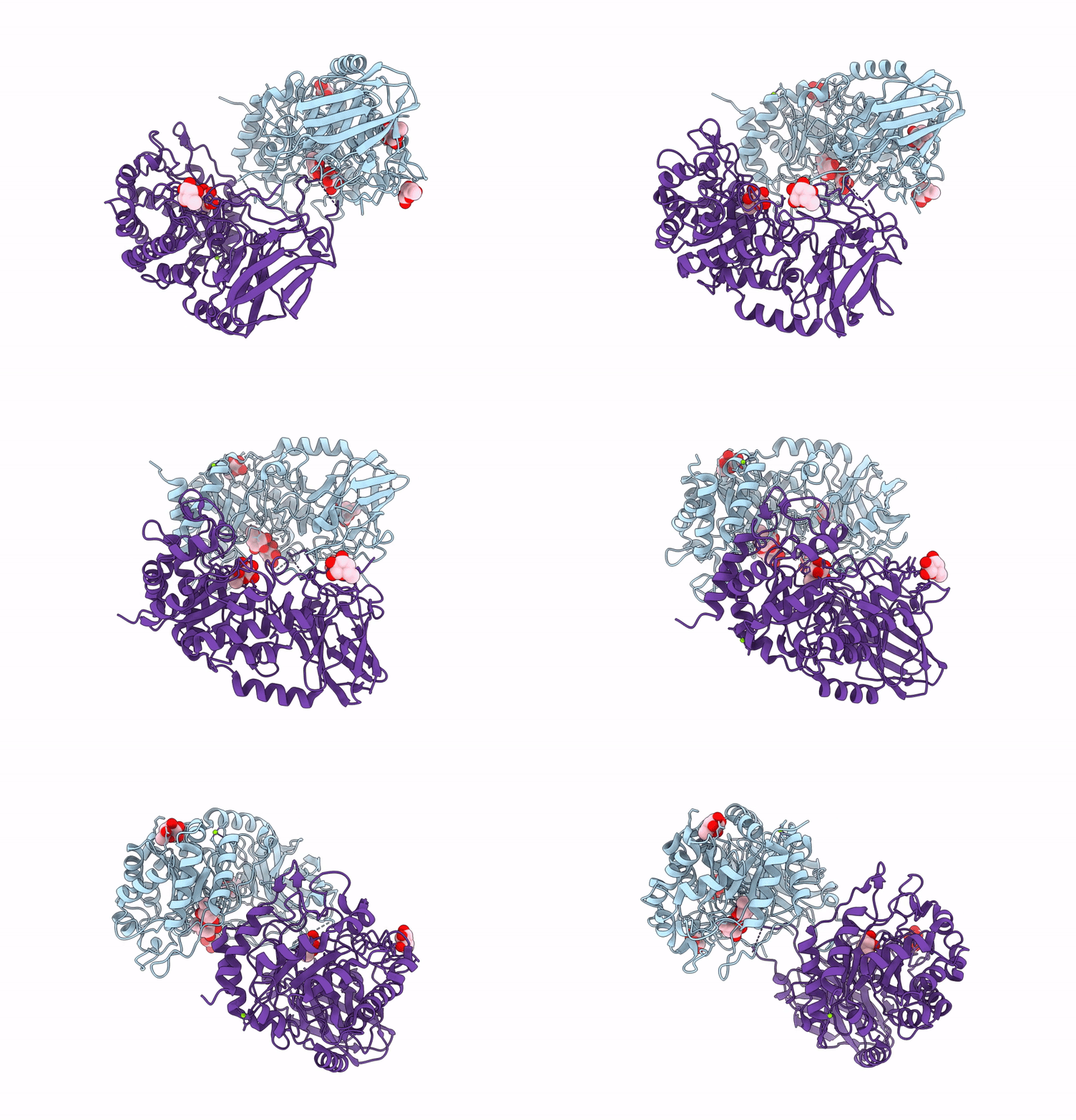
9PNK image
Deposition Date 2025-07-21
Release Date 2025-11-05
Last Version Date 2025-11-12
Entry Detail
PDB ID:
9PNK
Keywords:
Title:
Crystal structure of the GH29-like fucosidase FucWf4 in complex with fucose
Biological Source:
Source Organism:
Host Organism:
Method Details:
Experimental Method:
Resolution:
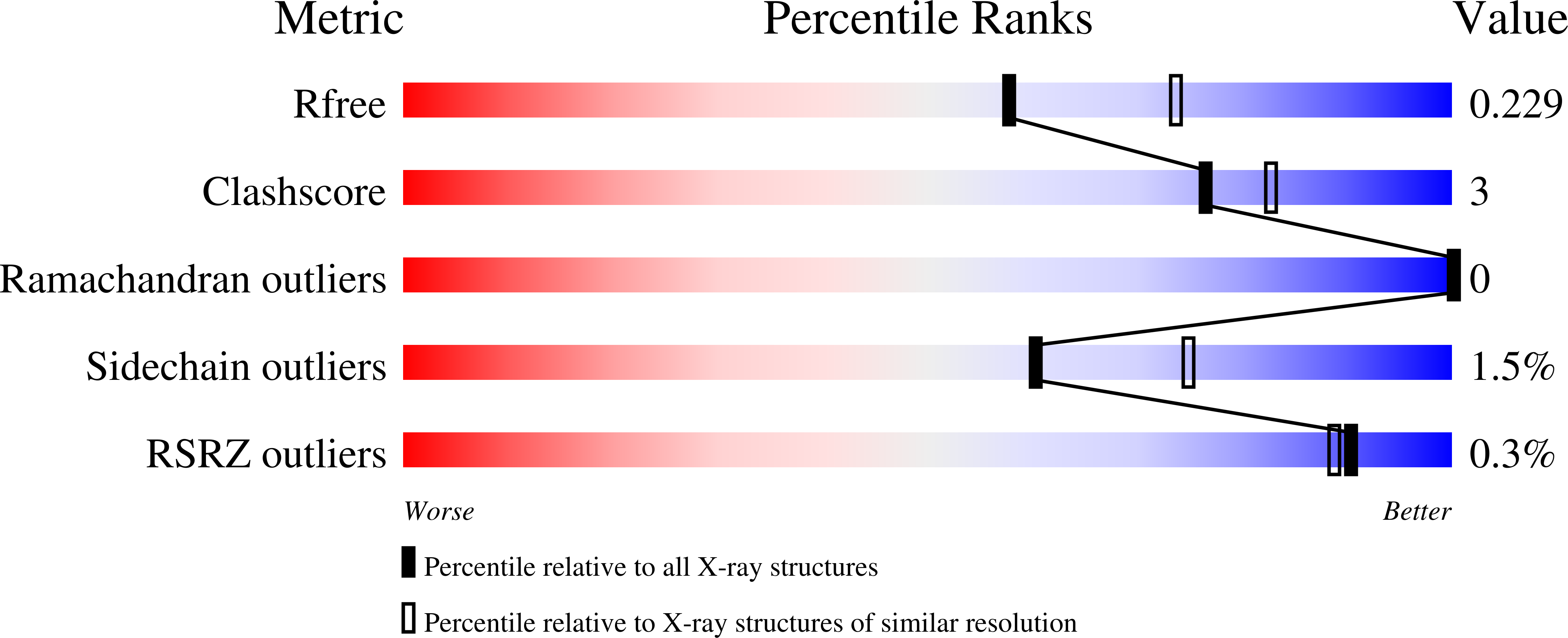
2.19 Å
R-Value Free:
0.22
R-Value Work:
0.18
R-Value Observed:
0.18
Space Group:
P 21 21 21
Macromolecular Entities
Structures with similar UniProt ID
Protein Blast
Polymer Type:polypeptide(L)
Molecule:Alpha-L-fucosidase
Gene (Uniprot):AXE80_07370
Chain IDs:A, B
Chain Length:530
Number of Molecules:2
Biological Source:Wenyingzhuangia fucanilytica
Primary Citation
Structural insights into a fucosidase involved in fucoidan degradation.
Acta Crystallogr.,Sect.F 81 459 466 (2025)
PMID: 41114657 DOI: 10.1107/S2053230X25008842

Abstact

Fucoidan is a complex, sulfated polysaccharide primarily found in brown algae, where it plays important structural and protective roles. Due to its abundance in marine ecosystems, many marine bacteria have evolved diverse and specialized enzymatic systems to degrade fucoidan, although the functions and structures of many of these enzymes remain uncharacterized. Here, we describe the structure of a newly identified fucosidase, FucWf4, which cleaves terminal, unsulfated fucose residues from linear, sulfated fucoidan. FucWf4 does not belong to any known glycoside hydrolase (GH) family, but shows the greatest similarity to GH29 fucosidases. We present the first crystal structure of FucWf4 in complex with fucose, revealing a unique C-terminal domain that resembles a carbohydrate-binding module, although it may have lost its carbohydrate-binding capacity and is absent from canonical GH29 enzymes. Docking experiments suggest the presence of a -1 subsite containing a potential sulfate-binding pocket, which may underlie the substrate specificity of the enzyme. Furthermore, sequence analysis of FucWf4 homologs reveals two distinct clades, likely corresponding to functionally divergent groups. Together, these findings provide new insights into the molecular basis of fucoidan recognition and degradation by this novel enzyme subfamily, laying the groundwork for future functional and structural studies.

Legend

Protein

Chemical

Disease

Primary Citation of related structures
Feedback Form
Name
Email
Institute
Feedback