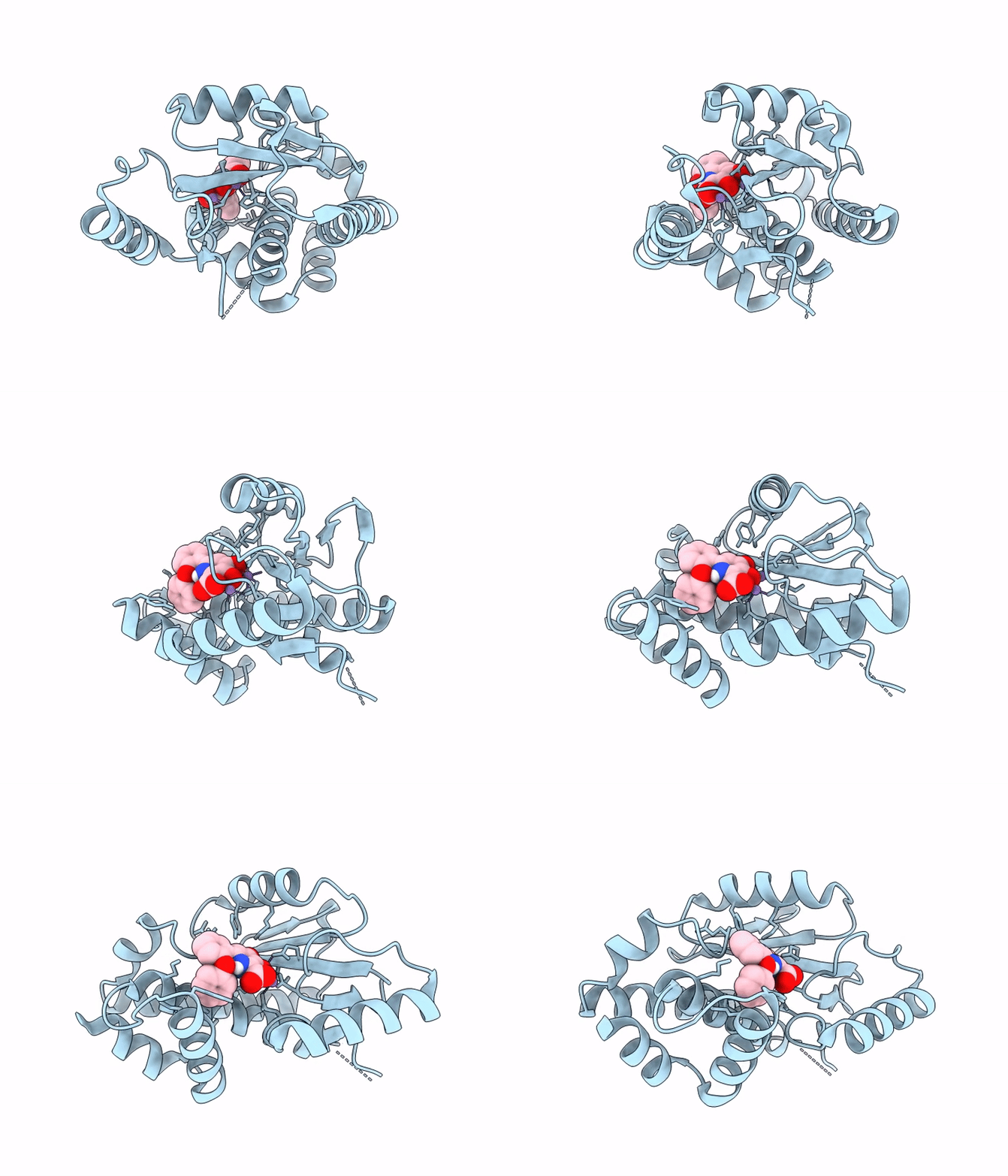
9PN3 image
Deposition Date 2025-07-18
Release Date 2026-01-21
Last Version Date 2026-01-21
Entry Detail
PDB ID:
9PN3
Keywords:
Title:
Influenza PA-N Endonuclease I38T mutant with compound 4 ((6M)-3-hydroxy-4-oxo-6-(2-phenoxyphenyl)-1,4-dihydropyridine-2-carboxylic acid)
Biological Source:
Expression System(s):
Method Details:
Experimental Method:
Resolution:
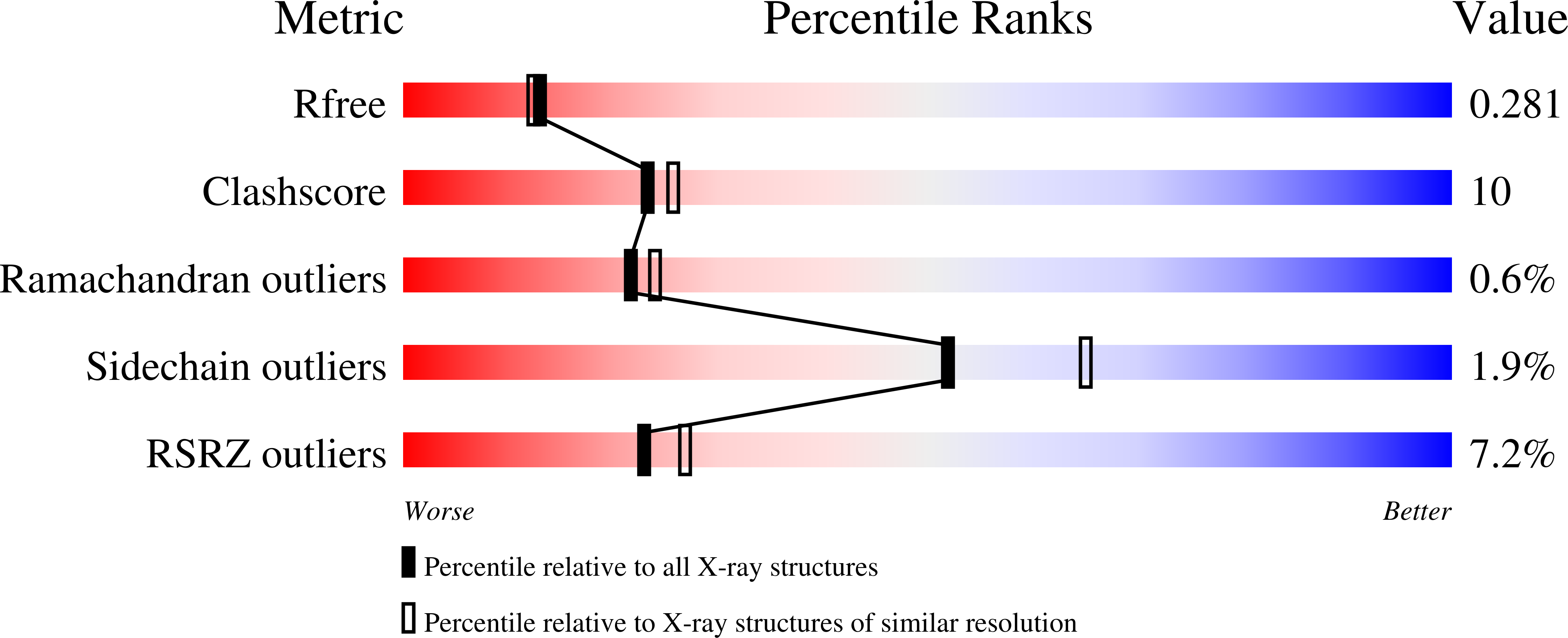
2.36 Å
R-Value Free:
0.27
R-Value Work:
0.22
R-Value Observed:
0.22
Space Group:
P 62 2 2
Macromolecular Entities
Structures with similar UniProt ID
Protein Blast
Polymer Type:polypeptide(L)
Molecule:Polymerase acidic protein
Gene (Uniprot):PA
Mutagens:I38T
Chain IDs:A
Chain Length:192
Number of Molecules:1
Biological Source:Influenza A virus (A/California/04/2009(H1N1))
Primary Citation
Substituent size versus metal binding of inhibitors with variants of influenza endonuclease.
J.Inorg.Biochem. 277 113210 113210 (2025)
PMID: 41512630 DOI: 10.1016/j.jinorgbio.2025.113210

Abstact

The influenza virus causes a significant burden of illness each year. Although vaccination is the most effective method to prevent seasonal influenza infection, viral escape mechanisms make vaccine composition difficult to predict. Antivirals are crucial for decreasing rates of morbidity and mortality from influenza viral infection. The newest anti-influenza drugs target the RNA-dependent RNA polymerase acidic N-terminal (PAN) endonuclease, a critical component of influenza viral replication machinery. This study examines the structure of inhibitors of PAN that utilize a hydroxypyridinone-based metal-binding pharmacophore (MBP). Specifically, this report explores how the size of substituent groups impacts the binding conformation and affinity of a series of compounds against both wild-type (WT) and resistance mutant strains, I38T and E23K. Co-crystal structures revealed that the distance between compounds and enzyme residue 38 was conserved to maintain strong interactions, resulting in deviations from ideal coordination geometries at the active site metal centers. This suggests the interactions with residue 38 with each compound is important and can impact inhibitor potency as a consequence of distortions in the metal binding geometry of the compounds.

Legend

Protein

Chemical

Disease

Primary Citation of related structures
Feedback Form
Name
Email
Institute
Feedback