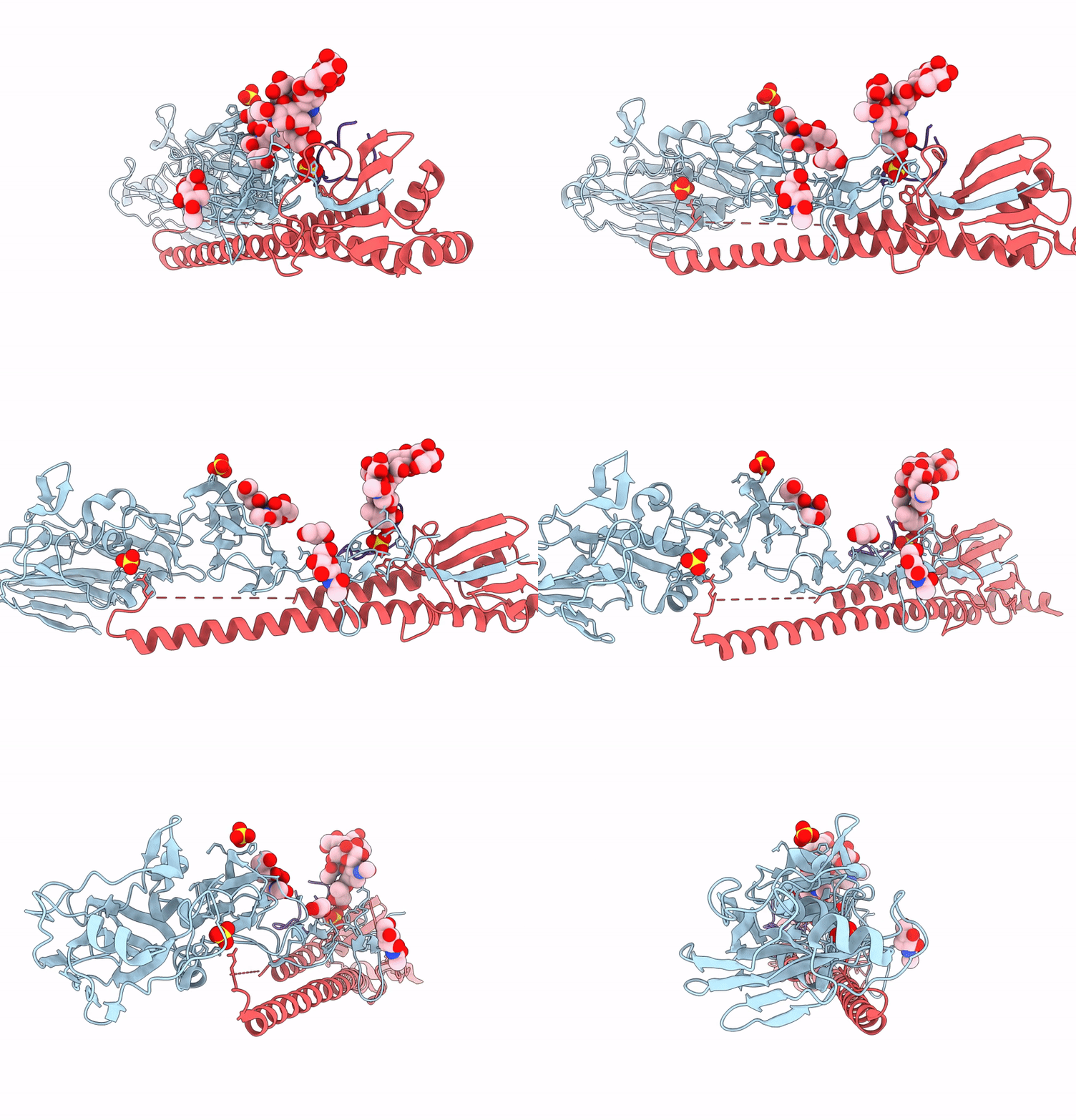
9PHD image
Deposition Date 2025-07-09
Release Date 2025-12-24
Last Version Date 2025-12-31
Entry Detail
PDB ID:
9PHD
Keywords:
Title:
Crystal structure of the A/Puerto Rico/8/1934 (H1N1) influenza virus hemagglutinin in complex with fusion inhibitor cyclic peptide CP141076 (CP8)
Biological Source:
Expression System(s):
Method Details:
Experimental Method:
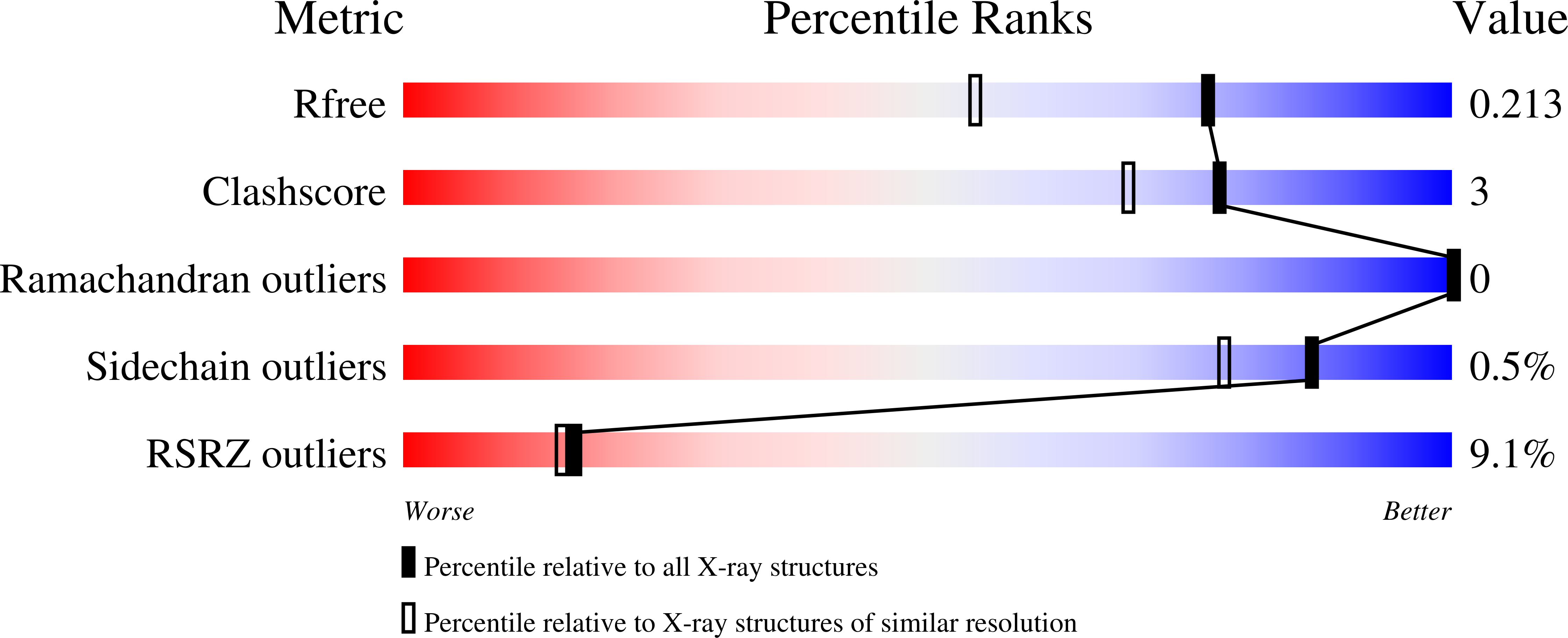
Resolution:
1.59 Å
R-Value Free:
0.21
R-Value Work:
0.19
R-Value Observed:
0.19
Space Group:
H 3 2
Macromolecular Entities
Structures with similar UniProt ID
Protein Blast
Polymer Type:polypeptide(L)
Molecule:Hemagglutinin
Gene (Uniprot):HA
Chain IDs:A (auth: C)
Chain Length:326
Number of Molecules:1
Biological Source:Influenza A virus (A/Puerto Rico/8/1934(H1N1))
Structures with similar UniProt ID
Protein Blast
Polymer Type:polypeptide(L)
Molecule:Hemagglutinin HA2 chain
Gene (Uniprot):HA
Chain IDs:B (auth: D)
Chain Length:176
Number of Molecules:1
Biological Source:Influenza A virus (A/Puerto Rico/8/1934(H1N1))
Polymer Type:polypeptide(L)
Molecule:cyclic peptide CP141076
Chain IDs:C (auth: G)
Chain Length:15
Number of Molecules:1
Biological Source:synthetic construct
Primary Citation
V H H antibody loop guides design of a synthetic macrocyclic peptide that potently blocks influenza virus membrane fusion.
Npj Viruses 3 83 83 (2025)
PMID: 41413306 DOI: 10.1038/s44298-025-00166-1

Abstact

Miniaturizing biologically complex structural motifs to produce synthetic functional mimetics holds significant promise for development of new therapeutic modalities. Here, we demonstrate a unique approach using the key binding loop of the single variable domain of a heavy chain (VHH) llama antibody as a starting point for peptide design. VHH antibodies of camelids and sharks generally have longer, but more ligand-efficient complementarity determining region 3 (CDR3) loops and are relatively stable structures. We harnessed these attributes as templates for design of a series of synthetic macrocyclic peptides. The designed peptides exhibit nanomolar binding to influenza hemagglutinin (HA) and heterosubtypic in vitro neutralization breadth against influenza A viruses by inhibiting the low pH mediated HA conformational changes that lead to membrane fusion. X-ray structures of peptide-HA complexes reveal high structural mimicry with the parent VHH antibody. One such macrocycle peptide candidate is promising for further development of broad protection against influenza A group 1 viruses.

Legend

Protein

Chemical

Disease

Primary Citation of related structures
Feedback Form
Name
Email
Institute
Feedback