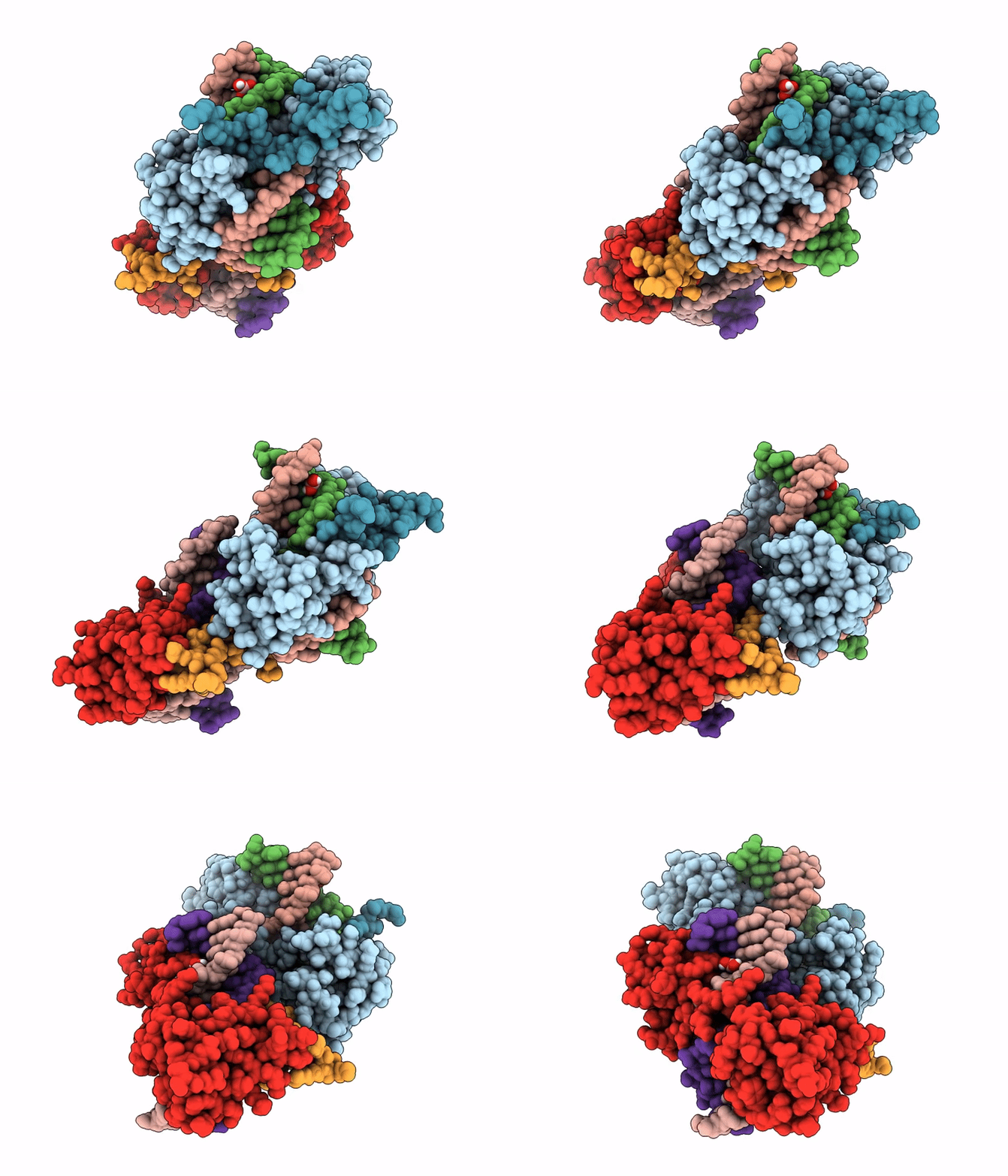
9PFP image
Deposition Date 2025-07-06
Release Date 2025-10-01
Last Version Date 2025-12-10
Entry Detail
PDB ID:
9PFP
Keywords:
Title:
Structure of POU2F3 POU domains bound to coactivator OCA-T1 and DNA
Biological Source:
Source Organism:
Homo sapiens (Taxon ID: 9606)
Method Details:
Experimental Method:
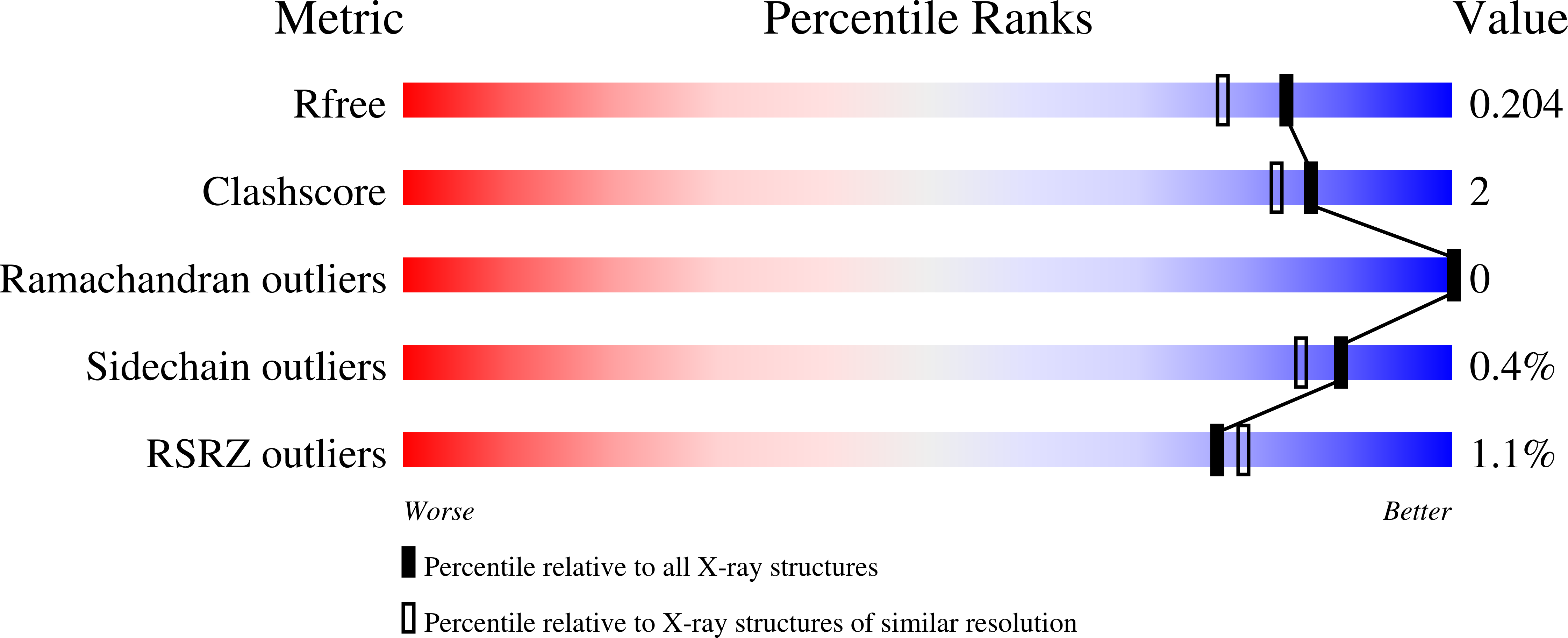
Resolution:
1.70 Å
R-Value Free:
0.20
R-Value Work:
0.17
R-Value Observed:
0.17
Space Group:
P 1 21 1
Macromolecular Entities
Structures with similar UniProt ID
Protein Blast
Polymer Type:polypeptide(L)
Molecule:POU domain, class 2, transcription factor 3
Gene (Uniprot):POU2F3
Chain IDs:A, E
Chain Length:160
Number of Molecules:2
Biological Source:Homo sapiens
Structures with similar UniProt ID
Protein Blast
Polymer Type:polypeptide(L)
Molecule:POU domain class 2-associating factor 2
Gene (Uniprot):POU2AF2
Chain IDs:B, F
Chain Length:41
Number of Molecules:2
Biological Source:Homo sapiens
Polymer Type:polydeoxyribonucleotide
Molecule:DNA containing POU domain recognition element octamer (sense strand)
Chain IDs:C, G
Chain Length:15
Number of Molecules:2
Biological Source:Homo sapiens
Polymer Type:polydeoxyribonucleotide
Molecule:DNA containing POU domain recognition element octamer (antisense strand)
Chain IDs:D, H
Chain Length:15
Number of Molecules:2
Biological Source:Homo sapiens
Ligand Molecules
Primary Citation
Structural basis of DNA-dependent coactivator recruitment by the tuft cell master regulator POU2F3.
Cell Rep 44 116572 116572 (2025)
PMID: 41260223 DOI: 10.1016/j.celrep.2025.116572

Abstact

The transcription factor POU2F3 defines the identity of tuft cells and underlies a distinct molecular subtype of small cell lung cancer (SCLC). Although POU2F3 is considered undruggable, its activity critically depends on the coactivators OCA-T1 and OCA-T2. Here, we demonstrate that acute suppression of either POU2F3 or OCA-T1 induces regression of tuft cell-like SCLC xenografts in vivo. To explore the structural basis and druggability of this dependency, we determine crystal structures of POU2F3 bound to OCA-T1 or OCA-T2 in complex with DNA, revealing a tripartite, DNA-dependent interface. We further employ deep mutational scanning to assess the functional impact of 4,218 missense variants in POU2F3 and OCA-T1, uncovering both mutation-sensitive hotspots and structurally constrained regions critical for tumor cell fitness. These findings define a transcriptional complex that integrates DNA recognition with coactivator recruitment and nominate POU2F3-OCA-T as a structurally tractable vulnerability in tuft cell-like carcinomas.

Legend

Protein

Chemical

Disease

Primary Citation of related structures
Feedback Form
Name
Email
Institute
Feedback