Planned Maintenance: Some services may turn out to be unavailable from 15th January, 2026 to 16th January, 2026. We apologize for the inconvenience!

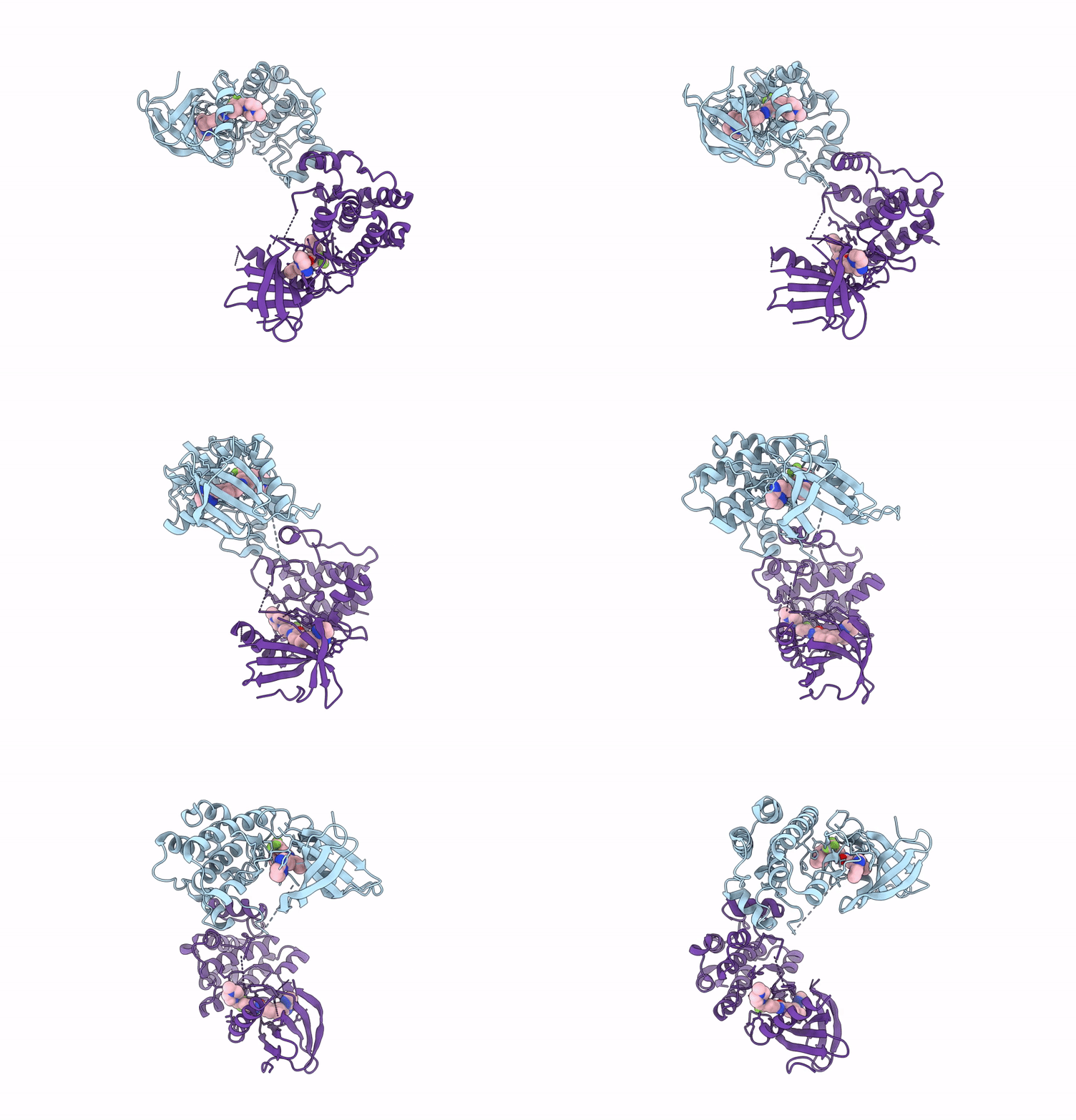
9P6A image
Deposition Date 2025-06-18
Release Date 2025-11-26
Last Version Date 2026-01-14
Entry Detail
PDB ID:
9P6A
Title:
The catalytic domain of MEKK2 in complex with ponatinib
Biological Source:
Source Organism(s):
Homo sapiens (Taxon ID: 9606)
Expression System(s):
Method Details:
Experimental Method:
Resolution:
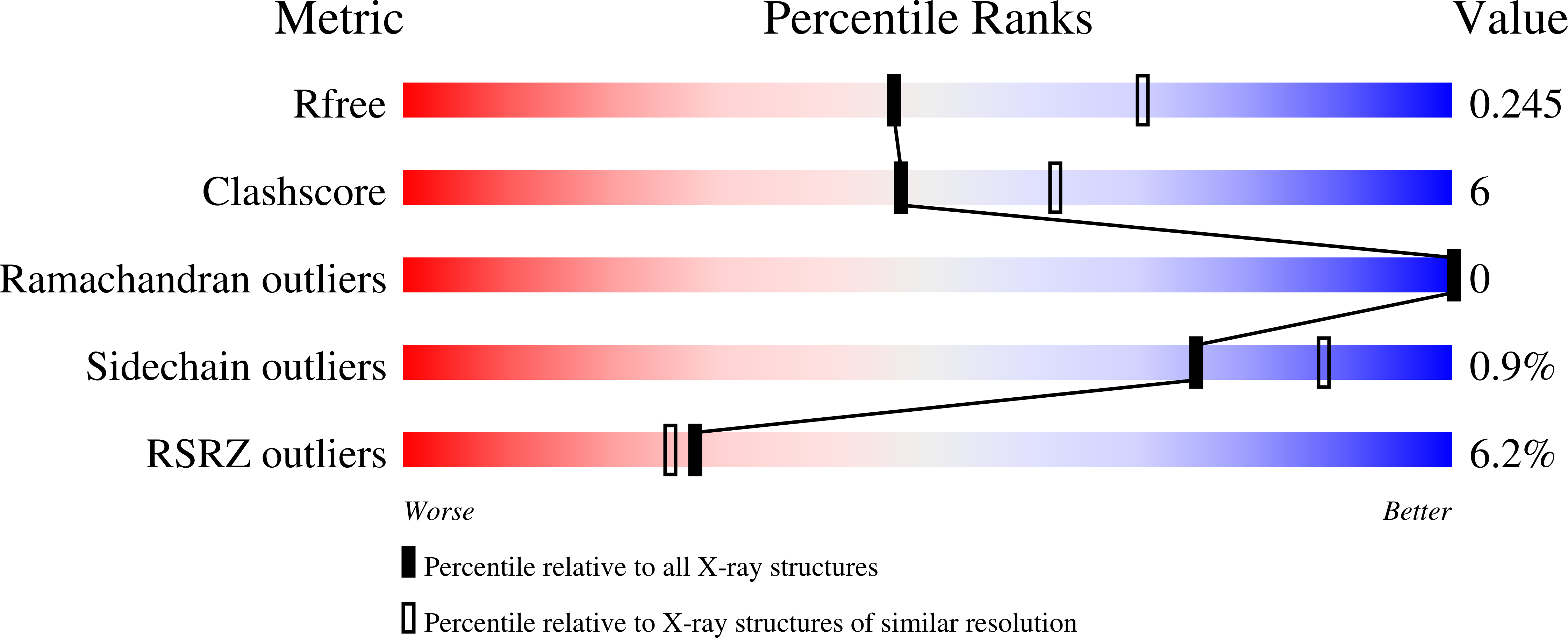
2.40 Å
R-Value Free:
0.24
R-Value Work:
0.22
R-Value Observed:
0.22
Space Group:
P 32 2 1
Macromolecular Entities
Structures with similar UniProt ID
Protein Blast
Polymer Type:polypeptide(L)
Molecule:Mitogen-activated protein kinase kinase kinase 2
Gene (Uniprot):MAP3K2
Chain IDs:A, B
Chain Length:299
Number of Molecules:2
Biological Source:Homo sapiens
Ligand Molecules
Primary Citation
Structural basis for MEKK2 dimerization and substrate recognition.
Nat Commun 17 193 193 (2025)
PMID: 41318559 DOI: 10.1038/s41467-025-66884-5

Abstact

Signaling downstream of Mitogen-Activated Protein Kinase Kinase Kinases (MAP3K) is promiscuous. In the vascular and immune systems the MAP3K, MEKK2, activates different substrates, but the mechanisms of substrate targeting have not been delineated. Here, we determine the 2.4 Å crystal structure of the MEKK2 kinase domain in complex with the small molecule inhibitor, ponatinib. We find that MEKK2 dimerizes by a surface centered on the αG helix and the C-terminal region of the activation segment, that this surface is important for MEKK2 autophosphorylation and dimerization, and that this surface is conserved with MEKK3. We then assess the importance of the surface for phosphorylation and recruitment of two MAP2K substrates, MEK5 and MKK6. We find that both MEK5 and MKK6 require the αG helix-mediated interaction for phosphorylation. In contrast, MEKK2 recruitment of MEK5 is dependent on PB1 domain interactions but MKK6 recruitment is associated with the αG helix-mediated interaction. Our study therefore provides a framework to understand diverse substrate targeting by the MAP3Ks, MEKK2 and MEKK3.

Legend

Protein

Chemical

Disease

Primary Citation of related structures
Feedback Form
Name
Email
Institute
Feedback