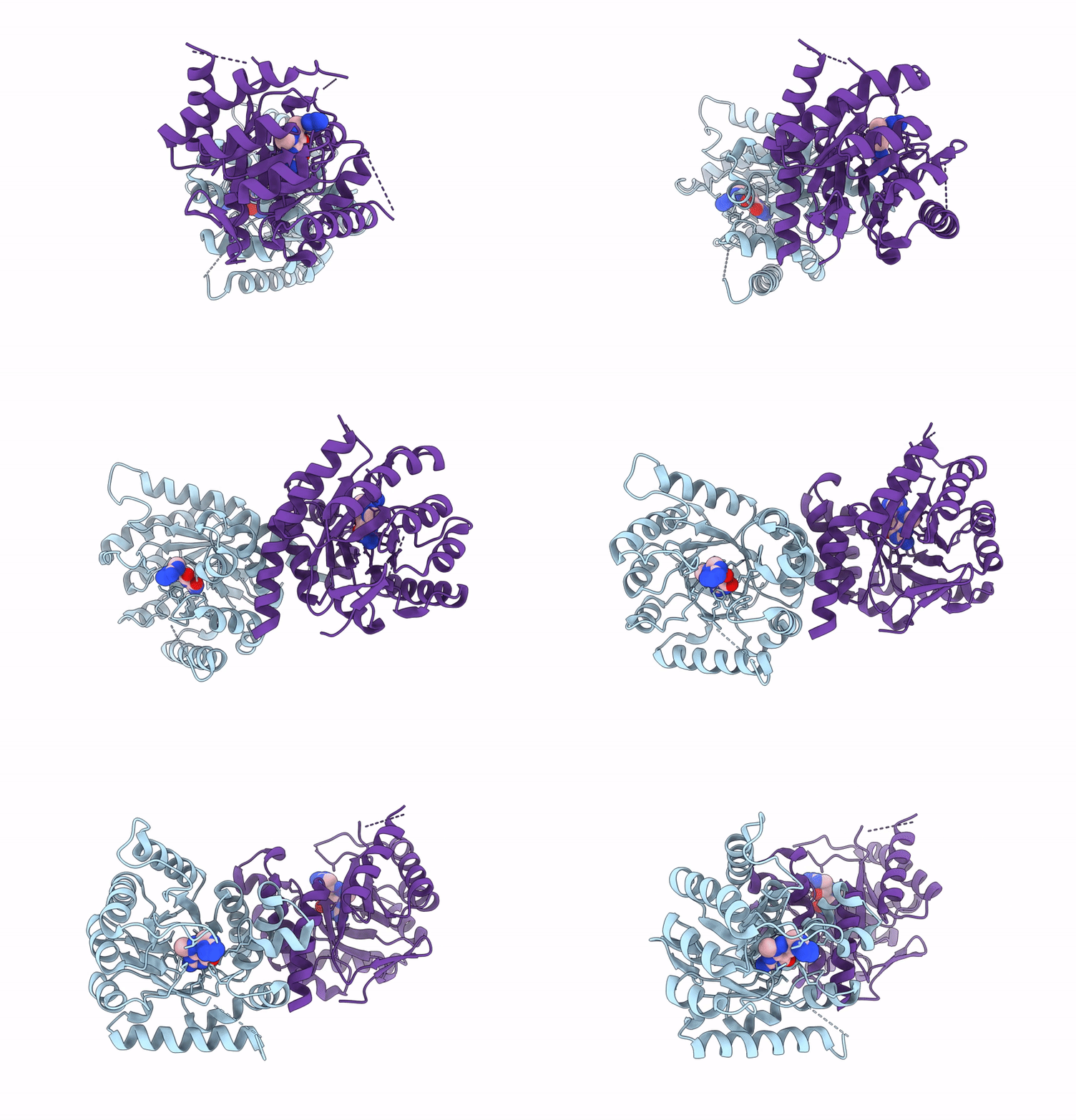
9P5I image
Deposition Date 2025-06-18
Release Date 2025-11-05
Last Version Date 2025-11-26
Entry Detail
PDB ID:
9P5I
Keywords:
Title:
E. coli Dihydropteroate Synthase in complex with pterin-based inhibitor
Biological Source:
Source Organism:
Escherichia coli (Taxon ID: 562)
Method Details:
Experimental Method:
Resolution:
2.14 Å
R-Value Free:
0.23
R-Value Work:
0.19
Space Group:
P 21 21 21

Macromolecular Entities
Structures with similar UniProt ID
Protein Blast
Polymer Type:polypeptide(L)
Molecule:Dihydropteroate synthase
Gene (Uniprot):folP
Chain IDs:A, B
Chain Length:277
Number of Molecules:2
Biological Source:Escherichia coli
Ligand Molecules
Primary Citation
Development of Pyrimido Pyridazine Analogs through Increased Whole Cell Target Engagement of the Dihydropteroate Synthase Pterin Binding Site in Gram-Negative Bacteria.
Acs Infect Dis. 11 3237 3250 (2025)
PMID: 41116192 DOI: 10.1021/acsinfecdis.5c00635

Abstact

Dihydropteroate synthase (DHPS) is a critical enzyme in the folate biosynthetic pathway of bacteria, fungi, and protozoans. Sulfonamides successfully target the p-aminobenzoic acid (pABA) binding site of DHPS, forming a false product that obstructs the formation of 7,8-dihydropteroate and disrupts subsequent reactions in the pathway. Pyrimido[4,5-c]pyridazine-based inhibitors target the pterin binding site of DHPS, demonstrating high target affinity but minimal antimicrobial activity, which has previously been attributed to poor permeability without detailed analysis. In this study, we investigate the permeability limitations of our pyrimido pyridazine series in Gram-negative bacteria within the context of whole cell target engagement and cellular accumulation. To evaluate their whole cell target engagement against Escherichia coli DHPS (EcDHPS), we developed a robust luminescence-based HiBiT cellular thermal shift assay and combined it with surface plasmon resonance and an LC-MS/MS-based accumulation assay. This orthogonal assay platform was used to reevaluate the SAR of our Legacy pyrimido pyridazine compound series against EcDHPS and to facilitate the design of an exploratory series of compounds with improved permeability. From this series, we found that the removal or replacement of the negatively charged carboxylic acid pyrimido pyridazine side chain with a thiotetrazole or a nitrile group resulted in increased accumulation, improved whole cell target engagement, and moderate antimicrobial activity against E. coli.

Legend

Protein

Chemical

Disease

Primary Citation of related structures
Feedback Form
Name
Email
Institute
Feedback