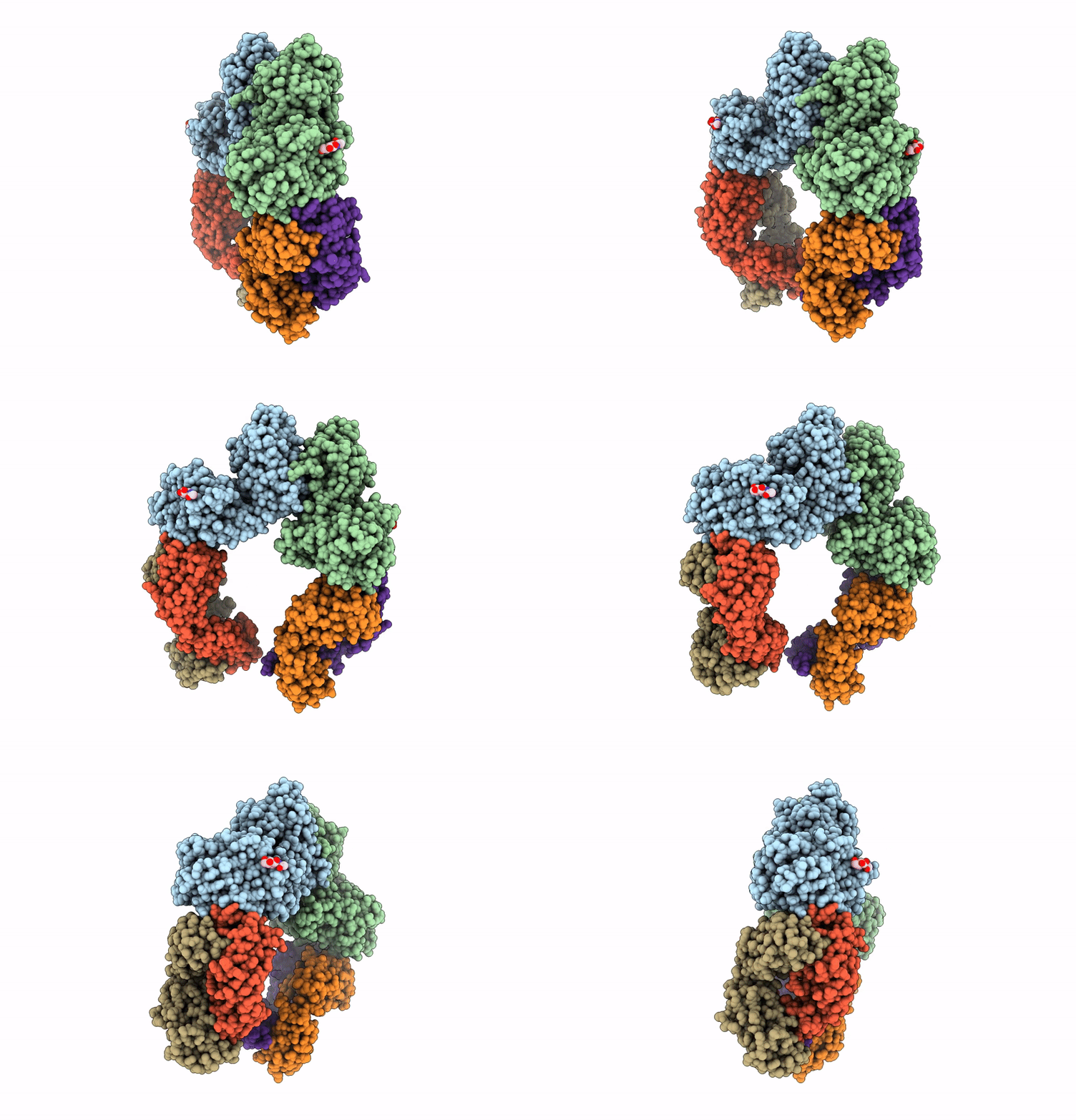
9P1M image
Deposition Date 2025-06-10
Release Date 2025-12-24
Last Version Date 2026-01-21
Entry Detail
PDB ID:
9P1M
Keywords:
Title:
Cryo-EM structure of CD73 in complex with antibody Sym024
Biological Source:
Source Organism(s):
Homo sapiens (Taxon ID: 9606)
Expression System(s):
Method Details:
Experimental Method:
Resolution:
2.90 Å
Aggregation State:
PARTICLE
Reconstruction Method:
SINGLE PARTICLE
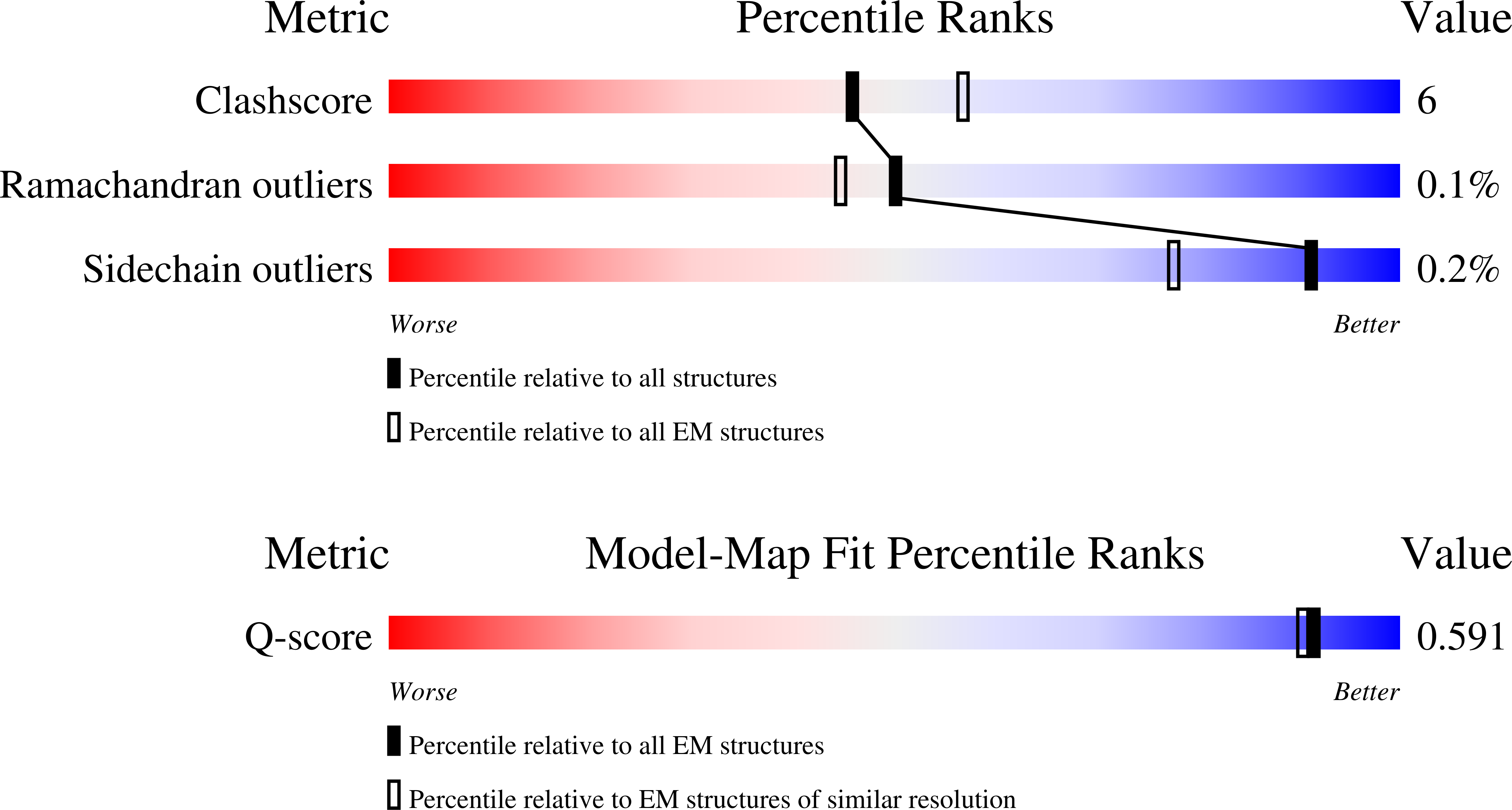
Macromolecular Entities
Structures with similar UniProt ID
Protein Blast
Polymer Type:polypeptide(L)
Molecule:5'-nucleotidase
Gene (Uniprot):NT5E
Chain IDs:A, B
Chain Length:536
Number of Molecules:2
Biological Source:Homo sapiens
Polymer Type:polypeptide(L)
Molecule:Antibody Light Chain
Chain IDs:C, E
Chain Length:214
Number of Molecules:2
Biological Source:Homo sapiens
Polymer Type:polypeptide(L)
Molecule:Antibody Heavy Chain
Chain IDs:D, F
Chain Length:453
Number of Molecules:2
Biological Source:Homo sapiens
Primary Citation
Sym024 interacts with a unique epitope on the CD73 homodimer, favoring effective bivalent binding to improve anti-PD1 therapy.
Clin.Cancer Res. ? ? ? (2026)
PMID: 41511395 DOI: 10.1158/1078-0432.CCR-25-2406

Abstact

PURPOSE Adenosine signaling may be a central immune suppressive mechanism in several cancers, and blockade of the rate-limiting CD73 AMP-to-adenosine enzyme has been demonstrated to improve clinical efficacy of PD(L)-1 immune therapy. However, deep inhibition of CD73 activity could prove difficult in tumor environments with a constant AMP supply and high CD73 levels. Here, we sought to identify, characterize, and benchmark a novel antagonistic anti-CD73 antibody, Sym024 (S95024), and to structurally decode its mode of action. EXPERIMENTAL DESIGN Sym024, selected via functional antibody repertoire screening, was tested against benchmark anti-CD73 antibodies in primary cell, cell line in vitro binding, CD73 enzymatic activity, and T cell activation assays. Its in vivo tumor growth inhibition was examined in transplanted human or mouse tumors in immunocompetent or immunodeficient mice, and intra-tumoral enzymatic inhibition and immune cell recruitment were assessed. We investigated Sym024-CD73 interaction using surface plasmon resonance, cryo-electron microscopy, site-directed mutagenesis, and population level complex formation through size-exclusion-chromatography with light scatter mass detection. Preclinical safety and pharmacokinetics were assessed in monkeys. RESULTS Sym024 effectively blocked CD73 across a large range of enzyme expression levels, comparing favorably to benchmark anti-CD73 antibodies; it improved the efficacy of PD-1 blockade in vitro as well as in vivo. Our structural data indicate that a unique one-to-one Sym024-CD73 interaction engenders this comprehensive inhibition. No pre-clinical safety flags were observed, and the pharmacokinetics profile of Sym024 supported a standard clinical dosing regimen. CONCLUSIONS The comprehensive CD73 inhibition exhibited by Sym024 may improve the efficacy of anti-PD(L)-1/anti-CD73 combination treatment.

Legend

Protein

Chemical

Disease

Primary Citation of related structures
Feedback Form
Name
Email
Institute
Feedback