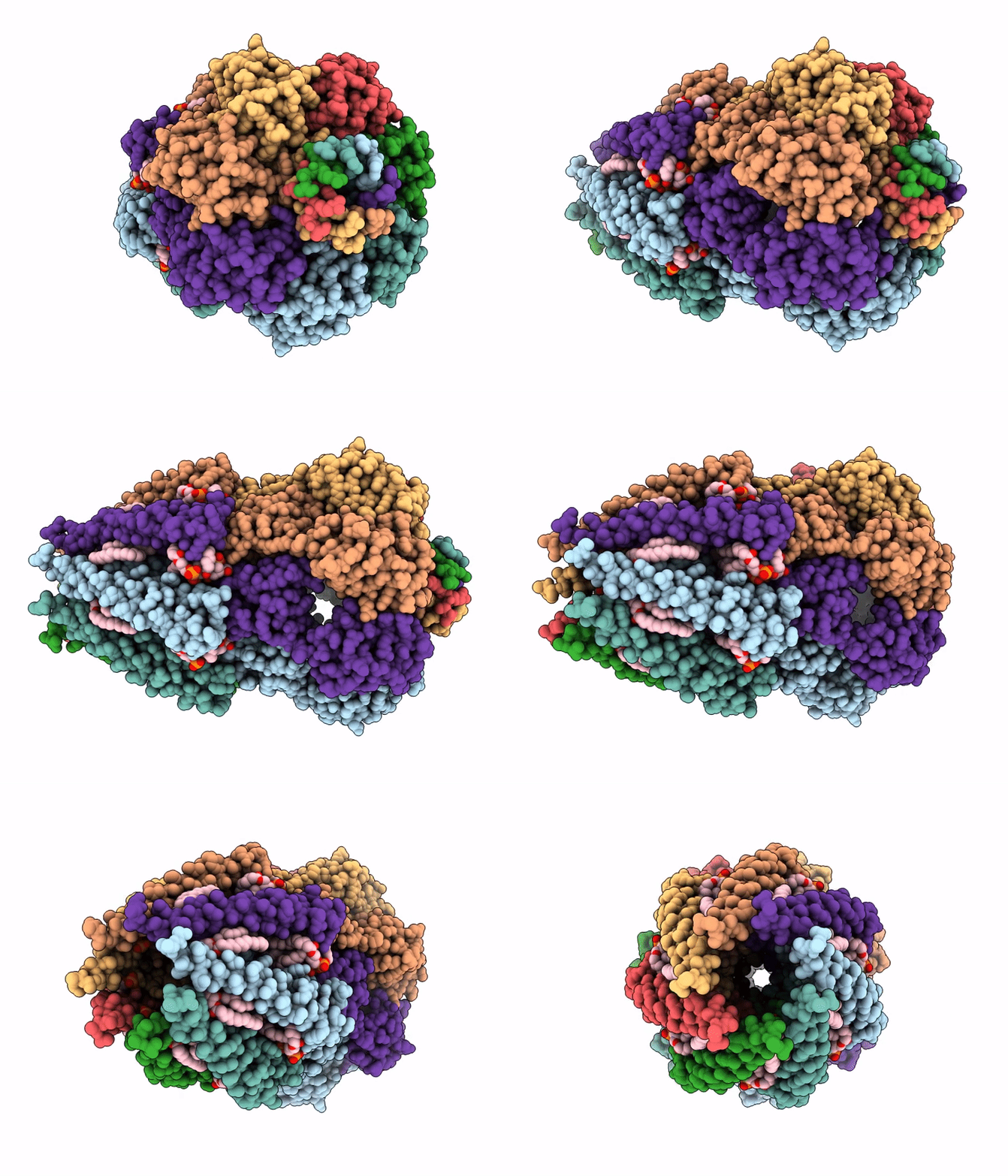
9P0N image
Deposition Date 2025-06-07
Release Date 2026-01-28
Last Version Date 2026-01-28
Entry Detail
PDB ID:
9P0N
Title:
MscS in Glyco-DIBMA Native Nanodiscs (C7 symmetry)
Biological Source:
Source Organism(s):
Escherichia coli (Taxon ID: 562)
Expression System(s):
Method Details:
Experimental Method:
Resolution:
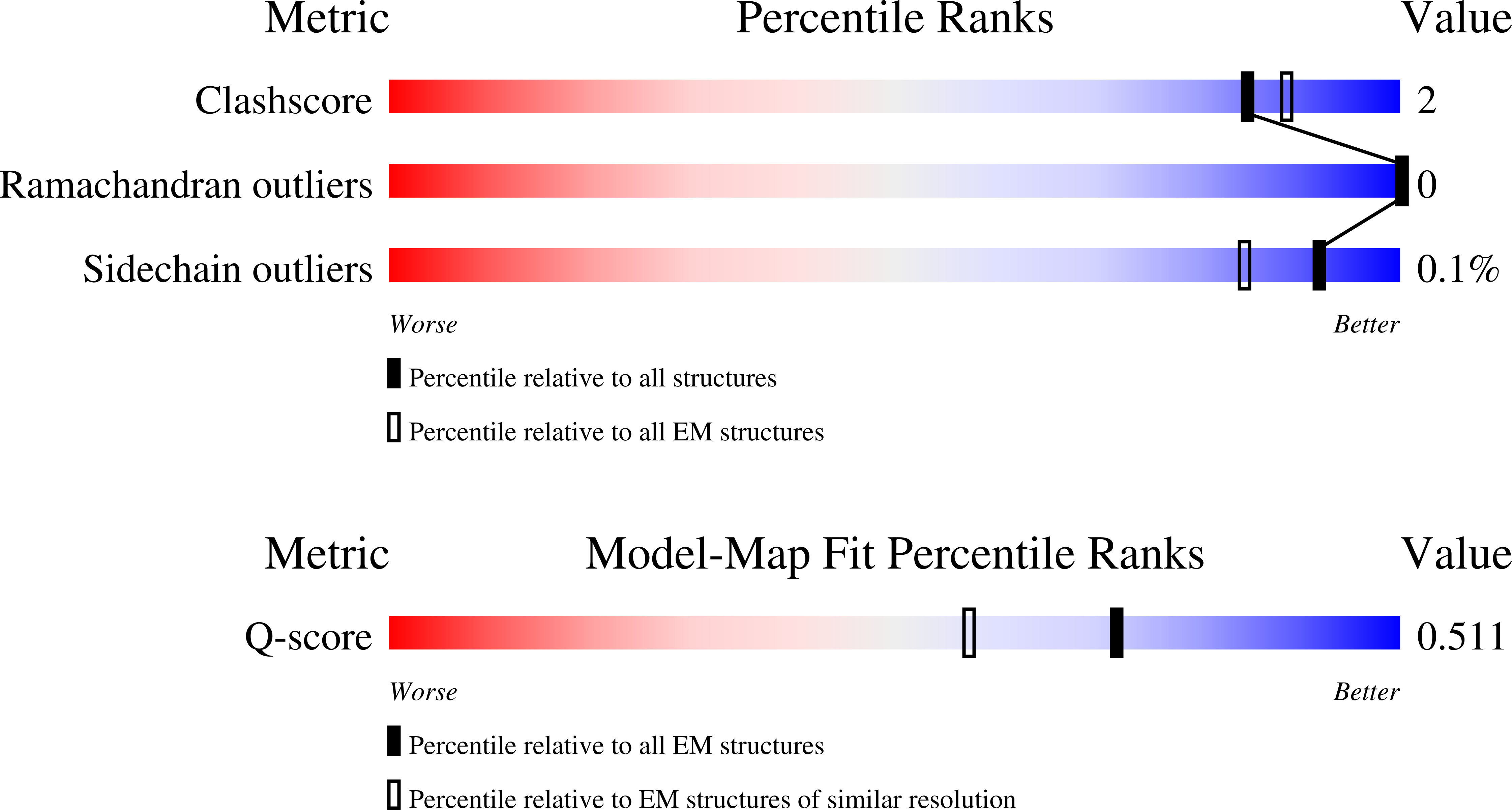
2.99 Å
Aggregation State:
PARTICLE
Reconstruction Method:
SINGLE PARTICLE
Macromolecular Entities
Structures with similar UniProt ID
Protein Blast
Polymer Type:polypeptide(L)
Molecule:Small-conductance mechanosensitive channel
Gene (Uniprot):mscS
Chain IDs:A, B, C, D, E, F, G
Chain Length:292
Number of Molecules:7
Biological Source:Escherichia coli
Ligand Molecules
Primary Citation
The lipid-mediated mechanism of mechanosensitive channel MscS inactivation.
Biorxiv ? ? ? (2025)
PMID: 38328078 DOI: 10.1101/2024.01.22.576751

Abstact

Interpretations of experimental conformations of mechanosensitive channels gated by 'force from lipids' become more reliable when native lipids are preserved in the structures. Escherichia coli MscS is an adaptive osmolyte release valve that regulates turgor in osmotically stressed cells. MscS promptly opens under abrupt super-threshold tensions in the membrane, but at lower and more gradually applied tensions, it silently inactivates from the closed state. A central question has been whether to assign the commonly observed non-conductive conformation with splayed peripheral helices to a closed or inactivated state. We present a 3-Å MscS cryo-EM structure obtained in Glyco-DIBMA polymers, which avoid complete lipid removal. Within the complex, we observe densities for endogenous phospholipids intercalating between the peripheral and pore-lining helices. The lipidomic analysis shows a 2-3 fold enrichment of phosphatidylglycerol in Glyco-DIBMA-extracted MscS samples. The computed pressure of these lipids on the protein surface enforces the characteristic kinks in the pore-lining helices, sterically stabilizing the separation of the peripheral helices. Mutations of residues coordinating lipids in the crevices eliminate inactivation, allowing us to classify this group of structures as the inactivated state. Our study reveals a novel inactivation mechanism in which intercalated lipids physically decouple the tension-sensing helices from the gate.

Legend

Protein

Chemical

Disease

Primary Citation of related structures
Feedback Form
Name
Email
Institute
Feedback