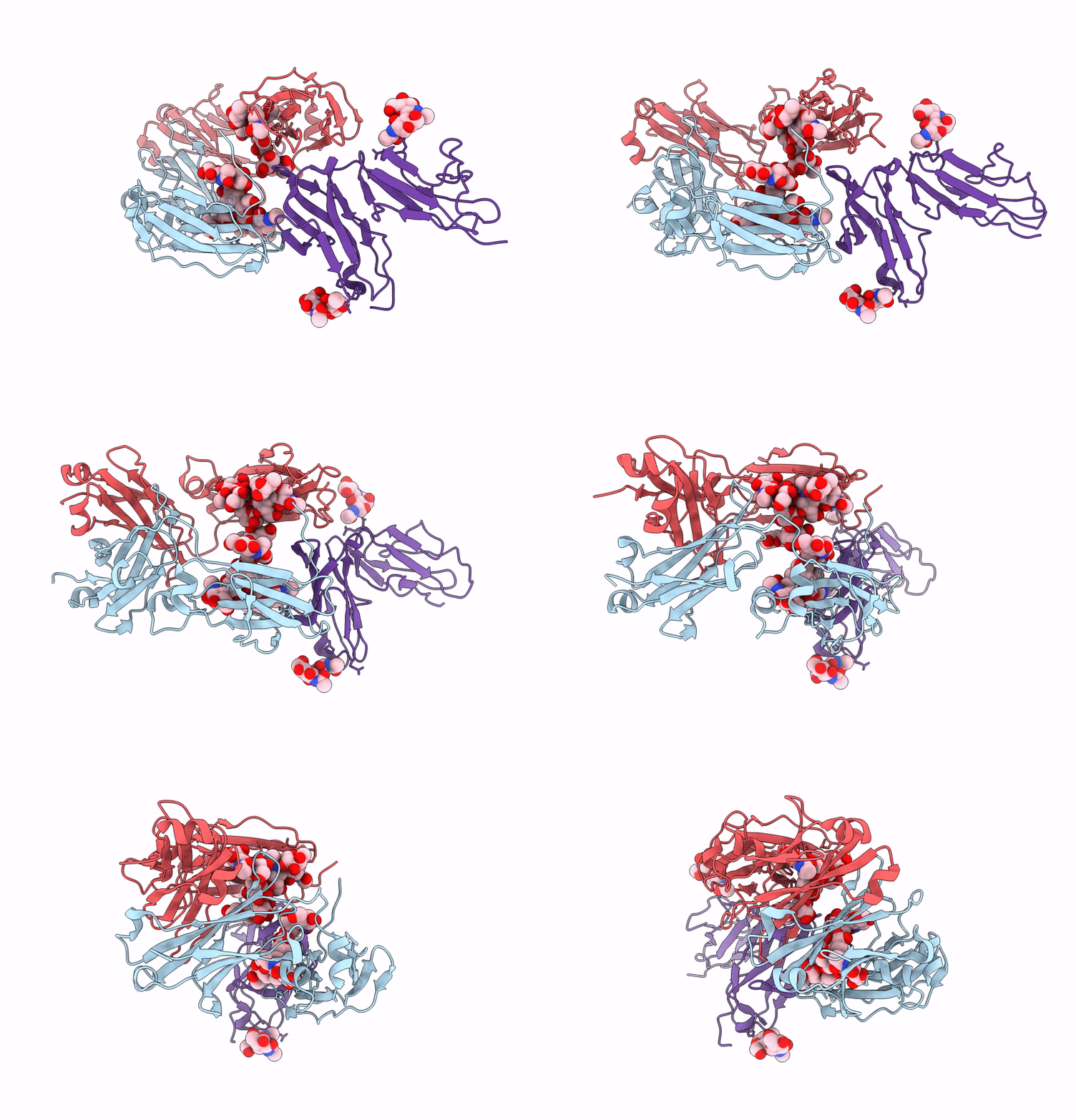
9OUV image
Deposition Date 2025-05-29
Release Date 2025-12-03
Last Version Date 2026-01-07
Entry Detail
PDB ID:
9OUV
Keywords:
Title:
Crystal structure of human IGG1 FC fragment-FC-gamma receptor IIB complex
Biological Source:
Source Organism(s):
Homo sapiens (Taxon ID: 9606)
Expression System(s):
Method Details:
Experimental Method:
Resolution:
3.07 Å
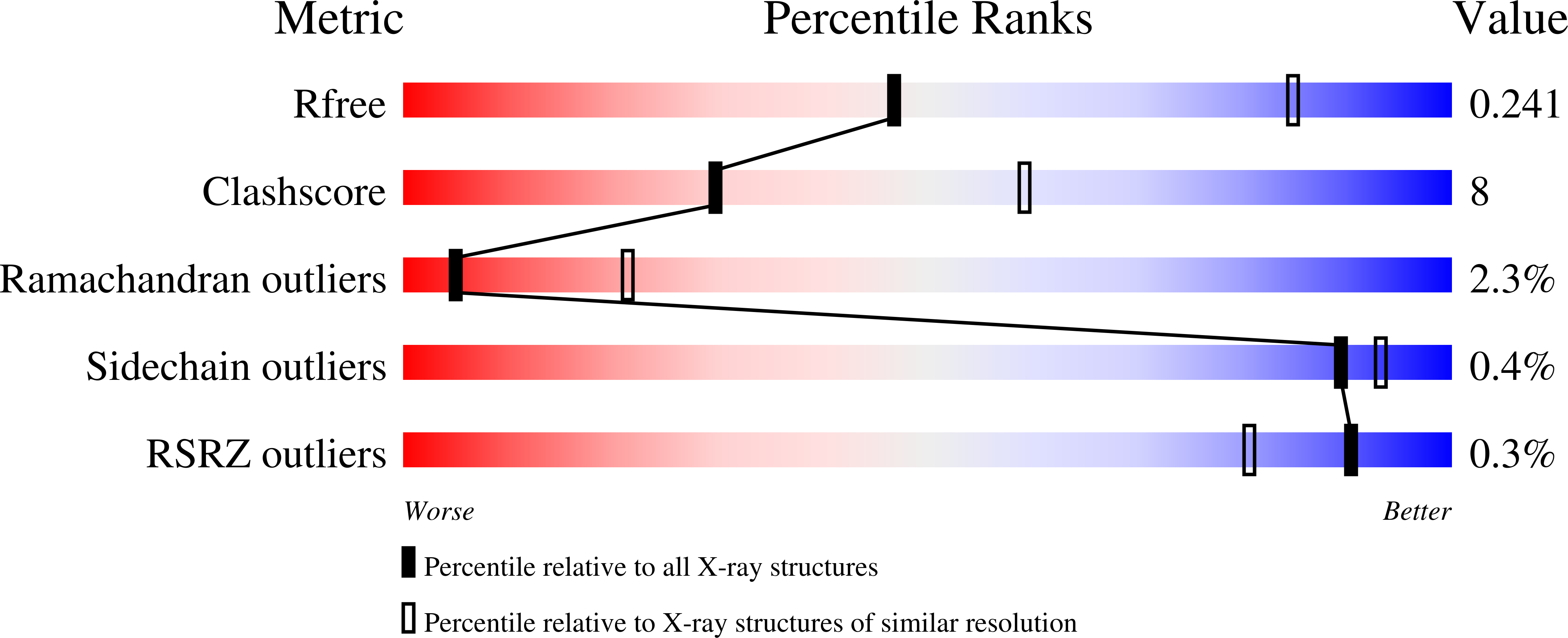
R-Value Free:
0.24
R-Value Work:
0.18
R-Value Observed:
0.18
Space Group:
P 1 21 1
Macromolecular Entities
Structures with similar UniProt ID
Protein Blast
Polymer Type:polypeptide(L)
Molecule:Immunoglobulin gamma-1 heavy chain Fc fragment
Chain IDs:A, B
Chain Length:223
Number of Molecules:2
Biological Source:Homo sapiens
Structures with similar UniProt ID
Protein Blast
Polymer Type:polypeptide(L)
Molecule:Low affinity immunoglobulin gamma Fc region receptor II-b
Gene (Uniprot):FCGR2B
Chain IDs:C
Chain Length:173
Number of Molecules:1
Biological Source:Homo sapiens
Primary Citation
Cross-species analysis of Fc gamma RIIa/b (CD32a/b) polymorphisms at position 131: structural and functional insights into the mechanism of IgG- mediated phagocytosis in human and macaque.
Front Immunol 16 1726068 1726068 (2025)
PMID: 41445744 DOI: 10.3389/fimmu.2025.1726068

Abstact

INTRODUCTION Antibodies play a critical role in immunity in part by mediating clearance of pathogens and infected cells by antibody-dependent cellular phagocytosis (ADCP) through engagement of Fc gamma receptors (FcγRs) on innate immune cells. Among these, FcγRIIa (CD32a) is a key activating receptor expressed on macrophages, dendritic cells, and other antigen-presenting cells. Its affinity for IgG and ability to mediate ADCP is influenced by allelic polymorphisms. In humans, a single amino acid polymorphism at position 131, where histidine (H) is substituted with arginine (R), leads to decreased IgG1 and IgG2 subclass binding affinity and, consequently, lower efficiency of phagocytic responses. Rhesus macaques (Macaca mulatta), which are widely used as nonhuman primate models, exhibit a similar polymorphism at position 131 of FcγRIIa, but with arginine replaced by proline (P). Here, we investigated structure-function relationships associated with the FcγRIIa polymorphism at position 131 in both species, specifically with respect to IgG1 and IgG2. METHODS We determined the structures of complexes formed by each variant with IgG1 Fc and those formed by the higher affinity variant with IgG2 Fc for both species by x-ray crystallography and linked these structures to affinity and activity using SPR and an ADCP assay. We also determined the structure of human inhibitory FcγRIIb (CD32b) in complex with IgG1 Fc by x-ray crystallography. RESULTS Through analysis of these structures, our studies reveal that FcγRIIa engagement is minimally influenced by Fc glycan composition, distinguishing it from FcγRIIIa whose affinity is strongly influenced by glycan-composition. Comparative structures of human and macaque FcγRIIa variants demonstrate species- and allele-specific differences in Fc binding, but our functional assays showed only minimal allele-specific effects in humans. In contrast, allele-specific effects in macaques were highly significant; the macaque P131 variant showing uniformly reduced IgG affinity. CONCLUSION These insights highlight fundamental interspecies and allelic distinctions that are critical for interpreting FcγRIIa-mediated effector functions in macaque models and for optimizing translational antibody and vaccine design.

Legend

Protein

Chemical

Disease

Primary Citation of related structures
Feedback Form
Name
Email
Institute
Feedback