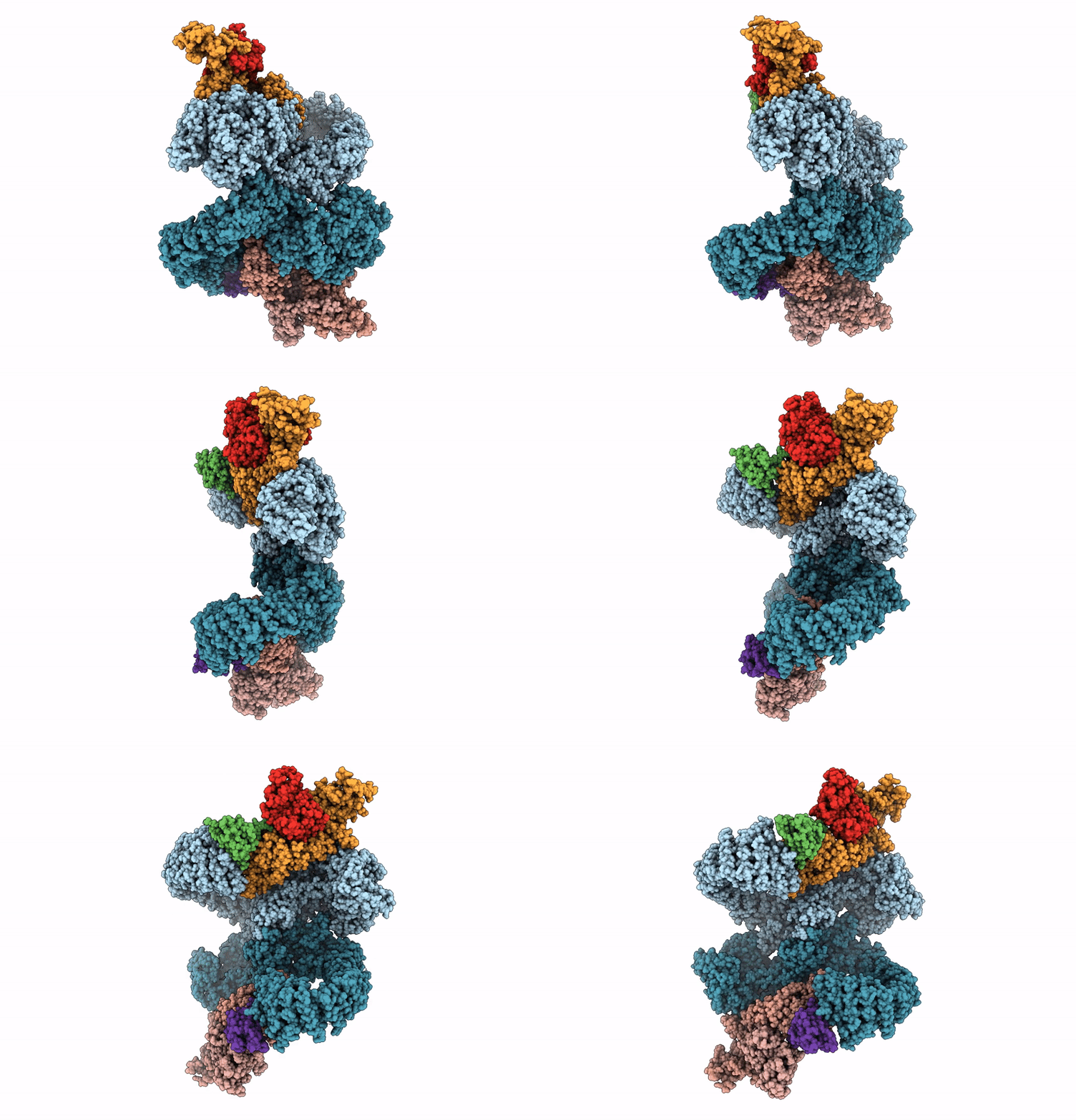
9OT6 image
Deposition Date 2025-05-26
Release Date 2025-12-03
Last Version Date 2025-12-03
Entry Detail
PDB ID:
9OT6
Title:
Cryo-EM structure of the PI4KA complex bound to an EFR3 interfering nanobody (F3IN)
Biological Source:
Source Organism:
Homo sapiens (Taxon ID: 9606)
Lama glama (Taxon ID: 9844)
Host Organism:
Method Details:
Experimental Method:
Resolution:
3.54 Å
Aggregation State:
PARTICLE
Reconstruction Method:
SINGLE PARTICLE
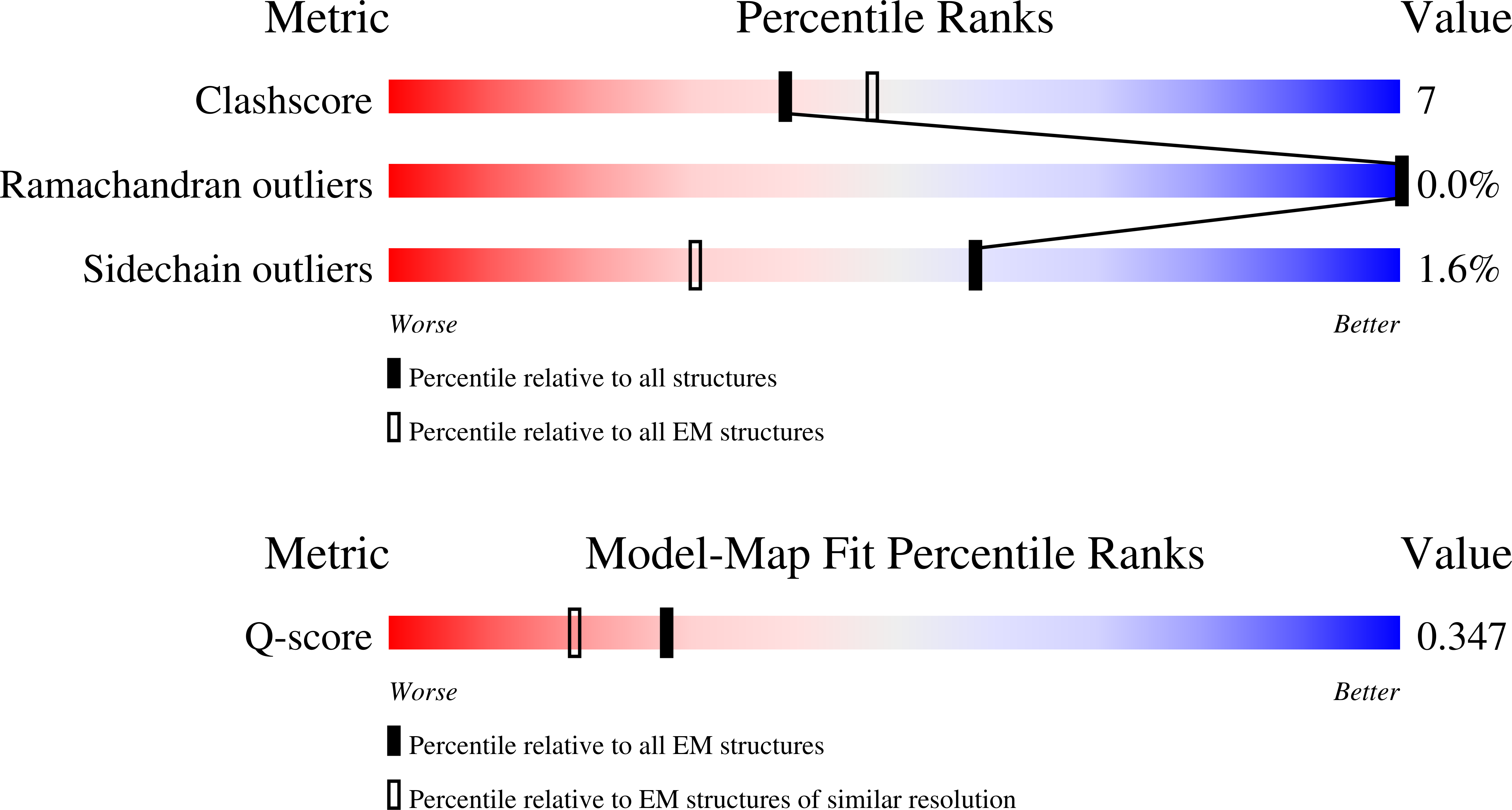
Macromolecular Entities
Structures with similar UniProt ID
Protein Blast
Polymer Type:polypeptide(L)
Molecule:Phosphatidylinositol 4-kinase alpha
Gene (Uniprot):PI4KA
Chain IDs:A, B
Chain Length:2104
Number of Molecules:2
Biological Source:Homo sapiens
Polymer Type:polypeptide(L)
Molecule:EFR3 interfering Nanobody (F3IN)
Chain IDs:C, H
Chain Length:165
Number of Molecules:2
Biological Source:Lama glama
Structures with similar UniProt ID
Protein Blast
Polymer Type:polypeptide(L)
Molecule:Tetratricopeptide repeat protein 7B
Gene (Uniprot):TTC7B
Chain IDs:D, F
Chain Length:843
Number of Molecules:2
Biological Source:Homo sapiens
Structures with similar UniProt ID
Protein Blast
Polymer Type:polypeptide(L)
Molecule:Hyccin
Gene (Uniprot):HYCC1
Chain IDs:E, G
Chain Length:308
Number of Molecules:2
Biological Source:Homo sapiens
Ligand Molecules
Primary Citation
Development of an inhibitory TTC7B selective nanobody that blocks EFR3 recruitment of PI4KA.
J.Biol.Chem. ? 110886 110886 (2025)
PMID: 41197736 DOI: 10.1016/j.jbc.2025.110886

Abstact

Phosphatidylinositol 4 kinase IIIα (PI4KIIIα/PI4KA) is an essential lipid kinase that plays a critical role in regulating plasma membrane identity. PI4KA is primarily recruited to the plasma membrane through the targeted recruitment by the proteins, EFR3A and EFR3B, which bind to the PI4KA accessory proteins TTC7 (TTC7A/B) and FAM126 (FAM126A/B). Here we characterised how both EFR3 isoforms interact with all possible TTC7-FAM126 combinations and developed a nanobody that specifically blocked EFR3-mediated PI4KA recruitment in TTC7B containing complexes. Most EFR3-TTC7-FAM126 combinations show similar binding affinities, with the exception of EFR3A-TTC7B-FAM126A, which binds with a ∼10-fold higher affinity. Moreover, we showed that EFR3B phosphorylation markedly decreased binding to TTC7-FAM126. Using a yeast display approach, we isolated a TTC7B selective nanobody that blocked EFR3 binding. Cryo-electron microscopy and hydrogen deuterium exchange mass spectrometry showed an extended interface with both PI4KA and TTC7B that sterically blocks EFR3 binding. The nanobody caused decreased membrane recruitment both on lipid bilayers and in cells, with decreased PM production of PI4P. Collectively, these findings provide new insights into PI4KA regulation and provide a tool for manipulating PI4KA complexes, that may be valuable for therapeutic targeting.

Legend

Protein

Chemical

Disease

Primary Citation of related structures
Feedback Form
Name
Email
Institute
Feedback