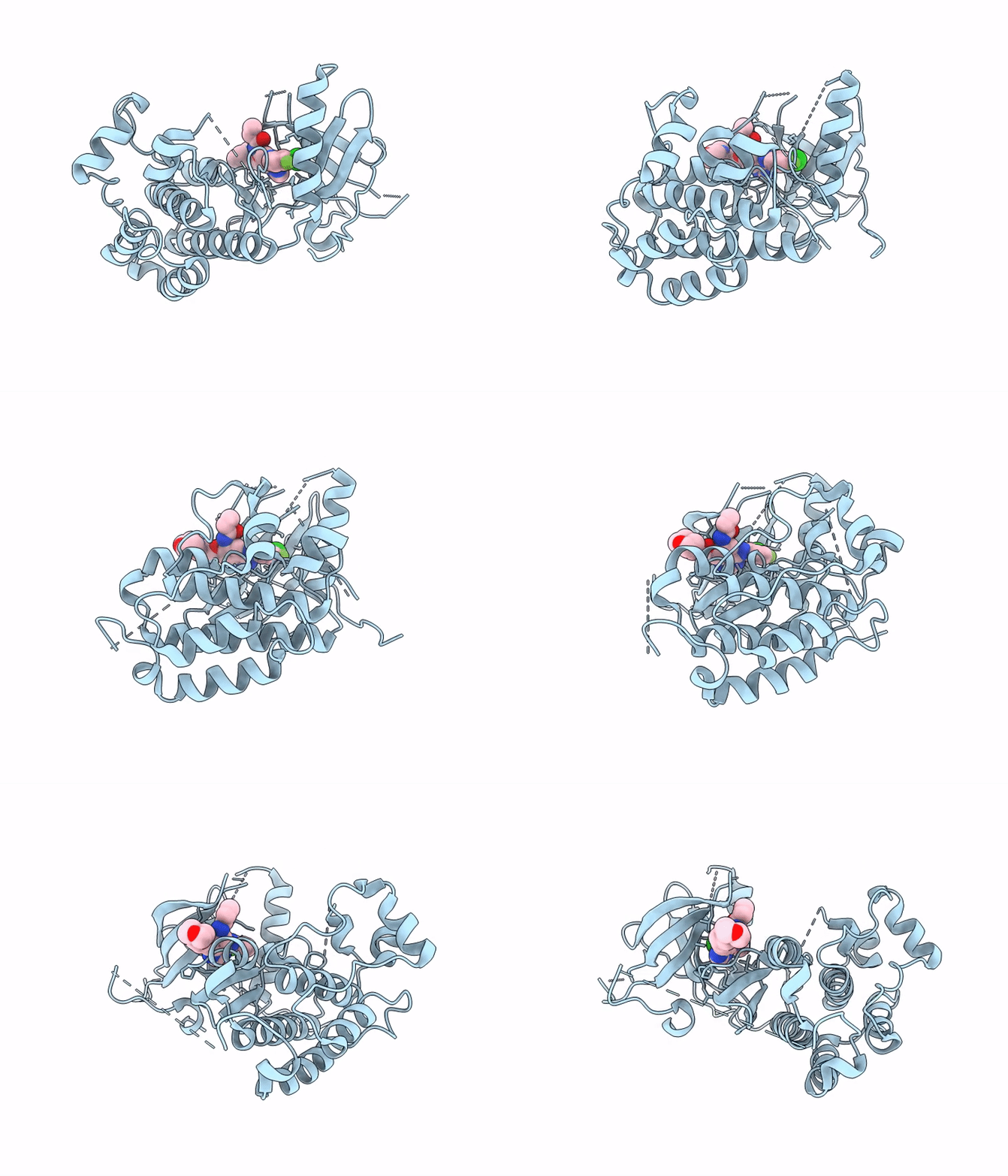
9OS6 image
Deposition Date 2025-05-23
Release Date 2025-10-08
Last Version Date 2025-11-19
Entry Detail
PDB ID:
9OS6
Keywords:
Title:
Canertinib (CI-1033) in complex with wild-type EGFR
Biological Source:
Source Organism:
Homo sapiens (Taxon ID: 9606)
Host Organism:
Method Details:
Experimental Method:
Resolution:
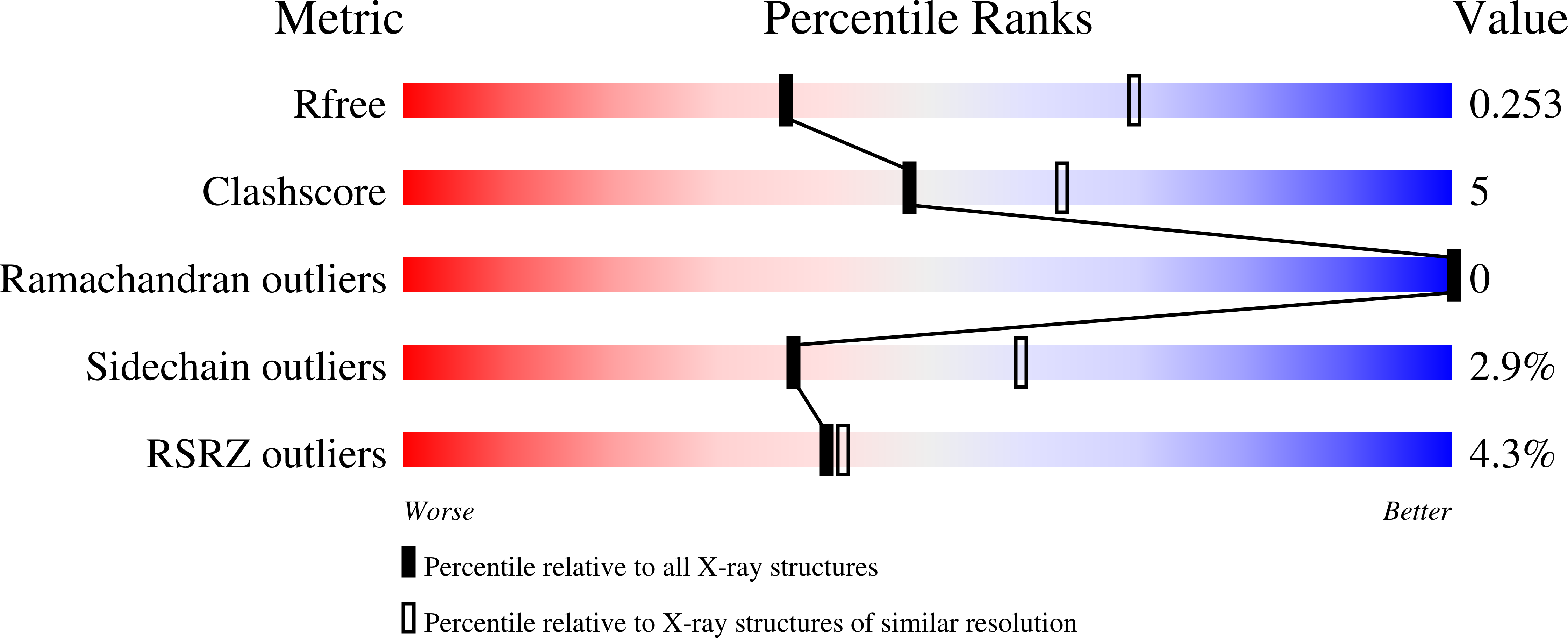
2.75 Å
R-Value Free:
0.25
R-Value Work:
0.20
R-Value Observed:
0.21
Space Group:
I 2 3
Macromolecular Entities
Structures with similar UniProt ID
Protein Blast
Polymer Type:polypeptide(L)
Molecule:Epidermal growth factor receptor
Gene (Uniprot):EGFR
Chain IDs:A
Chain Length:327
Number of Molecules:1
Biological Source:Homo sapiens
Ligand Molecules
Primary Citation

Abstact

Targeted covalent inhibitors (TCIs) are actively pursued in drug discovery due to their prolonged target engagement and clinical efficacy. Although kinetic parameters provide a path to their optimization, systematic design strategies and practical guidance remain underexplored. In this study, the EGFR kinase is deployed as a model system to elucidate structural and functional determinants critical for directing the optimization of irreversible TCIs. Functional analyses reveal a two-phase optimization process, underscoring the importance of balancing─rather than maximizing─the inactivation efficiency rate (kinact/KI). Selective inhibition of the oncogenic L858R/T790M mutant over the wild-type is achieved by tuning this balance, particularly for TCIs exhibiting the fastest kinact/KI. Structural studies indicate that certain hydrophobic and hydrophilic interactions are associated with L858R/T790M selectivity, offering insights into structure-guided design. These results offer a broadly applicable approach for prioritizing compounds and support the integration of kinetic and selectivity data in TCI discovery campaigns.

Legend

Protein

Chemical

Disease

Primary Citation of related structures
Feedback Form
Name
Email
Institute
Feedback