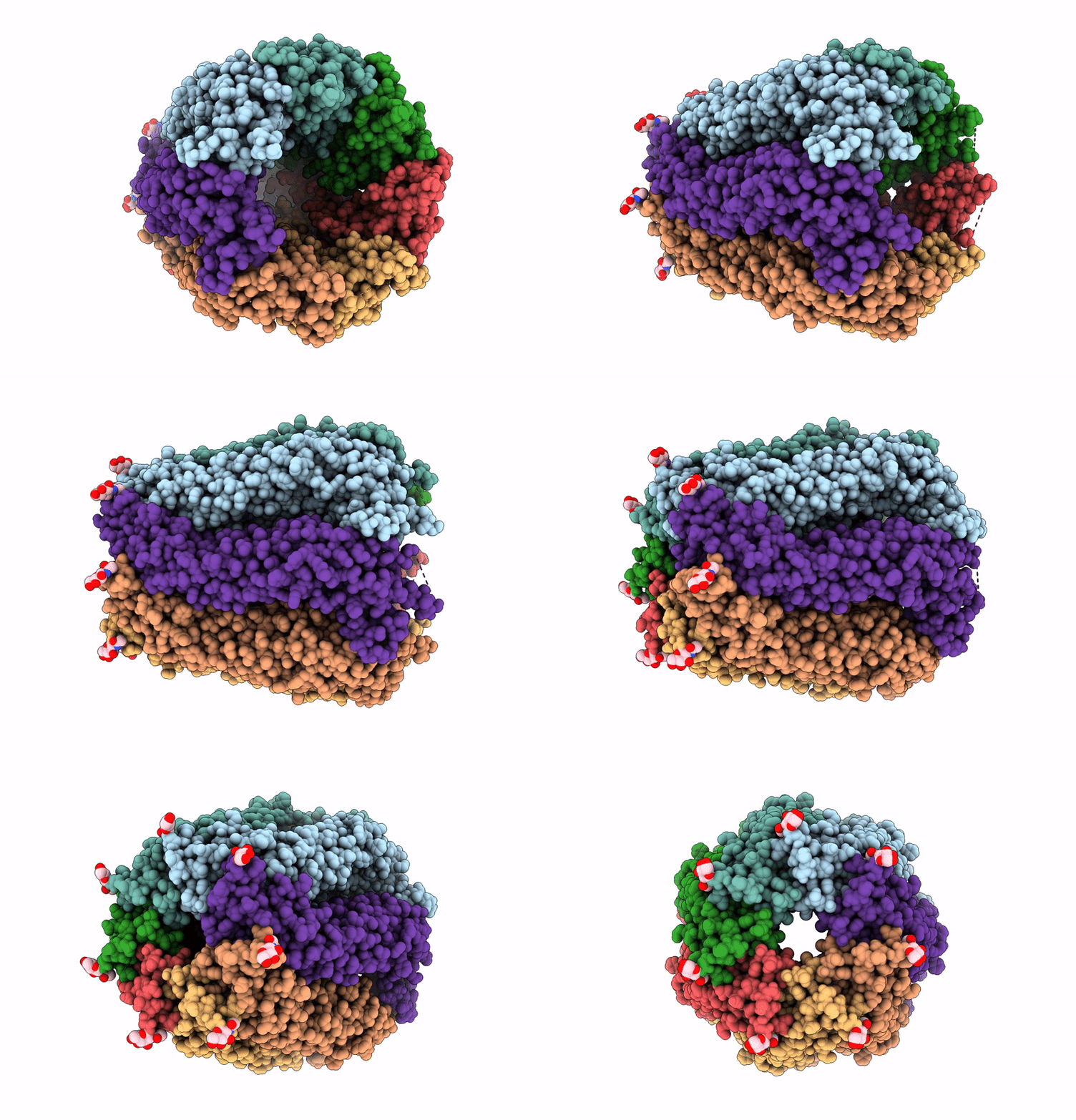
9OQQ image
Deposition Date 2025-05-21
Release Date 2025-12-24
Last Version Date 2025-12-24
Entry Detail
PDB ID:
9OQQ
Title:
Human pannexin 1 channel W74A mutant with 10mM ATP
Biological Source:
Source Organism:
Host Organism:
Method Details:
Experimental Method:
Resolution:
3.25 Å
Aggregation State:
PARTICLE
Reconstruction Method:
SINGLE PARTICLE
Macromolecular Entities
Protein Blast
Polymer Type:polypeptide(L)
Molecule:Pannexin-1,RNA-directed RNA polymerase L chimera
Gene (Uniprot):PANX1
Mutagens:W74A
Chain IDs:A, B, C, D, E, F, G
Chain Length:691
Number of Molecules:7
Biological Source:Homo sapiens, Human respiratory syncytial virus
Ligand Molecules
Primary Citation
Structural basis of PANX1 permeation and positive modulation by mefloquine.
Nat Commun 16 11057 11057 (2025)
PMID: 41381453 DOI: 10.1038/s41467-025-66028-9

Abstact

Purinergic signaling relies on ATP release through exocytosis and large-pore channels. Large-pore channels permeate both small anions like chloride and large signaling molecules like ATP, but how this broad cargo selectivity is structurally controlled remains elusive. Here we investigate PANX1, a prototypical large-pore channel, and uncover structural plasticity at the extracellular entrance formed by seven tryptophan (W74) residues. The W74 sidechains are flexible, sampling conformations that range from a constricted state permissive only to chloride to a dilated state compatible with ATP. These states are coupled to variable cation-π interactions between W74 and arginine 75 (R75), suggesting a mechanism for dynamic tuning of pore architecture and selective cargo permeation. We also identify mefloquine as a positive modulator of PANX1 that binds near the side tunnel to control ion flow through this pathway. Together, these findings define the structural principles underlying PANX1 permeation and modulation.

Legend

Protein

Chemical

Disease

Primary Citation of related structures
Feedback Form
Name
Email
Institute
Feedback