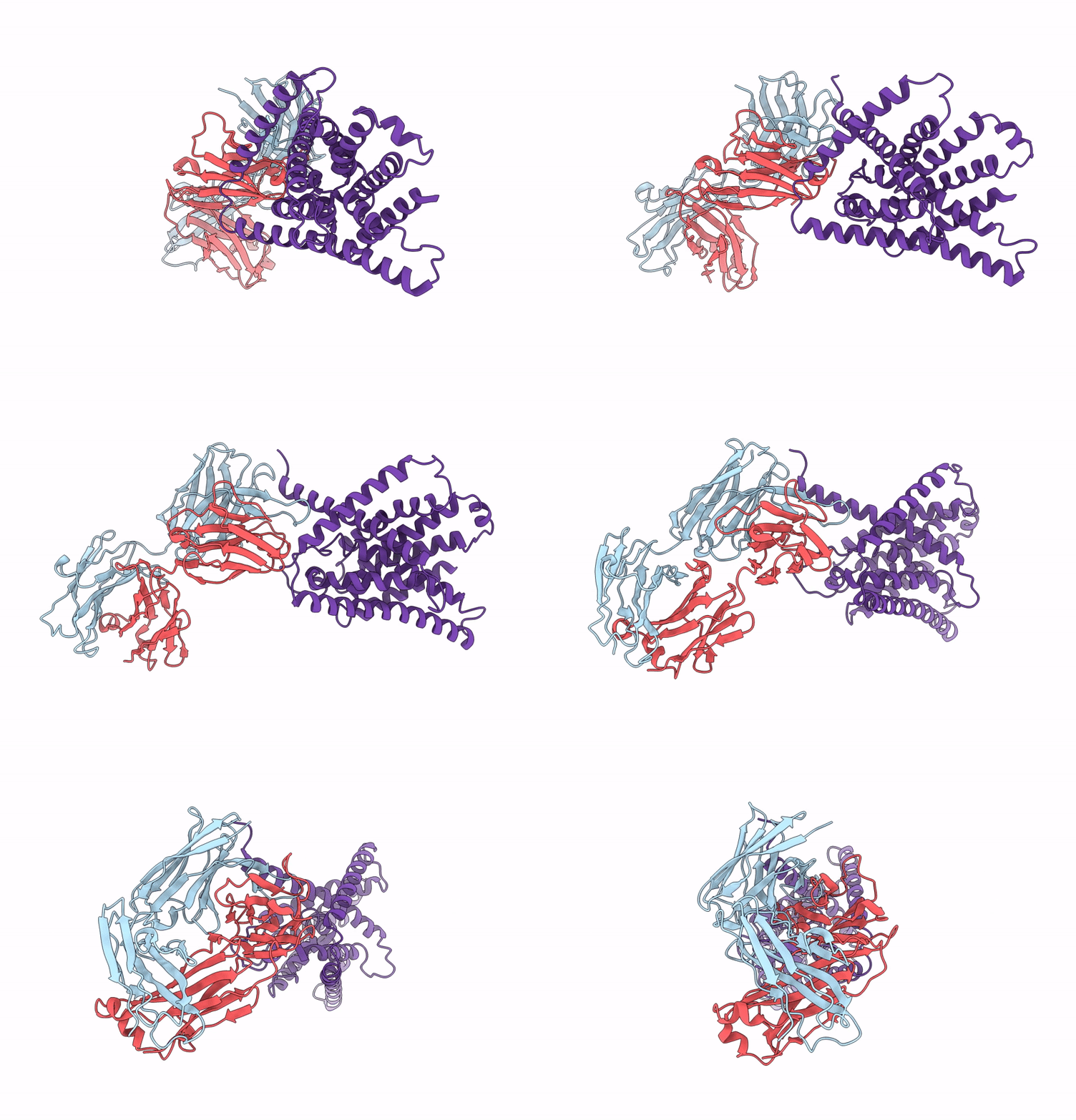
9OP1 image
Deposition Date 2025-05-16
Release Date 2025-12-03
Last Version Date 2026-01-28
Entry Detail
PDB ID:
9OP1
Title:
Cryo-EM structure of Candida albicans fluoride channel FEX in complex with Fab fragment
Biological Source:
Source Organism(s):
Method Details:
Experimental Method:
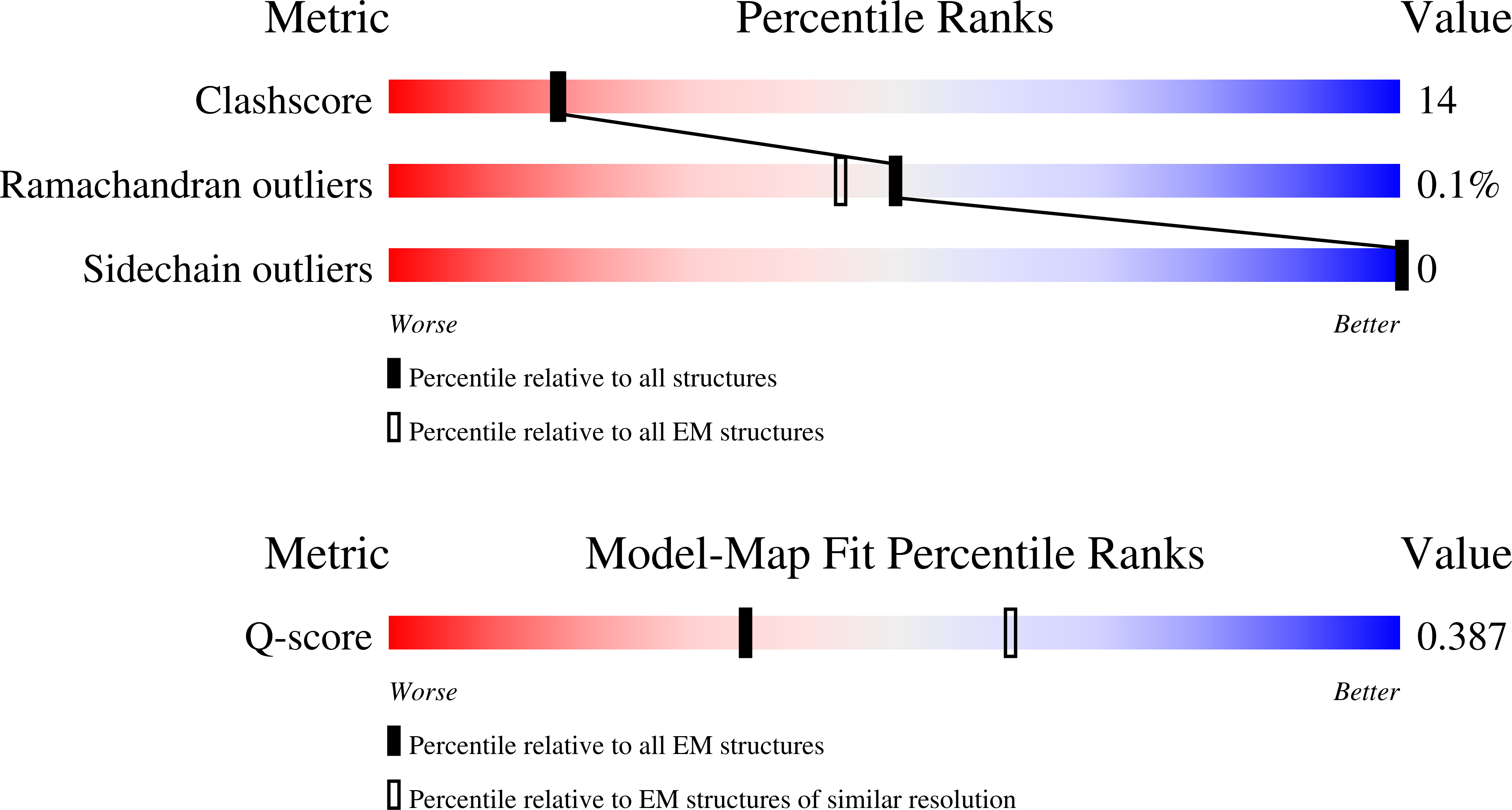
Resolution:
4.05 Å
Aggregation State:
PARTICLE
Reconstruction Method:
SINGLE PARTICLE
Macromolecular Entities
Polymer Type:polypeptide(L)
Molecule:10E8v4 Fab Heavy Chian
Chain IDs:A
Chain Length:232
Number of Molecules:1
Biological Source:Homo sapiens
Polymer Type:polypeptide(L)
Molecule:10E8v4 Fab Light Chain
Chain IDs:B
Chain Length:210
Number of Molecules:1
Biological Source:Homo sapiens
Protein Blast
Polymer Type:polypeptide(L)
Molecule:Transmembrane protein gp41,Fluoride export protein 1
Gene (Uniprot):env, FEX1
Chain IDs:C
Chain Length:353
Number of Molecules:1
Biological Source:HIV-1 M:B_MN, Candida albicans SC5314
Ligand Molecules
Primary Citation
The molecular mechanism of fluoride export by the eukaryotic fluoride channel FEX.
Nat Commun 17 589 589 (2025)
PMID: 41381451 DOI: 10.1038/s41467-025-67289-0

Abstact

Much of life on Earth, including plants, fungi, and bacteria, evolved to resist toxic environmental fluoride. In eukaryotes, the major resistance mechanism is fluoride export by membrane proteins known as FEX. Using electrophysiology and transport assays, we establish that FEX from plants and yeasts are highly selective fluoride channels. Fluoride transport activity depends on reversible sodium ion binding, but sodium itself is not transported. We determine a structure of a FEX protein, from pathogenic yeast Candida albicans, using cryo-EM. Bolstered by mutagenesis studies, this structure reveals a fluoride permeation route through a single phenylalanine-lined pore. Molecular dynamics simulations demonstrate that a cation binding motif adjacent to the pore provides a stable sodium binding site that is accessible from the external aqueous solution. Comparison to the structurally related bacterial fluoride channels, Flucs, provides a glimpse of the evolution of structural and mechanistic complexity in a membrane protein family with inverted repeat architecture.

Legend

Protein

Chemical

Disease

Primary Citation of related structures
Feedback Form
Name
Email
Institute
Feedback