9OOA image
Deposition Date 2025-05-15
Release Date 2026-02-11
Last Version Date 2026-02-25
Entry Detail
PDB ID:
9OOA
Title:
Crystal structure of MYST acetyltransferase domain in complex with inhibitor 7
Biological Source:
Source Organism(s):
Homo sapiens (Taxon ID: 9606)
Expression System(s):
Method Details:
Experimental Method:
Resolution:
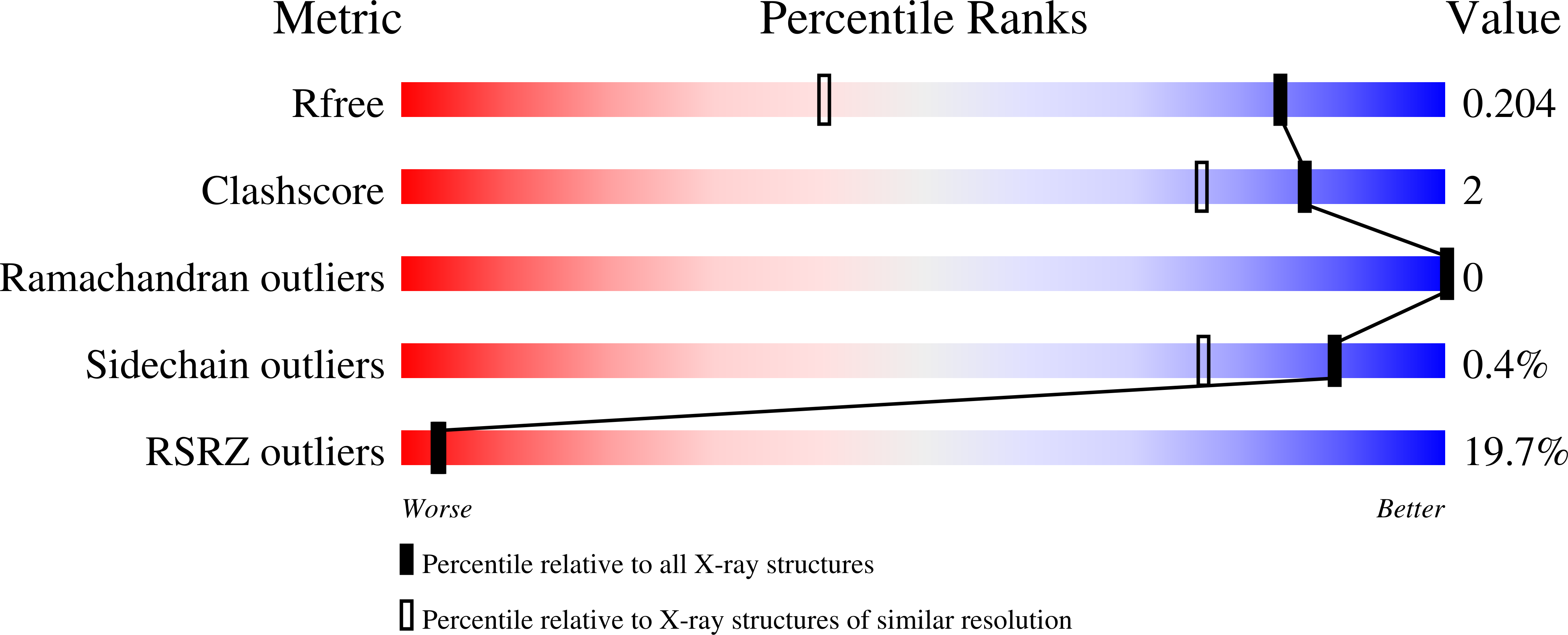
1.39 Å
R-Value Free:
0.20
R-Value Work:
0.18
R-Value Observed:
0.18
Space Group:
P 21 21 21
Macromolecular Entities
Structures with similar UniProt ID
Protein Blast
Polymer Type:polypeptide(L)
Molecule:Histone acetyltransferase KAT8
Gene (Uniprot):KAT8
Mutagens:A142S, L145M, T146I, K157R, S204W
Chain IDs:A
Chain Length:295
Number of Molecules:1
Biological Source:Homo sapiens
Modified Residue
Compound ID Chain ID Parent Comp ID Details 2D Image
ALY A LYS modified residue
Primary Citation
Biological Activity and Structural Biology of Current KAT6A Inhibitor Chemotypes.
J.Med.Chem. 69 2082 2114 (2026)
PMID: 41611522 DOI: 10.1021/acs.jmedchem.5c01426

Abstact

All lysine acetyltransferases (KATs) modulate biological outcomes through the acetylation of lysine side-chain amino groups facilitated by acetyl coenzyme A (AcCoA). KAT6A belongs to the class of MYST domain histone acetyltransferases (HATs), which had been regarded as undruggable. The first on-target KAT6A inhibitors with in vivo activity were reported in 2018, catalyzing intense industry interest in this enzyme as an oncology target. In this study, we experimentally evaluated representative KAT6A inhibitor chemotypes through resynthesis and comparative biochemical assays, cellular assays, and structural biology. We outline the recent history of each KAT6A inhibitor chemotype discovery, including SAR for potency, selectivity, and cellular activity. We extensively benchmark key compounds from each chemotype, augmented by new acylsulfonohydrazide analogues and a novel fused [1,2,4]thiadiazine KAT6A inhibitor subclass, which we report here for the first time, along with co-crystal structures. Additionally, we report on the in vivo activity, pharmacokinetics, and toxicology profiles of these inhibitors.

Legend

Protein

Chemical

Disease

Primary Citation of related structures
Feedback Form
Name
Email
Institute
Feedback