9OKA image
Deposition Date 2025-05-09
Release Date 2025-12-24
Last Version Date 2026-01-07
Entry Detail
PDB ID:
9OKA
Keywords:
Title:
Cardiac lambda-6 light chain amyloid AL-224L single protofilament
Biological Source:
Source Organism(s):
Homo sapiens (Taxon ID: 9606)
Expression System(s):
Method Details:
Experimental Method:
Resolution:
2.92 Å
Aggregation State:
FILAMENT
Reconstruction Method:
HELICAL
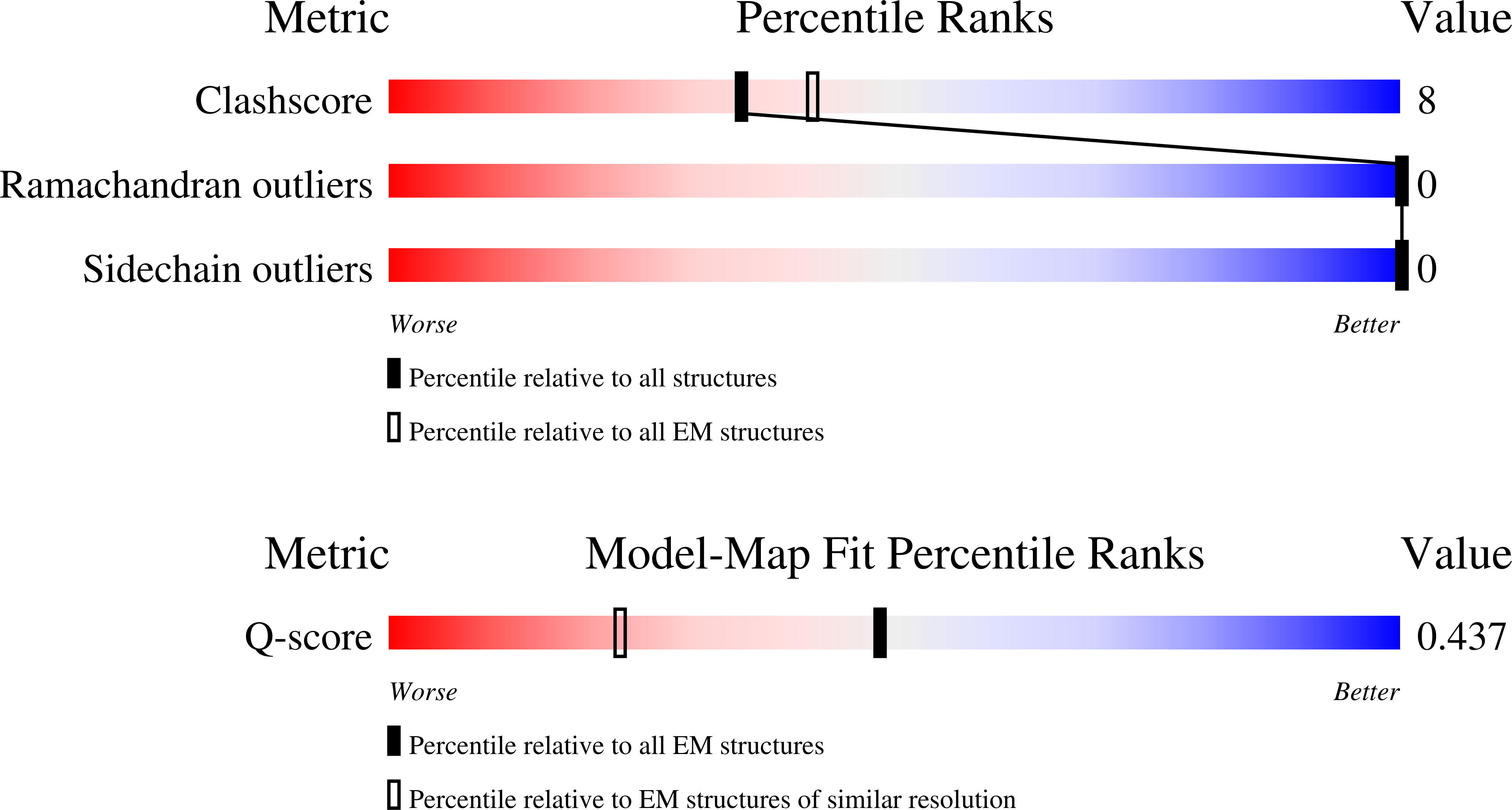
Macromolecular Entities
Polymer Type:polypeptide(L)
Molecule:Immunoglobulin l6 light-chain AL-224L
Chain IDs:A (auth: E), B (auth: C), C (auth: D), D (auth: B), E (auth: A)
Chain Length:116
Number of Molecules:5
Biological Source:Homo sapiens
Ligand Molecules
Primary Citation
Cryo-EM of Cardiac AL-224L Amyloid Reveals Shared Structural Motifs and Mutation-induced Differences in lambda 6 Light Chain Fibrils.
J.Mol.Biol. 438 169591 169591 (2025)
PMID: 41389958 DOI: 10.1016/j.jmb.2025.169591

Abstact

In light chain amyloidosis (AL), aberrant monoclonal antibody light chains (LCs) deposit in vital organs causing organ damage. Each AL patient features a unique LC; previous cryogenic electron microscopy (cryo-EM) studies revealed different amyloid structures in different AL patients. How LC mutations influence amyloid structures remains unclear. We report a cryo-EM structure of cardiac AL-224L amyloid (2.92 Å resolution) from λ6-LC family, which is overrepresented in AL amyloidosis. Comparison with λ6-LC structures from two other patients reveals similarities in amyloid folds, along with major differences caused by specific mutations. Differences in AL-224L include altered C-terminal conformation with an exposed surface forming an apparent ligand-binding site; an enlarged hydrophilic pore with orphan density; and altered steric zipper registry with backbone flipping, which likely represent general adaptive mechanisms in amyloids. The results reveal shared features in λ6-LC amyloid folds and suggest how mutation-induced structural changes influence amyloid-ligand interactions in a patient-specific manner.

Legend

Protein

Chemical

Disease

Primary Citation of related structures
Feedback Form
Name
Email
Institute
Feedback