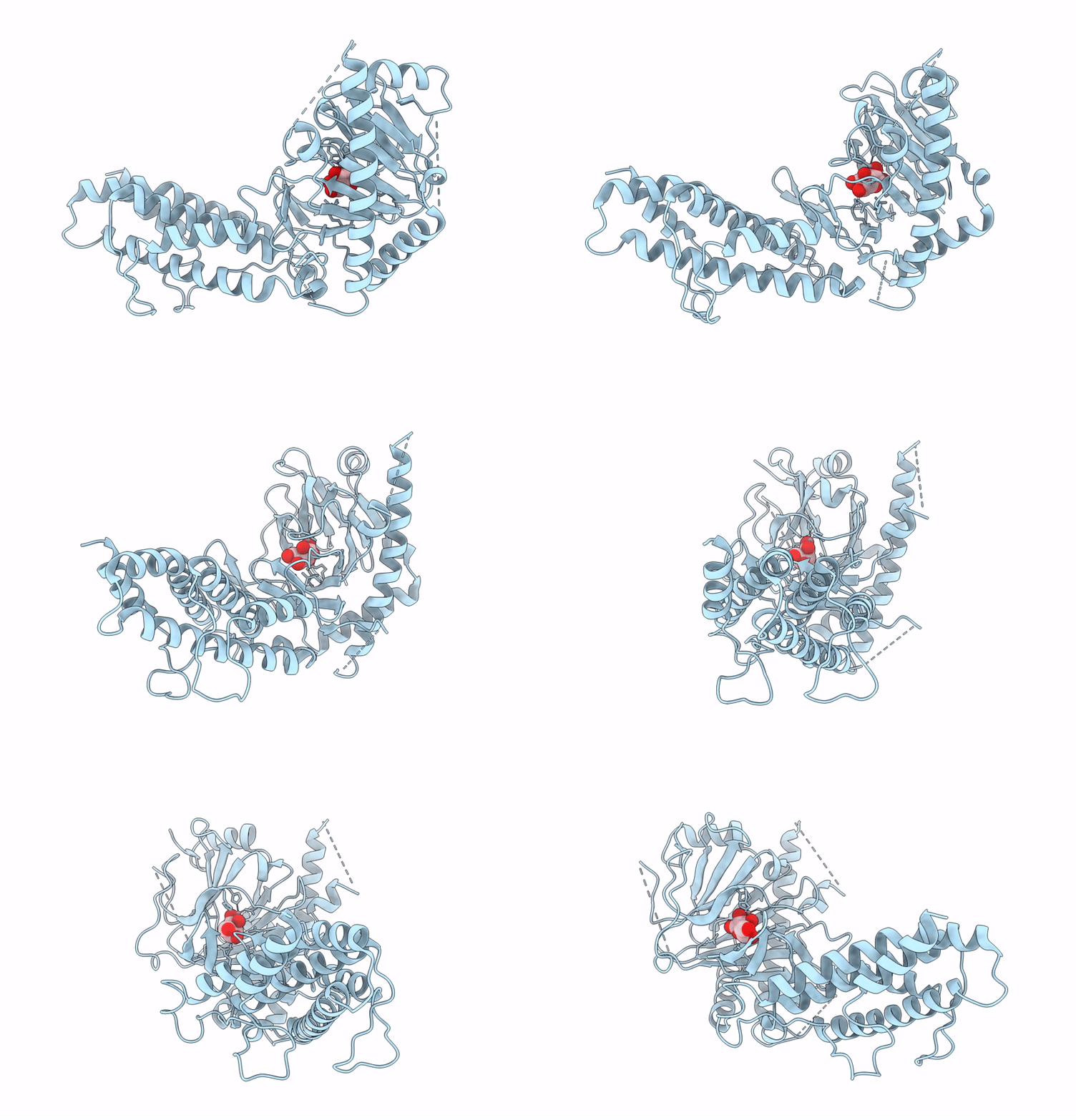
9OHS image
Deposition Date 2025-05-05
Release Date 2025-07-02
Last Version Date 2025-07-30
Entry Detail
PDB ID:
9OHS
Keywords:
Title:
Crystal structure of human FTO in complex with Ga(III) and ascorbate
Biological Source:
Source Organism:
Homo sapiens (Taxon ID: 9606)
Host Organism:
Method Details:
Experimental Method:
Resolution:
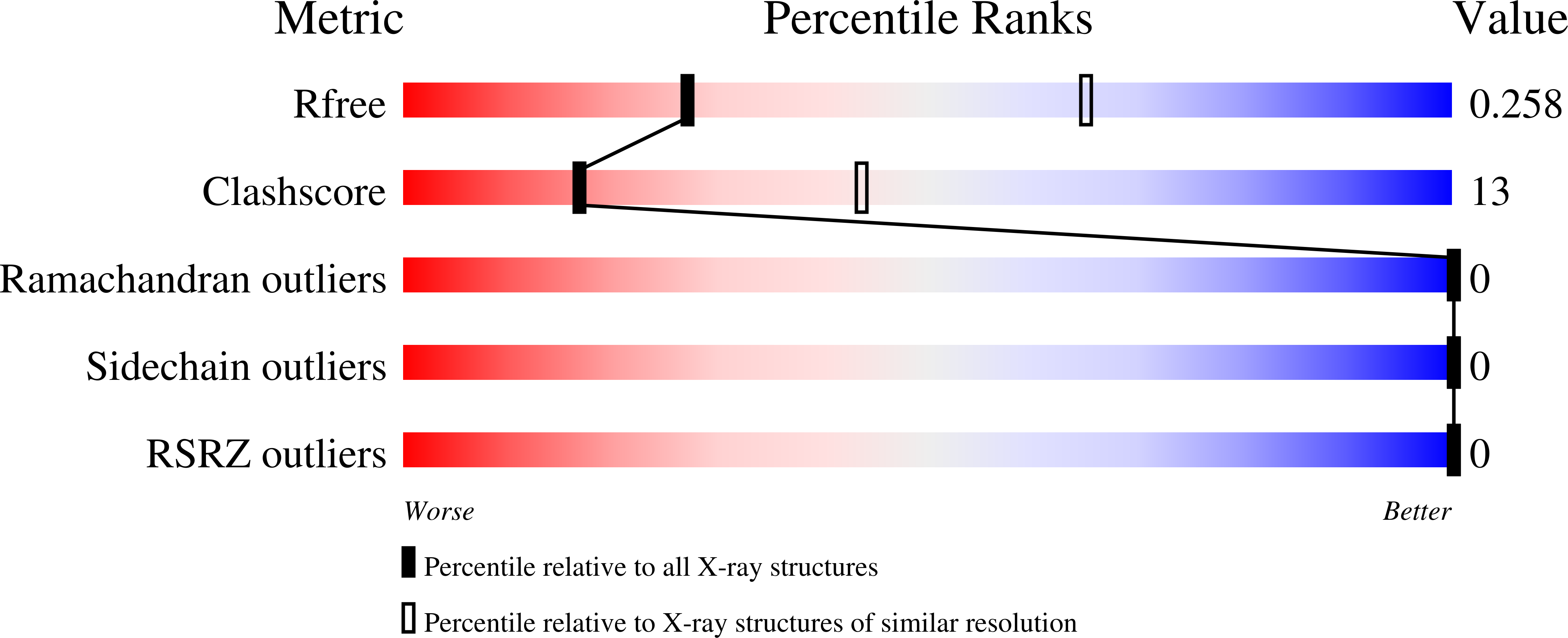
3.07 Å
R-Value Free:
0.25
R-Value Work:
0.19
R-Value Observed:
0.19
Space Group:
H 3
Macromolecular Entities
Structures with similar UniProt ID
Protein Blast
Polymer Type:polypeptide(L)
Molecule:Alpha-ketoglutarate-dependent dioxygenase FTO
Gene (Uniprot):FTO
Chain IDs:A
Chain Length:479
Number of Molecules:1
Biological Source:Homo sapiens
Primary Citation
Differential control of RNA demethylase activity and selectivity by cofactor ascorbate.
Biorxiv ? ? ? (2025)
PMID: 40654844 DOI: 10.1101/2025.05.06.652568

Abstact

The Fe(II)- and 2-oxoglutarate(2-OG)-dependent dioxygenase (FOGDD) enzyme superfamily catalyzes the oxidation of RNA, DNA, and peptide substrates to install chemical modifications that regulate the diverse functions of these biomolecules. For decades, it has been appreciated that many FOGDDs require ascorbate (Vitamin C) as a cofactor for efficient catalysis, but ascorbate requirements across different FOGDD enzymes, its effects on the catalysis of different substrates, and how it engages the FOGDD active site, remain poorly understood. Here, we use RNA demethylases FTO and AlkBH5 as model FOGDD enzymes and show that their ascorbate requirements for efficient demethylation reactions are dramatically different. Furthermore, FTO was found to have strikingly different ascorbate requirements for its own demethylation reactions with different methylated RNA substrates. Our enzymology experiments suggest FTO and AlkBH5, and likely FOGDDs generally, can have widely different ascorbate dependencies based on the balance between an enzyme's intrinsic ability to decarboxylate co-substrate 2-oxoglutarate and the kinetics of its substrate oxidation reaction. Finally, we determined a crystal structure of FTO in complex with ascorbate, which for the first time shows how ascorbate selectively engages the FOGDD active site. Together, our biochemical and structural data show that ascorbate can selectively tune the RNA demethylation reactions of FTO and AlkBH5, and that more globally, differences in ascorbate concentrations in different environments or diseases may regulate the activity and specificity of diverse FOGDD-catalyzed oxidation reactions in the cell.

Legend

Protein

Chemical

Disease

Primary Citation of related structures
Feedback Form
Name
Email
Institute
Feedback